
What Is a Co2 Gun Used for? (2026)
What is a CO2 gun used for? Want a quick, clear answer without the jargon?
This guide shows real uses like plinking, training, airsoft/paintball, small‑game pest control, and event CO2 effects. You will get plain facts and one‑sentence takeaways for each use.
We also cover the main CO2 gun types, pros and cons, and when to pick CO2 over green gas or HPA. Safety, legal rules, and simple maintenance tips are included so you can use them smartly and safely.
Read on for short sections, easy checklists, and a handy table to compare uses, gun types, ammo, and typical ranges. By the end you’ll know exactly what a CO2 gun is best used for and how to get started.
Table of Contents
- What is a CO2 gun used for? Practical uses and common applications
- Types of CO2 guns and how they differ
- Pros and cons of CO2 guns
- Safety, legal and ethical considerations
- Practical tips: operation, maintenance, ammo, cartridges & maximizing performance
- What People Ask Most
- Final Thoughts on CO2 Gun Uses
What is a CO2 gun used for? Practical uses and common applications
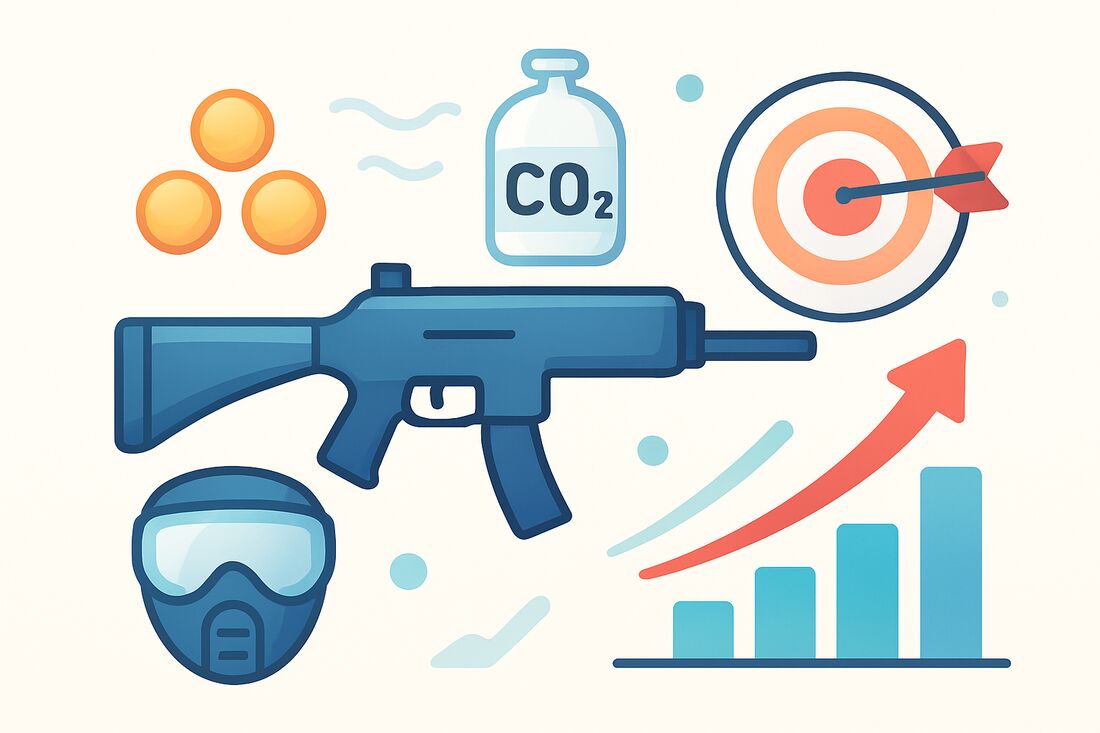
In short, what is a co2 gun used for: recreation, training, small-game pest control, airsoft and paintball play, and special-effects CO2 jets at events.
Plinking and casual target shooting is the most common use. CO2 pistol uses shine here because pistols are easy to carry, fire semi-auto, and keep costs low per BB or pellet. Typical setup is a CO2 pistol or a lightweight CO2 rifle, shooting BBs or light pellets out to 10–30 yards with modest accuracy needs.
Competitive and skills training often uses CO2 for realistic feel and rapid follow-up shots. Blowback CO2 pistols simulate recoil and are useful for handgun drills, while more accurate CO2 rifles work for sighting and short-range marksmanship. Expect matched pellets in rifled barrels for best groups and effective ranges of 10–40 yards depending on the model.
Airsoft, paintball and mil‑sim gear frequently use CO2 to power pistols, grenades and 40mm launchers because the gas delivers quick, repeatable shots. CO2 vs green gas is a common choice — CO2 gives higher power and instant gas flow while green gas is softer and less cold-sensitive. If you want to browse models, stores that list a range of CO2 airsoft guns show the differences between pistols, 40mm launchers and grenade-style devices.
Pest control and small-game hunting is possible with the right CO2 rifle and pellet setup. For humane results you need a rifled barrel, heavier pellets, and a gun that produces sufficient energy and consistent accuracy; this is the realm of CO2 rifle hunting for small targets at controlled distances. Typical effective range for ethical dispatch is often inside 30–50 yards, but local laws and the animal species determine acceptable practice.
Special effects and event use employ large CO2 cannons or jets, not handheld guns, to create fog, bursts of vapor, or crowd visuals. These devices use big CO2 tanks or 88g cartridges and are calibrated for effect rather than projectile accuracy. The recommended device for events is a mounted cannon; range is measured in effect radius and safety zones rather than yards for target shooting.
Can CO2 guns be used for hunting? Yes, but only under strict conditions: use a purpose-built, high-power CO2 rifle with a rifled barrel and heavy pellets, obey local hunting laws, and aim for quick, humane kills. Always verify legal limits and ethical guidelines before attempting any hunting with a CO2 platform.
For content and visuals, a one-use-case photo grid works well: plinking, airsoft action, a small-game setup, and a staged CO2 jet shot at an event. A simple mapping of use to recommended CO2 type and ammo helps readers choose gear, but start with purpose—plinking, training, hunting or event effects—then pick the best platform.
Types of CO2 guns and how they differ
CO2 guns come in several main types: CO2 pistols (blowback and non-blowback), CO2 rifles (bolt-action and semi-auto), CO2 grenades and 40mm launchers for airsoft, and large CO2 cannons for special effects. Pistols are compact and often magazine-fed with integrated cartridge systems, while rifles usually offer better accuracy and larger frame options. Launchers and grenades are dedicated airsoft accessories that trade single-shot power for area effect, and event cannons are built for safe, repeatable vapor or jet output.
The core mechanical differences center on the gas source and delivery. Most handguns use disposable 12g cartridges in the grip or magazine; larger devices use 88g bottles or mounted tanks with regulators. Many pistols have a piercing screw and valve that the gun pierces to release gas, and blowback systems route gas to cycle the slide for realistic recoil at the cost of more moving-part stress. Magazine-integrated cartridges are convenient but mean you must manage O-rings and seals more closely.
Compare CO2 to green gas and HPA and you get clear trade-offs: CO2 is cheap and powerful but temperature sensitive, green gas is gentler and often better for softer blowback in warm weather, and HPA gives stable pressure and extreme consistency at higher setup cost. When you want to see real models and specs, sellers of CO2 airsoft guns list exact velocities and feed systems so you can compare performance. Example types to explore are full-size licensed CO2 pistols from established makers, multi-shot CO2 rifles for backyard plinking, and professionally made CO2 jet units for events—always check manufacturer specs for pressure, cartridge compatibility, and recommended ammo.
Pros and cons of CO2 guns
One big pro is convenience: CO2 is an instant power source and you get semi-auto without pumps or compressed tanks. Many CO2 pistols include realistic blowback and fast follow-up shots, which makes them great for casual shooting and quick training sessions. Disposable cartridges are widely available, and swapping them is simple and fast compared with filling tanks or cocking spring guns.
On the flip side, CO2 is temperature sensitive—cold weather lowers pressure and velocity, and very warm temps can increase pressure beyond optimal levels. Cartridge life and running costs can add up since 12g CO2 cartridge life varies by model and use; heavy rapid fire yields fewer shots per cartridge and more waste. CO2 systems can be less consistent than regulated HPA/PCP setups for precision shooting, and blowback mechanisms accelerate wear on moving parts.
When to choose CO2: pick it for quick-action shooting, semi-auto realism, airsoft sidearms, and event effects where portability matters. When not to choose CO2: if you need sub-MOA accuracy, very stable velocities in varying weather, or extreme shot counts without swapping sources—consider PCP, HPA or quality spring systems instead. Balance cost, maintenance, and your shooting goals before you decide.
Safety, legal and ethical considerations
Safety basic rules still apply: treat every CO2 gun as loaded, always use eye protection, and never point a gun at people or animals unless you are legally and ethically hunting with the correct setup. A proper backstop and range etiquette save accidents; teach new shooters to keep fingers off the trigger until ready to fire and to follow local range rules. CO2 gun safety also means having a clear firing zone and a safe target that stops pellets reliably.
CO2 cartridge safety matters: do not expose cartridges to heat, never try to puncture a cartridge outside the designed device, and store cartridges in a cool, dry place. Dispose of empty cartridges responsibly and look for recycling options in your area; damaged cartridges can be a hazard and must not be reused. Avoid leaving pierced cartridges in a gun for long-term storage to prevent seal strain and slow leaks.
Legal rules vary widely by country and region, so always check local law before buying or shooting. Some places treat high‑power airguns as firearms and require licensing or have power limits and hunting seasons. If you are unsure what applies where you live, read local guides such as articles on CO2-powered air guns and consult local authorities; compliance keeps you out of legal trouble.
Ethics for hunting and pest control demand humane practice: use proper pellet types, only take shots within your proven effective range, and aim for quick, humane kills. Know species-specific rules and avoid risky shots. For special-effects work, follow operator training, secure the equipment, keep the audience a safe distance, and consider weather since CO2 jets create cold vapor and condensation.
Practical tips: operation, maintenance, ammo, cartridges & maximizing performance
Start with operation basics: learn how to insert and pierce a 12g cartridge safely, load magazines correctly, and perform a basic function check before walking onto a range. Break in new guns gently, start with controlled drills to confirm cycling and grouping, and always chronograph a new setup to know real velocity. Remember what is a co2 gun used for when you pick warm-up drills and distances to practice.
Ammo matters: use BBs in smoothbore barrels for casual plinking and pellets in rifled barrels for accuracy. Heavier pellets slow velocity but often tighten groups; match pellet weight to the gun’s barrel type and expected use. Quality match ammo pays off; cheap BBs or pellets can reduce accuracy and increase feeding problems.
Cartridge sizes and shot capacity vary: 12g cartridges are standard for pistols and many rifles, while 88g bottles or bulk tanks feed larger devices and cannons. Typical 12g shot counts range widely—dozens to a hundred-plus shots depending on the model, temperature and rate of fire—so CO2 cartridge life is best judged by field testing your gun with a chronograph. Cold air or rapid full-auto-style firing cuts shot count dramatically.
Maintenance keeps seals and valves working: clean barrels lightly and use silicone oil on O-rings as recommended; never use petroleum oils on seals. Check and replace worn O-rings and seals on a schedule based on use frequency, and keep a small kit of spare parts and silicone lubricant. Regularly inspect magazines and piercing screws for damage and corrosion.
Troubleshooting basics include warming a limp cartridge safely in your hands or a warm pocket for cold-weather use, reseating a loose cartridge, checking the piercing screw and seal orientation, and swapping in a fresh cartridge to isolate leaks. If velocity drops significantly, check seals and the valve; many problems are cured with a new O-ring or a little silicone oil. For persistent issues consult the manual or a qualified tech.
Accessories you’ll want are eye protection, spare 12g cartridges, extra magazines, a speedloader, a cleaning rod and silicone oil, and a chronograph to measure FPS. For parts and extras, reputable distributors and stores serve as a source for gear and spares; check an airsoft retailer for common items and compatibility. A soft case or holster keeps gear safe during transport and helps prevent accidental discharge.
Running costs are simple to estimate: cartridge cost divided by shots plus BB or pellet cost gives a per-shot number, which often works out to a few cents per shot for casual use. Buying cartridges and BBs in bulk lowers unit cost, and recycling empty cartridges reduces waste. Track your cartridge averages in different temperatures so you can plan how many spares to bring.
Beginner checklist in one line: a suitable CO2 gun for your purpose, the right BBs or pellets, spare 12g cartridges, eye protection, silicone oil and a basic cleaning kit, and an optional chronograph to tune performance. Start slow, learn safe handling, and match gear to the activity—plinking, training, hunting or event work each has slightly different needs.
What People Ask Most
What is a CO2 gun used for?
A CO2 gun is used for recreational shooting, target practice, and training. It is also common in airsoft, paintball, and casual plinking.
Can I use a CO2 gun for target practice?
Yes, CO2 guns are popular for target practice because they are easy to operate and have low recoil. They work well for short-range shooting and skill building.
Are CO2 guns suitable for self-defense?
CO2 guns are generally designed for recreation and training, not as reliable self-defense tools. Their effectiveness and legal status vary, so they are not usually recommended for defense.
How safe are CO2 guns for beginners?
CO2 guns can be safe if you follow basic safety rules like keeping the muzzle pointed away and wearing eye protection. Treat them seriously and store them where children cannot reach them.
Can CO2 guns be used for pest control?
Some people use CO2 guns for small pest control at very short range, but effectiveness varies. Always check local regulations and use humane, safe methods.
Do CO2 guns need special maintenance?
CO2 guns need simple upkeep such as cleaning and checking seals to keep them reliable. Regular basic care helps prevent leaks and malfunctions.
How accurate are CO2 guns?
CO2 guns are generally accurate enough for casual target shooting and short-range use. Their consistency can vary, so they are not ideal for long-range precision shooting.
Final Thoughts on CO2 Gun Uses
If you were wondering “what is a CO2 gun used for?” this guide showed they’re great for recreation, training, small-game control, airsoft/paintball, and event effects—and for many shooters the big win is easy, repeatable power and fast follow-up shots. Even gear labeled 270 is aimed at the same crowd. That instant, on-demand propulsion with realistic handling makes them ideal for quick drills and casual fun, though they aren’t the choice for extreme long-range precision or cold-weather dependability; hobbyists, trainers, and mil‑sim players will benefit most, from beginners enjoying the low barrier to entry to advanced users exploring mil‑sim realism.
We walked through types, cartridges, use cases, safety, and maintenance so you can match a model and ammo to your needs with confidence. Keep the practical caution in mind and practice safe handling while you tune performance to your goals. Enjoy the learning curve and the steady progress that comes with shooting thoughtfully.