
5 Best Pellet Rifles for Squirrels – Ultimate Guide (2026)

Ever wondered which pellet rifle will give you a quick, humane harvest of tree squirrels without spooking the whole yard? Squirrel hunting is deceptively exacting; tiny targets among branches demand steady aim and predictable terminal performance. This guide cuts through the noise with practical, field‑tested advice.
We evaluate five top pellet rifles tailored for squirrel work and walk you through the buying choices that actually matter in the woods. You’ll get clear guidance on matching rifle styles, calibers and pellet types to typical squirrel ranges and hunting situations. The focus is on reliable performance and real‑world usefulness, not flashy numbers.
Accuracy and humane terminal results trump raw velocity every time. Before you head out, test rifle/pellet combinations from realistic shooting positions, chronograph candidate pellets, and verify consistent groups. Those simple steps separate a frustrating afternoon from a productive, ethical hunt.
Whether you favor compact carry rigs, multi‑shot platforms, or powerful single‑shot springers, this guide explains the practical trade‑offs in power, accuracy, ergonomics and refill logistics. Expect actionable tips to help you choose the right caliber and pellet for your typical engagement distances. Read on and get prepared to make every shot count.
Table of Contents
- Benjamin Marauder Pellet Rifle Review
- Brocock Commander XR Pellet Rifle Review
- Hatsan FlashPup QE Pellet Rifle Review
- Gamo Swarm Magnum Pellet Rifle Review
- FX Impact M4 Pellet Rifle Review
- Choosing the Right Caliber for Squirrel Hunting
- Pellet Type and Weight for Squirrels
- What People Ask Most
- Conclusion on Best Pellet Rifles for Squirrels
1. Benjamin Marauder Pellet Rifle Review

Benjamin Marauder Wood Stock Air Rifle
Precision long-range shooting with ultra-smooth wooden ergonomics, adjustable power and whisper-quiet operation for hunting and target practice.
The Benjamin Marauder is a PCP rifle available in .177 and .22, and it’s widely praised as a top overall choice for squirrel hunting. Its compact size and synthetic stock make it easy to carry and durable in rough field conditions, so it handles well when moving through brush and trees.
Accuracy and power are the rifle’s strong suits; it delivers consistent shot placement and sufficient energy for clean, humane kills without excessive over-penetration. That quiet operation also helps — you can take multiple shots without scaring nearby squirrels, which is a big advantage during a slow stalk.
It’s a multi-shot, bolt-action design that gives reliable follow-ups when you need them, and users report consistent performance across fills, so you can trust the rifle to behave the same shot after shot. For most squirrel hunts the .22 offers better terminal performance, while .177 remains an option if you prefer a flatter trajectory or specific local rules.
The main practical limits are logistical: as a PCP it requires an air source (pump or tank) for fills, so spontaneous field use without that equipment is limited. Also, the setup tends to be heavier than some ultra-light springers, and that extra weight can fatigue you during long stalks if you’re covering a lot of ground on foot.
Pros
- Synthetic stock stands up to rough field use
- Sufficient power for ethical squirrel drops
- Accurate, consistent shot placement
- Quiet operation for multiple shots
Cons
- Requires pump or tank for fills
- Heavier setup can cause fatigue
2. Brocock Commander XR Pellet Rifle Review

Gamo 6110017154 Varmint Air Rifle
Affordable, lightweight platform delivering rapid follow-up shots, excellent accuracy, and ideal control for pest management and backyard plinking.
The Brocock Commander XR is a PCP that comes in .177, .22 and .25 — a versatile platform if you want to match caliber to range and local rules. It delivers around ~55 foot-pounds of energy, which is very suitable for clean, ethical squirrel shots with the right pellet.
What stands out is how quiet and accurate it is in the field. The built-in silencer keeps reports low so you can take multiple shots without spooking other squirrels nearby.
The rifle uses a Huma‑Air regulator, giving shot‑to‑shot consistency and tight groups when it’s set up right. It also has a smooth side‑lever action and an efficient trigger, so follow‑ups are fast and predictable when a squirrel moves at the last moment.
Practical features include an adjustable stock and power settings, letting you dial the rifle for short tree shots or slightly longer clearings. Do expect to spend a little time fine‑tuning the regulator in reality, and know that the compact layout isn’t optimized for very long‑range stability — but for typical squirrel distances it’s a highly capable, field‑ready option.
Pros
- Regulator gives tight groups and consistent power
- Extremely quiet for multiple shots
- Adjustable power dial for range/size tuning
- Smooth side‑lever and efficient trigger for quick follow‑ups
Cons
- Compact design limits very long‑range stability
- Regulator needs initial field fine‑tuning
3. Hatsan FlashPup QE Pellet Rifle Review

Hatsan FlashPup Synthetic QE PCP Air Rifle .25 Caliber
Compact power in a durable synthetic package; exceptional knockdown energy, smooth suppressed shooting, and easy handling for medium-game.
The Hatsan FlashPup QE is a compact PCP offered in .177, .22 and .25 that still manages roughly 1150 FPS of punch — more than enough for clean squirrel hits in close to medium ranges. Its small footprint makes it ideal where maneuverability matters, like tight backyards or brushy stalks.
It uses a two‑stage trigger which gives you fine control for follow‑ups on moving targets. Combined with its quiet report, it’s well suited for urban or close‑quarter pest control on tree squirrels without scattering the rest of the yard.
Users who’ve field‑tested the FlashPup QE report clean drops despite the rifle’s small size, so the power and accuracy are practical, not just theoretical. That real‑world confirmation matters: compact rifles often underperform, but this one lives up to the specs.
The main tradeoffs are logistics and fit. The smaller onboard reservoir means more frequent refills on all‑day hunts, so plan on a quick refill solution if you intend long sessions away from a tank or pump.
Also expect limited stock adjustability compared with larger hunting rifles, which can make some off‑shoulder or awkward shooting positions less comfortable. If you value a lightweight, quiet, powerful compact PCP for squirrel work, the FlashPup QE is a strong candidate — just manage your air and be prepared for fixed ergonomics.
Pros
- Surprising power (~1150 FPS)
- Two‑stage trigger for control
- Compact and easy to maneuver
- Quiet report for close/urban use
Cons
- Smaller reservoir — frequent refills
- Limited stock adjustability
4. Gamo Swarm Magnum Pellet Rifle Review

Gamo Swarm Magnum 10X GEN3i Inertia-Fed .22 Caliber 10-Shot Break Barrel Air Rifle
High-capacity rapid-fire action with consistent shot grouping, optics-ready design, and maximum convenience for serious field use.
The Gamo Swarm Magnum is a gas‑piston springer that stands out for sheer velocity and a practical magazine system. It comes in .177 rated at 1600 FPS and .22 at 1300 FPS, so you get real down‑range punch for ethical squirrel shots when you match pellet choice and range.
What I like as a field shooter is the 10‑shot quick‑shot magazine. It makes follow‑ups and clearing multiple pest squirrels fast without reloading single pellets between shots. The rifle also offers versatile power settings and decent open sights, which helps with fast target acquisition on a tree‑lined stalk.
For budget‑minded hunters this rifle is attractive: high velocity, quiet operation, and a magazine at this price point make it an effective control tool. In my experience, a springer’s report here is subdued enough to allow several shots without immediately spooking neighboring squirrels, provided you’re mindful of shot placement.
Two practical caveats: being a springer, it’s hold‑sensitive — offhand accuracy can suffer if you don’t settle the gun. Also, cocking is heavier than a PCP, so long sessions of repeated cocking will tire your arms faster than a precharged rifle would.
Pros
- High velocity (.177 1600 FPS / .22 1300 FPS)
- Quiet enough for repeated shots
- 10‑shot quick‑shot magazine for fast follow‑ups
- Versatile power settings and good open sights
Cons
- Springer hold sensitivity affects accuracy
- Heavier cocking fatigues arms
5. FX Impact M4 Pellet Rifle Review
Gamo 6110017154 Varmint Air Rifle
Compact pest-control solution offering smooth cocking, reliable accuracy, and lightweight balance for extended backyard sessions.
As a shooter who values precision, the FX Impact M4 is a modular PCP that immediately stands out. It supports multiple calibers, uses a side lever and has a superb trigger that makes follow-up shots intuitive.
Its accuracy is exceptional — the outline notes .28‑inch groups at distance, which translates to consistent headshot-level precision on small game like squirrels. The platform’s long-range pedigree is proven by a documented 168‑yard prairie dog kill, so point-of-aim confidence at typical squirrel ranges is very high.
The rifle cycles flawlessly and accepts tuning for pellets or slugs, giving you flexibility to match ammunition to wind and range conditions. It’s highly customizable out of the box, yet performs well without extensive setup, so you can hunt with confidence right away.
Adjustable power means you can dial the output for close woods work or slightly longer field shots, which is valuable when small differences in energy matter for ethical kills. The ergonomic stock is comfortable for extended carrying and makes it easier to glass and stalk all day without fatigue.
There are practical caveats to weigh. Proprietary fittings can complicate field maintenance, so bring the right tools and spares if you plan remote hunts. Also, stock adjustability is limited for some body types, so try one before committing if you need a highly tailorable fit.
Pros
- Pinpoint accuracy for headshots
- Smooth action and superb trigger
- Adjustable power for varied ranges
- Ergonomic for extended carrying
Cons
- Proprietary fittings complicate field maintenance
- Limited stock adjustability for some body types
Choosing the Right Caliber for Squirrel Hunting
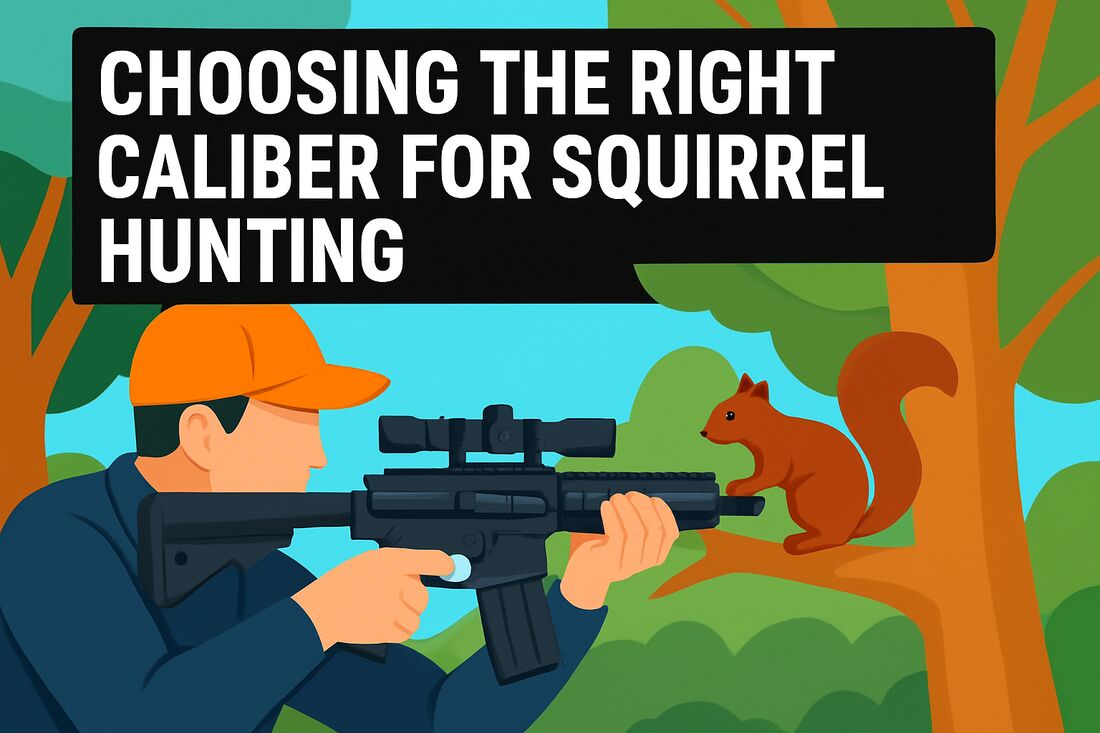
.22 is my go‑to for most squirrel work because it hits the sweet spot between pellet diameter, mass and terminal performance. .177 remains a solid alternative when you need a flatter trajectory, a quieter report, or when local rules push you toward smaller bores.
Caliber changes how a pellet carries energy and how large the wound channel will be on impact. That mix of mass, diameter and velocity is what separates a clean, humane harvest from a crippling hit that requires a follow‑up.
.22 pellets tend to retain momentum better on small targets, which makes them more forgiving with less‑than‑perfect shot placement in brush or from awkward shooting positions. The larger cross‑section also helps transfer energy without punching straight through and wasting terminal effect.
Use .177 when your rifle can push it hard and you’re shooting at longer, more precise ranges; the flatter arc helps on extended pulls and high‑speed pellets can still carry enough energy from a regulated PCP. Conversely, a weak gun with a lightweight .22 pellet will often underperform, so bore size alone isn’t the whole picture.
Match caliber to the rifle’s actual output, not just the label. Run a chronograph, then shoot groups at the distances you actually hunt—10, 20 and 30+ yards—and compare point‑of‑impact, group size and retained energy for each pellet and caliber you try.
In the field I always pick the combination that gives repeatable groups and reliable terminal hits at my normal ranges, even if that means leaning on a tuned .177 or a heavy .22. Real performance beats theory every time.
Bottom line: start with .22 as the default, but let chronograph data and group testing be the decider, and always prioritize clean shot placement and humane results.
Pellet Type and Weight for Squirrels
Pick a pellet that gives your rifle tight groups and enough on‑target energy. For most squirrel work that means a lead domed pellet in a weight that maximizes retained momentum — commonly a heavier .22 for close‑to‑medium shots and a well‑tuned .177 when you need a flatter trajectory at longer ranges.
Domed pellets are the go‑to: they stabilize well, penetrate predictably and retain energy for clean, humane kills. Pointed pellets can aid penetration but their flight and accuracy vary by barrel, so test them before you rely on them; hollow‑points and wadcutters make larger wound channels at very short range but are often less accurate and more wind‑sensitive.
Weight is the tradeoff: heavier pellets carry more momentum and transfer energy reliably on impact, which reduces cripples on small, tough targets like squirrels. Lighter pellets give higher muzzle velocity and a flatter arc but lose terminal energy faster and react more to crosswind.
Match pellet weight to your rifle’s power curve — a low‑power gun won’t push a heavy pellet to useful terminal speeds, while a regulated PCP or stronger springer will often benefit from heavier .22s. Don’t assume heavier is always better; the best result comes from the rifle and pellet tuned together.
Practical testing beats theory every time. Chronograph your candidate pellets to compare muzzle energy, then shoot groups at your typical hunting distances (10–40 yards) from both a rested bench and the field positions you actually use.
Always prioritize accuracy over paper specs: choose the pellet that groups smallest and still delivers ethical terminal energy at your engagement range. On small game, precise placement — head or upper torso where legal — is more important than an extra bit of velocity.
In the woods I carry my two best pellets: the one that grouped best and a backup with slightly different weight or profile for windy or odd‑range shots. That redundancy and pre‑hunt testing will give you the cleanest, quickest harvests.
What People Ask Most
What is the best pellet rifle for squirrels?
There is no single best rifle for every hunter; choose one that delivers consistent accuracy, comfortable handling in the woods, and the power you need at your typical ranges. Test rifle and pellet combinations on the range and prioritize reliable, humane shot placement in the field.
What caliber is best for hunting squirrels with an air rifle?
.22 is generally preferred because it balances down‑range energy and terminal performance for small game. .177 can be a viable alternative where a flatter trajectory, higher velocity, or local restrictions favor the smaller bore.
Are .177 or .22 pellets better for squirrels?
.22 pellets usually offer better retained energy and momentum for clean kills on squirrels. .177 pellets can work well when paired with a rifle and pellet that produce consistent accuracy and adequate terminal performance at your engagement distances.
What pellets (shape/material) are most effective for taking squirrels?
Lead domed pellets are the most versatile and often give the best balance of accuracy and penetration for hunting. Pointed pellets can aid penetration in some rifles while hollow points and wadcutters may expand or cut larger wound channels at short range, so always test shapes in your rifle before relying on them.
What is the effective range for a pellet rifle when hunting squirrels?
Effective range varies with your rifle, caliber, pellet choice, and wind conditions, so determine it by field testing your setup from typical hunting positions. Use the distance at which you can consistently place humane shots as your effective range rather than a fixed number.
Should I choose a break-barrel, PCP, or CO2 pellet rifle for squirrel hunting?
Choose based on the tradeoffs that matter most to you: PCPs offer consistency and rapid follow-ups but require a fill source, springers and break-barrels are self-contained and simple, and CO2 systems are convenient but can be affected by temperature and power limits. Match the platform to your needs for portability, maintenance, and the typical hunting scenarios you face.
What velocity or power is needed to humanely dispatch a squirrel with a pellet rifle?
The power needed depends on caliber, pellet weight, and shot distance, so focus on a setup that delivers consistent terminal performance at your practical ranges. Prioritize precise shot placement and verify effectiveness through careful testing rather than relying on advertised numbers alone.
Conclusion on Best Pellet Rifles for Squirrels
To wrap up: the five rifles covered span PCP and springer platforms, so choose the setup that best balances accuracy, power, portability and how you’ll refill in the field.
Before you hunt, bench-test rifle and pellet combinations at realistic distances to find the pairing that gives repeatable groups and reliable terminal performance.
Always prioritize precise shot placement, tune power and pellet choice to match your typical engagement ranges, and build practice time so you can make humane, one-shot kills.
If you want to sharpen your skills and setup knowledge, read more articles on the site for practical tips on testing, field techniques and responsible hunting practices.
Have questions or field experience to share? Leave a comment below — we usually reply within a few hours and welcome your reports and setup questions.