
5 Best Rifles for Squirrel Hunting (in 2026)

What really makes the best rifle for squirrel hunting?
Is it pinpoint accuracy, whisper‑quiet operation, or the ability to swing fast through tight timber? The right answer depends on terrain, typical shot ranges, and your personal standards for ethical shots.
This roundup concentrates on five proven small‑game platforms across rimfire and airgun categories. Selections were driven by repeat recommendations in expert roundups, controlled field tests, and steady user reports emphasizing reliability, accuracy, and real‑world utility.
You’ll see how handling, trigger feel, noise signature, and follow‑up capability change real hunts. We’ll show how those factors translate to ethical performance at typical squirrel ranges, based on field experience rather than bench numbers.
Whether you’re a new woods walker or a seasoned tree‑stand regular, this guide will sharpen your selection criteria. Pick the best rifle for squirrel hunting that suits your terrain and shooting style, and get into the woods better prepared for cleaner, more consistent harvests.
1. Ruger 10/22 Rifle

Umarex Ruger Targis Hunter Max .22 Pellet Air Rifle with 3-9x32mm Scope
Hunting-ready pellet rifle delivering consistent power, crisp accuracy, and an included variable optic for confident shots at medium ranges.
The Ruger 10/22 is a lightweight semi‑automatic .22 LR that earned its place as a go‑to for squirrel hunting because it combines easy handling with proven reliability. In the woods it shines for short‑to‑moderate ranges — many users keep shots inside ~50 yards — and the semi‑auto action makes rapid follow‑ups realistic when squirrels bust out of the canopy.
What really sells the 10/22 to field players is the huge aftermarket: stocks, triggers, and barrels are plentiful, so you can turn a basic rifle into a tailored hunting tool without breaking the bank. The stock platform is light and well‑balanced for walking and quick aiming, and there’s a deep community of owners and support resources if you want to tinker or troubleshoot.
Out of the box the 10/22 is mostly ready for casual hunting, especially for new hunters or those who value fast handling and multiple‑target capability. If you crave absolute bench precision at longer small‑game distances, plan on upgrading barrel and trigger components — the factory setup can trail tuned bolt guns when chasing sub‑MOA accuracy.
For someone who wants a versatile, tweakable rimfire that favors speed and follow‑ups in timber, the 10/22 is hard to beat. It’s ideal for both new and experienced hunters who want a reliable, customizable platform that’s forgiving in the field.
Pros
- Light, well‑balanced for walking and quick aiming
- Semi‑auto for fast follow‑ups in trees
- Huge aftermarket and upgrade options
- Broad community knowledge and parts/support ecosystem
Cons
- Out‑of‑the‑box accuracy can trail tuned bolt guns
- Factory sights/triggers often need upgrading for longer small‑game work
2. CZ 457 Rifle

MDT XRS Chassis for CZ 457 Right-Hand 105051
Lightweight precision chassis enhances rifle stability, adjustable ergonomics, and modular accessory mounting for superior small-bore accuracy.
The CZ 457 is a modern bolt‑action rimfire that feels built for deliberate, accurate squirrel work. It comes in .17 HMR and .22 LR varmint configurations, and the varmint barrels plus adjustable triggers make it a precision‑oriented package out of the box.
Owners and reviewers praise its real‑world accuracy — some called the .17 HMR variant one of the most accurate guns they’d owned. The .17 HMR’s flat trajectory reduces holdover, which means you can confidently stretch shots toward treetops and, with quality optics and some ballistic dialing, push practical range toward ~100 yards.
For woods hunters who prefer single‑shot precision, the 457 gives predictable, tight groups and a trigger you can tune for consistent breaks. The bolt action is slower than a semi‑auto for follow‑ups, so it’s a better fit if you value one‑shot ethics and shot placement over rapid chaining of shots.
If your typical ambush or stand involves longer, deliberate shots at exposed squirrels, the CZ 457 is an excellent choice. It’s less ideal if you need quick follow‑ups in dense timber or are hunting where .17 HMR ammo scarcity or cost is a factor. Overall, it’s a top pick for hunters who want bolt‑action precision and flat‑shooting ballistics for longer, deliberate shots.
Pros
- Tight groups and excellent out‑of‑the‑box accuracy in varmint configs
- .17 HMR offers a much flatter trajectory for extended small‑game range
- Quality adjustable triggers and barrels for precise shot placement
- Available in .17 HMR and .22 LR varmint configurations
Cons
- .17 HMR ammo is costlier and less available than .22 LR
- Slower bolt cadence than semi‑autos for rapid follow‑ups
3. Savage Mark II Rifle
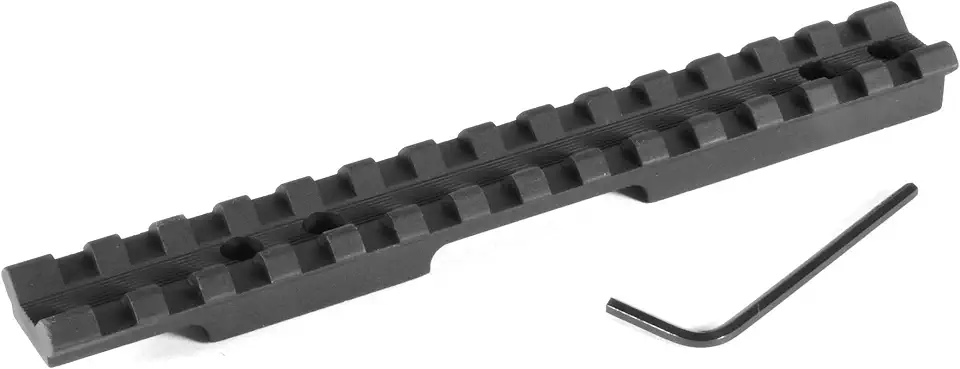
EGW Picatinny Rail Scope Mount for Savage Mark II 1-3/8in Ejection Port 0 MOA
Low-profile cantilever mount ensures rock-solid optic attachment, perfect alignment, and durable steel construction for repeatable zero.
The Savage Mark II is a bolt‑action .22 LR rimfire that gets mentioned whenever accuracy is the priority. Many models ship with Savage’s AccuTrigger and varmint barrels, which is a kit‑up geared toward tight groups and deliberate shots.
In the field it’s described as rock‑solid accurate with a varmint barrel and a good optic, making it well suited to deliberate marksmanship beyond 30–40 yards. That platform really earns its keep when you want one clean, ethical shot instead of trading follow‑ups in heavy cover.
The AccuTrigger is a standout feature — it allows a safer, reduced pull that produces a crisp, consistent break and helps tighten groups. Combined with bolt‑action simplicity and consistent bedding, the Mark II gives repeatable point of impact shot after shot.
If your hunting style is single‑shot precision for longer small‑game work, the Savage Mark II fits that bill. Expect strong inherent accuracy for 40–50+ yard shots with the right setup, but plan to pair it with a decent scope and do ammo testing to find the load that groups best.
Practical tradeoffs are straightforward: the rifle is heavier and slower to cycle than semi‑autos, so it’s not the best choice if you need rapid follow‑ups in tight timber. But for anyone who values predictable trigger break and repeatable accuracy at extended small‑game ranges, this is a very solid option.
Pros
- Strong inherent accuracy for 40–50+ yard shots
- AccuTrigger gives a crisp, reduced pull
- Bolt‑action simplicity and consistent bedding
- Available varmint barrels for precision
Cons
- Heavier and slower to cycle than semi‑autos
- Needs a good scope and ammo testing for best results
4. Benjamin Marauder Air Rifle

Benjamin Marauder Wood Stock Air Rifle
Traditional wood stock with regulated powerplant delivers quiet, consistent shots, pinpoint accuracy, and comfortable handling for field or range.
I’ve used the Benjamin Marauder a lot for close‑to‑moderate small‑game work, and it really shines when you need a quiet, low‑recoil platform that won’t spook birds or other game. It’s a pre‑charged pneumatic (PCP) rifle with stock options and comes in .177/.22/.25, so you can pick the caliber that matches your distance and pellet preference.
What makes the Marauder practical is the regulated action: you get consistent muzzle energy and multiple useful shots per fill, which translates to repeatable groups when you zero a scope. In real woods work the ethical ranges I’ve seen cited and used run about ~20–60 yards depending on caliber and pellet choice — perfect for most squirrel situations.
The Marauder’s smooth two‑stage trigger helps you place tiny shots without flinching, and the platform accepts heavier pellets for better terminal effect when you need it. That flexibility in caliber and power tuning is a big plus if you care about humane shot placement and minimizing pelt damage.
On the flip side, it requires logistics: fills with a hand pump or tank and periodic PCP maintenance. If you’re not willing to manage that, a rimfire might be less fuss. Also, it won’t perform optimally out of the box unless you pay attention to moderator, pellet selection, and tuning — otherwise it can be louder or less accurate.
Pros
- Very quiet — reduces spooking
- Consistent shot‑to‑shot energy (regulated)
- Smooth two‑stage trigger for precise shots
- Calibers .177/.22/.25 with power tuning options
Cons
- Requires fills (hand pump or tank) and PCP maintenance
- Needs proper moderator, pellet choice, and tuning to avoid noise/accuracy issues
5. Gamo Swarm Series Air Rifle

Gamo Swarm Magnum 10X GEN3i .22 Inertia-Fed 10-Shot Break Barrel Air Rifle 1300 fps
Rapid 10-shot break-barrel delivers high-velocity rounds, smooth inertia operation, and responsive handling for fast follow-up shots.
The Gamo Swarm Series Air Rifle is a gas‑piston (gas‑ram) platform with multi‑shot magazines, high nominal velocities, and integrated noise‑reduction features. It’s built around straightforward mechanics, so you don’t need a lot of special gear to keep it running. The basic design favors users who want a practical, everyday small‑game airgun rather than a workshop project.
In the field it performs like a budget‑minded multi‑shot option. Built‑in silencers and other noise‑suppression measures help reduce spooking compared with unsuppressed springers. The multi‑shot magazines let you follow up quickly on multiple treetop targets without racking the action between shots.
Don’t be fooled by the high advertised FPS numbers; they don’t automatically translate into terminal performance. Practical accuracy and humane hits at typical squirrel distances are very possible when you pair the gun with the right pellets and deliver good shot placement and follow‑through. Expect acceptable practical accuracy and power inside the ranges most squirrel hunters work.
Where this rifle really fits is with hunters who want an affordable, relatively quiet platform that needs less fiddly maintenance than PCP systems. It’s ideal for 20–50 yard engagements where quick follow‑ups and low logistics matter more than absolute long‑range precision. If you’re willing to spend time testing pellets and practicing placement, it’s a very usable small‑game tool.
Be realistic: you’ll get the best results after pellet testing and by focusing on placement rather than chasing FPS. If you want simple upkeep, multi‑shot capability, and lower noise on a budget, the Swarm series is a strong contender.
Pros
- Multi‑shot magazines for quick follow‑ups
- Gas‑piston operation is weather‑tolerant and low maintenance
- Integrated silencers/moderation reduce noise vs unsuppressed springers
- Good power potential with appropriate pellets and shot placement
Cons
- High advertised FPS can mislead about terminal performance
- Long‑range accuracy and pellet consistency lag higher‑end PCPs
Choosing the Right Squirrel Caliber

Pick a caliber that balances humane terminal effect, minimal pelt and meat damage, and the distances you actually shoot. Recoil, follow‑up speed and ammo availability matter just as much as headline energy when you’re walking timber all day.
For most wooded squirrel hunts .22 LR is the sweet spot: affordable, low recoil and plenty of reliable energy inside roughly 50 yards. I use match or target rounds for zeroing and a proven hollow‑point or JHP for the field; test brands because some .22 loads fragment more than others and can harm pelts.
If your terrain opens up and you need flatter trajectory, .17 HMR gives reach toward 100 yards but often fragments and can ruin meat or pelts, so reserve it for deliberate, longer shots. .22 WMR sits between .22 LR and .17 HMR in energy and reach and is a solid middle ground when you want more punch without extreme fragmentation.
Airguns demand a different mindset: mass beats raw FPS. On a regulated PCP like the Benjamin Marauder, .22 or .25 pellets usually deliver better terminal performance at 20–60 yards than a light .177 pushed to high velocity. On multi‑shot gas‑ram guns like the Gamo Swarm, pellet selection and consistent grouping are far more important than the advertised speed.
Whatever platform you pick, do the homework: test several loads or pellets, zero at realistic engagement distances (25–50 yards in timber), and practice from the field positions you’ll actually use. The best caliber is the one that lets you place a clean brain or upper‑spine shot at your typical range—so tune gear, test ammo, and prioritize shot placement over flashy numbers.
Squirrel Rifle Buying Guide
Start by matching the rifle to where and how you hunt. Tight timber, open edges and the need for follow‑ups should guide your choice.
For most woods .22 LR is the sweet spot—affordable, low recoil, and lethal inside fifty yards. Use .17 HMR for flatter trajectory at longer range, but expect higher ammo cost and possible pelt damage. Match caliber to terrain and how cleanly you want to harvest.
Bolt actions deliver repeatable accuracy for deliberate shots. Semi‑autos and multi‑shot airguns help when you need fast follow‑ups or hunt with a dog.
Keep the rifle light and balanced for long walks, but not so light you lose steady offhand aim. Short barrels aid maneuverability while heavier barrels help rested accuracy.
A crisp, adjustable trigger tightens groups and builds field confidence. Match stock length and cheek weld so your eye comes to the scope naturally.
Low‑to‑medium magnification glass—2–7x or 3–9x—lets you pick fast targets and reach modest distances. Use solid mounts and re‑check zero after rough hikes.
Five to ten rounds is enough for most hunts, but multi‑shot rifles shine when quick follow‑ups matter. For airguns, try heavier pellets; they often give better terminal effect on small game.
Quiet guns spook fewer animals; suppressors or PCP platforms help where legal. Remember moderators and subsonic loads can shift point‑of‑impact, and PCPs need a pump or tank plus basic maintenance.
Test multiple ammo or pellet types to find the best groups and terminal performance. Zero at realistic distances—25–50 yards—and practice the field shots you will actually take. Work field positions—sitting, kneeling, improvised rests—until you can place quick, ethical shots.
Finally, pick a rifle you like carrying and shooting; comfort equals more time in the woods and more clean, ethical takedowns. Practice with the ammo that grouped best; that combination wins in the field.
What People Ask Most
What caliber is best for squirrel hunting?
Choose a caliber that balances humane terminal effect, minimal pelt damage, and the effective range you expect. Many hunters favor .22 LR for general woods work, while .17 HMR or .22 WMR are chosen when a flatter trajectory or more reach is needed.
Is .22 LR good for squirrel hunting?
Yes, .22 LR is well suited to most close-to-moderate woods hunting because it balances terminal performance with low pelt damage. It is widely available and performs reliably when paired with proper shot placement and tested hunting loads.
What is the effective range for squirrel hunting?
Effective range depends on caliber, ammunition, and shot placement, with most small-game work happening at short to moderate distances in wooded terrain. Flatter-shooting calibers extend practical reach for more deliberate longer shots.
Should I use a rifle or a shotgun for squirrel hunting?
Either can be appropriate depending on terrain and hunting style: rifles offer better precision for deliberate shots while shotguns are helpful in dense cover at very close range. Pick the action and feeding type that match how you hunt and your need for follow-ups.
What type of scope or optics are best for squirrel hunting?
Low- to medium-power variable scopes provide a balance of quick target acquisition and useful reach, while iron sights or ghost-ring setups work well in heavy brush. Use secure mounts and ensure consistent eye-to-scope alignment for reliable shot placement.
What is the best ammunition for squirrel hunting?
Test several loads to find what shoots best in your rifle, and prefer hunting-grade bullets designed for reliable terminal effect. Matching your ammo choice to the caliber and intended range helps preserve meat and pelts.
Can you use an air rifle or pellet gun for squirrel hunting?
Yes where legal; PCP air rifles are popular for quiet, consistent performance, and gas‑ram or spring models offer lower-maintenance alternatives. Ensure the chosen power level, pellet selection, and local regulations support ethical, humane shots.
Conclusion on Best Squirrel Hunting Rifles
This comparison of five repeat‑recommended rimfire and airgun options, grounded in user and reviewer reports, is meant to give you a clear framework for choosing a reliable, accurate, and field‑useful small‑game rig.
Use the criteria here to match rifle and caliber to your terrain and typical shot distances, test ammo or pellet choices for group and terminal performance, practice realistic field positions, and always prioritize ethical shot placement and local regulations.
If you want to sharpen your skills and gear choices, read more articles on the site to expand your knowledge on tuning, optics, and field techniques that build on this guide.
Have questions or want to share a tip from your own hunts? Leave a comment below — we usually reply within a few hours.