
5 Best Scopes for Pellet Guns – Complete Guide (2026)
Ever wondered why your best groups still look average when the sun dips or the range stretches out? Small errors in optic choice can turn a great pellet gun into a frustrating puzzle at the bench or in the field.
This guide compares five top scopes designed for pellet guns and walks you through how to choose the right optic for your shooting style. You’ll get a clear, no-nonsense look at what matters and why it matters for airguns specifically.
We focus on the features that change real-world performance: parallax control, magnification ranges, reticle types, and ruggedness for different recoil patterns. These elements determine hit-or-miss outcomes at 25, 50, and 100 yards more than brand names or flash features.
Whether you shoot springers, PCPs, or a mixed bag of backyard plinking and small-game duty, the comparisons that follow are based on practical testing and common shooting scenarios. Expect straightforward advice on matching scope traits to pellet trajectory and shooting distance.
If precision, repeatable zeroes, and fewer excuses matter to you, read on. By the end you’ll know which optic traits to prioritize and how to pick a scope that actually improves your shooting.
1. CVLIFE 3-9×40 AO Scope

CVLIFE 3-9×40 AO R4 Rifle Scope with Mounts
Variable magnification, adjustable objective for parallax correction, clear multi-coated optics and included mounts for quick, stable zeroing in varied field conditions.
The CVLIFE 3-9x40AO Rifle Scope is ranked as the top overall scope for pellet guns. It offers 3–9x magnification with a 40mm objective and an adjustable objective (AO) for parallax correction down to 15 yards. Some variants feature red/green illuminated crosshairs, and the scope is noted for high light transmission.
Key features include a 3–9x magnification, a 40mm objective, and an AO designed for reliable parallax control at practical pellet-gun distances. Illuminated reticle is available in some versions, and the optics boast high light transmission so you can see the reticle clearly in varied lighting. This combination aims to deliver bright, clear images that stay sharp as light changes, which helps you lock onto targets quickly.
In real-world use, the CVLIFE 3-9x40AO is balanced for short‑ and long‑range shots, letting you adapt from indoor practice to outdoor skirmishes. The bright, clear images due to high light transmission help you pick out hits and details in dim or bright conditions alike. The precision of the reticle across different conditions, combined with the AO’s range flexibility, keeps your holdovers reliable at multiple distances.
However, the standard model lacks an illuminated reticle, even though illuminated variants exist for buyers who need it. There is no specific claim of exceptional spring-piston durability versus airgun‑rated scopes, so you should treat this as a solid mid‑range option rather than a heavy‑duty recoil setup. For beginners and intermediate pellet-gun shooters, it offers dependable performance and strong value at mid-range pricing.
Pros
- Balanced for short- and long-range shots.
- Bright, clear images from high light transmission.
- Precision targeting across varied conditions.
- AO provides flexibility for different ranges.
Cons
- Standard model lacks illuminated reticle (illuminated variants exist).
- No specific claim of exceptional spring-piston durability vs. airgun-rated scopes.
2. Hawke AirMax 3-9×40 AO Scope

Hawke Airmax Airgun Scope 1
High-performance one-inch airgun optic optimized for low recoil, crisp reticle, durable construction, and excellent low-light clarity.
The Hawke AirMax 3-9X40 AO is rated best for spring-piston air rifles, reflecting its reliability under the unique stress of springer movement. It offers 3–9x magnification with a 40mm objective, giving you versatility from close-range plinking to longer-range shots. The adjustable objective (AO) includes illumination control, and the scope is designed for spring-piston recoil with an illuminated reticle option for low-light situations.
Key features and specifications align with what serious shooters expect from a spring-gun optic. The setup includes magnification 3–9x and an objective 40mm, plus an AO with illumination control for precise parallax adjustments. Springer-rated construction ensures it stands up to dual recoil from spring-piston guns, and there is an illuminated reticle option for versatility in changing light.
From real-world use, the coatings deliver bright images with minimal distortion at 9x, and the glass is crisp with minimal color fringing. This clarity translates into confident target acquisition across varied light conditions. Zero retention is excellent, so you won’t chase the point of aim after repeated shots, and the AO plus illumination controls feel smooth to operate, with the illuminated reticle helping in shaded or low-light scenarios.
Two limitations reported are that it’s slightly heavier than some competitors. Additionally, illumination knob placement could be more convenient. For users who already have a heavier rifle or prefer lighter setups, this might impact balance and handling.
Ideal users are serious spring-piston shooters and hunters needing optics that tolerate springer recoil. They also value illumination for variable lighting conditions. What users say: praised for quality-to-price ratio, glass clarity, and reliable zero retention through repeated shooting.
Pros
- Exceptional coatings produce bright images with minimal distortion at 9x.
- Crisp glass with minimal color fringing.
- Excellent zero retention after shooting.
- Smooth AO and illumination controls.
Cons
- Slightly heavier than some competitors.
- Illumination knob placement could be more convenient.
3. UTG 3-9×32 BugBuster AO Scope

UTG BugBuster 3-9×32 1
Compact, waterproof variable optic with etched reticle, bright RGB illumination, and shockproof design for backyard plinking to hunting applications.
The UTG 3-9×32 BugBuster AO scope has long been a go-to for serious air rifle enthusiasts. It delivers 3–9x magnification with a compact 32mm objective and includes an adjustable objective for parallax correction down to practical backyard ranges. The BugBuster line is known for reliability and value in both PCP and springer setups.
With a compact, shockproof platform, this scope is built to withstand both forward and reverse recoil. The AO provides precise parallax adjustment without adding bulk, keeping a lean, field-ready profile. Its rugged construction translates to consistent performance in tough outdoor conditions.
Key features include 3–9x magnification, a 32mm objective, AO, and a compact form factor. The 32mm objective keeps the field of view comfortable while preserving light transmission for dawn or dusk shots. The combination balances size, weight, and optical quality for versatile use.
In real-world use, the BugBuster proves extremely durable for springer and PCP setups, tested against both forward and reverse recoil. It delivers accurate box-test tracking and clear reticle visibility across varied lighting. It also provides consistent eye relief at about 3 inches, aiding repeatable cheek welds.
Pellet performance has been solid for many shooters, with reported 1″ groups at 50 yd and 2″ groups at 100 yd using .22 pellets. This indicates reliable accuracy for mid-range pellet shooting and matches the expectations of serious airgun players.
Ideal users are serious airgun enthusiasts and springer/PCP players who prioritize ruggedness and reliability over ultra-lightweight setups. If you want a proven, budget-friendly optic that stands up to recoil, the UTG BugBuster AO is worth considering.
Pros
- Extremely durable for springer and PCP setups (tested forward/reverse recoil).
- Accurate box-test tracking performance.
- Clear reticle visibility in varied settings.
- Consistent eye relief at ~3 inches.
Cons
- Heavier than some lighter scope options.
- 3 inches of eye relief may be restrictive for some users.
4. Athlon Argos BTR Gen2 6-24×50 Scope

Athlon Argos BTR Gen2 6-24×50 FFP Rifle Scope with Sunshade
Long-range first focal plane optic with precision turrets, crisp glass, extended magnification and sunshade for glare-free target acquisition at distance.
Athlon Argos BTR Gen2 6-24×50 is widely regarded as the best overall air rifle scope on the market. It offers a versatile 6–24x magnification with a 50mm objective, balancing field of view and brightness for both close work and longer shots. The scope uses a First Focal Plane (FFP) reticle and features precise, tactile turrets with zero stop for repeatable holds at any distance.
As a shooter, you want glass clarity and holdover accuracy across a wide range of distances. This Argos Gen2 delivers outstanding glass clarity for the price point, so targets stay crisp from close work to longer-range engagements. The FFP reticle enables precise holdovers at any magnification, letting you dial in without recalculating ballistic holds as you zoom.
Want dependable tweaking? The turrets are smooth and the turret system includes a zero stop for repeatable zeros after field sessions. The platform is built for durability and versatility, with a robust construction that holds up in real-world field use. The magnification range remains versatile, covering everything from close-in pest control to longer-range shots.
Ideal users include serious air rifle shooters and small-game hunters who want long-term optical quality and precise holdovers. This scope suits those who value refined turret control and reliable performance at multiple distances. Real-world user feedback highlights its impressive consistency, with tight groupings at 50 yards and steady performance out to 100 yards.
Durable, versatile construction is part of its real-world appeal. If you need a scope that covers pest control to precision long-range work, this Gen2 is built to handle it, and the 50mm objective helps deliver brightness in low light.
Pros
- Outstanding glass clarity for the price point.
- FFP reticle enables precise holdovers at any magnification.
- Consistent performance from close ranges to 100 yards.
- Precise, tactile turrets with zero stop.
Cons
- Heavier than lightweight scope options.
- High magnification may be overkill for casual shooters.
5. Vortex Viper HD 5-25×50 FFP Scope

Vortex Viper HD 5-25×50 FFP Riflescope
High-definition first focal plane optic delivering superior edge-to-edge clarity, precise adjustments and dependable performance for competition and tactical long-range shooting.
Precision air rifle shooting hinges on a scope that can hold its zero across repeated shots. The Vortex Viper HD 5-25×50 FFP Scope is identified as the best scope for precision air rifles, offering a 5–25x magnification and a 50mm objective. Its First Focal Plane design, along with a tactile elevation adjustment and zero stop, keeps reticle subtensions accurate through the entire zoom range, which is crucial for correct holds at multiple distances.
Key features include 5–25x magnification, a 50mm objective, and a First Focal Plane reticle. The tactile elevation turret with a zero stop gives repeatable holds at any power. It also offers close-range focusing capability to keep near targets sharp.
Real-world pros include tactile elevation adjustment and a reliable zero stop. The glass quality is good for the price, giving clear images. It also provides effective close-range focusing, which helps with fast targets.
Cons include windage adjustment described as somewhat mushy versus elevation. The high magnification and larger size may be excessive for casual or beginner shooters.
Ideal users are precision air rifle shooters who prioritize optical quality and repeatable adjustments. Shooters planning long-term use who value warranty coverage will also appreciate this scope.
What users say: It is recognized for precision work and repeatable adjustments. The lifetime warranty provides added confidence for buyers.
Pros
- Tactile elevation adjustment and reliable zero stop.
- Good glass quality for the price.
- Effective close-range focusing.
- Backed by Vortex lifetime warranty.
Cons
- Windage adjustment described as somewhat mushy versus elevation.
- High magnification and larger size may be excessive for casual/beginner shooters.
Choosing Scopes For PCP Rifles
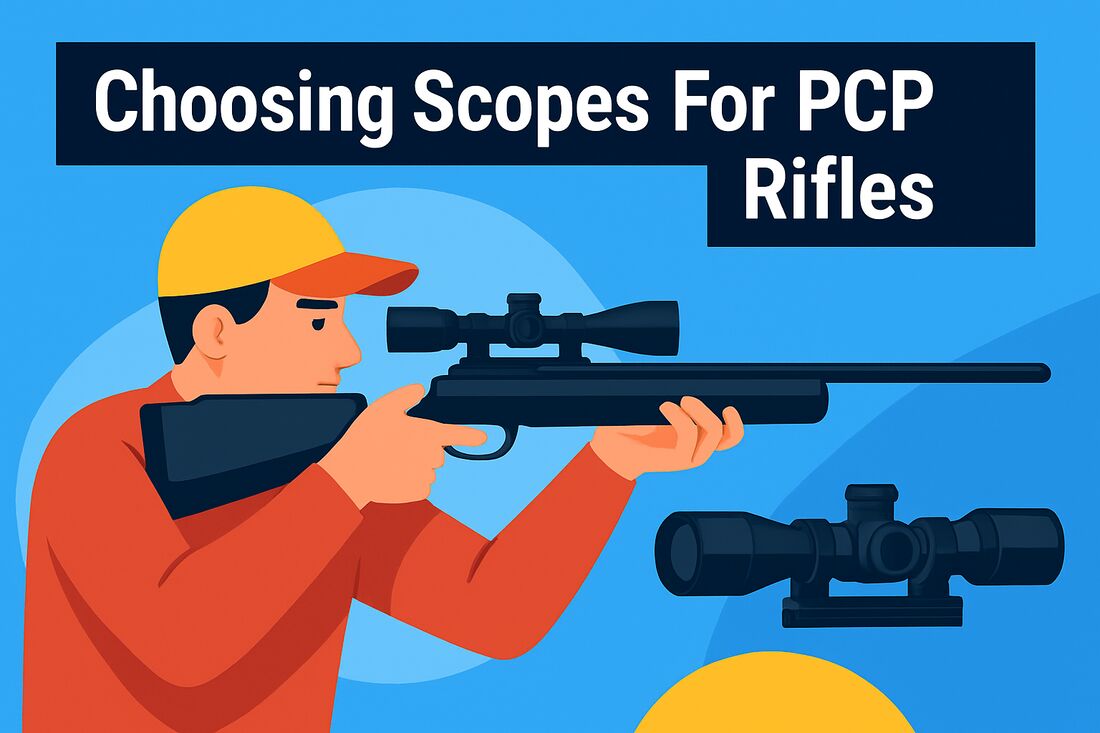
PCP rifles shine at precision shooting from about 10 to 100 yards, thanks to their power consistency and the flat trajectories of pellets. To get the most from that accuracy, you want a scope built with PCP realities in mind, not just a general rifle optic. Parallax adjustment is non negotiable on PCP setups. An adjustable objective (AO) or side focus that can set down to 10 yards helps eliminate parallax error at short and mid ranges, keeping your point of aim stable as you dial up to longer distances. For most users, matching parallax range to your typical distance—roughly 30 to 50 yards—is a smart move.
Magnification should match your typical targets. A 3–9x is plenty for most pest-control work up to around 50 yards. If you’re chasing varmints out to 100 yards, a 4–12x or 6–24x is a good balance; ultra-high magnifications like 15–24x or 6–48x lean toward benchrest or Field Target and add weight.
Reticles matter for pellet arcs. Mil‑Dot or BDC patterns help you estimate holdover as your pellet drops. If you hunt in low light, illuminated or fiber-reticle options can improve visibility, but remember they consume battery life.
PCP recoil demands rugged optics. Choose scopes that are airgun-rated and shockproof, preferably with a robust turrets and secure zero retention. PCP recoil differs from centerfire rifles, so look for forward/backward recoil tolerance and tight mechanical tolerances (750G rating is a common benchmark).
Know your effective range. Sub-20 FPE PCPs usually zero around 30–40 yards, while higher-power variants push toward 50 yards or a bit more. For hunting, a compact LPVO can work, but for precision at distance you’ll want a scope with good glass and repeatable adjustments.
Bottom line: pick features that align with your rifle’s power, your typical shooting distance, and your tolerance for weight and complexity. A well-chosen PCP scope will stay true shot after shot, turning consistent power into consistent groups.
First Versus Second Focal Plane
First focal plane and second focal plane scopes change how you read holdovers on a pellet gun in real field conditions. In an FFP scope, the reticle sits in the front focal plane and subtensions scale with magnification, so holds adapt as you zoom. In an SFP scope, the reticle sits in the second focal plane, so subtensions stay the same across power levels, which keeps the sight picture calmer at fixed distances.
That distinction matters when you’re dialing for different ranges on the field during a match. FFP shines when distances change and you’re dialing holds in real time without pausing to recalculate. This is especially handy for PCP rifles or field targets where shots come at different ranges, on the fly.
One caveat with FFP is that the reticle can look thin at very low magnification, which slows quick shots in bright sun or under tent lighting. Some reticles can feel cluttered when you push magnification into the higher ranges and foggy optics don’t help. That trade-off becomes a real factor when you’re choosing a scope for fast-paced airsoft in the heat of a skirmish.
SFP reticles stay clean at low magnification and are easier for quick, close-range shots in tight spaces. They’re a solid choice for fixed-distance practice and beginners who want a simple sight picture without second-guessing. The downside is that holdover marks are only precise at the maximum power, so you’ll need to be mindful when ranging.
For PCP rifles that see a mix of ranges and fast-changing shots, I’d lean toward an FFP setup so your holdovers stay accurate at any power, and you can rely on the reticle for holdovers without doing mental math. If your game is fixed-distance targets or you want a straightforward sight picture without constant dialing, an SFP scope can serve you well for benchrest, plinking, and casual skirmishes. Bottom line: choose FFP for dynamic distances; opt for SFP when simplicity and fixed ranges are your norm, and pick a model that balances glass quality, parallax adjustment, and ruggedness you can rely on in the field.
What People Ask Most
What is the best scope for a pellet gun?
There isn’t a universal best scope for every pellet gun. The right choice depends on your rifle, how you shoot, and the distances you typically engage. Prioritize a scope designed for air guns with solid construction and reliable parallax or focus control, and pick features that match your shooting style and goals.
How do you sight in a pellet gun scope?
To sight in, align the reticle with the point of aim at a chosen distance and make gradual adjustments. Test your zero from a stable position and at distances you’ll actually shoot. Keep notes of the adjustments to repeat the process consistently.
What magnification is best for pellet gun target shooting?
There is no single best magnification; choose a level that lets you clearly see targets at your typical distances. A moderate range provides versatility for various targets, from close to mid-range. Ensure the reticle remains visible and easy to use at your chosen power.
Are air rifle scopes the same as rifle scopes?
They share many features, but air rifle scopes are built to handle different recoil characteristics and mounting setups. Look for scopes specifically rated for air guns and compatible mounting options. The goal is to have reliable performance with your pellet gun’s handling and distances.
How high should you mount a scope on a pellet gun?
Mount the scope so you have a comfortable cheek weld and a clear sight picture with consistent eye relief. Avoid mounting too high or too low to prevent awkward shooting posture or alignment issues. Aim for a stable, repeatable cheek-to-scope position.
Do pellet guns need parallax adjustment on scopes?
Parallax adjustment helps keep the reticle aligned with your eye at varying distances. If you shoot at multiple distances, a scope with parallax control can help maintain accuracy and consistency. If you rarely change distances, a fixed-parallax scope may still work well.
Can you use a rifle scope on a pellet gun?
Yes, you can usually use a rifle scope on a pellet gun, but you should ensure compatibility with recoil and mounting. Use a scope rated for air gun use or opt for one known to handle the gun’s recoil. Confirm that mounting hardware and eye relief suit your setup.
Conclusion For Best Scopes For Pellet Guns
This guide highlights five top pellet-gun scopes and their standout strengths: springer-rated durability, shockproof reliability, First Focal Plane precision, solid mid-range value, and long-range accuracy.
Remember to match parallax adjustment, magnification, reticle type, and overall build to your rifle and typical shooting distances.
For ongoing skill improvement, read more articles on the site to refine your setup and shooting approach.
If you have thoughts or questions, leave a comment below; we usually reply within a few hours.