
CO2 vs Green Gas for Airsoft: Which Is Better?
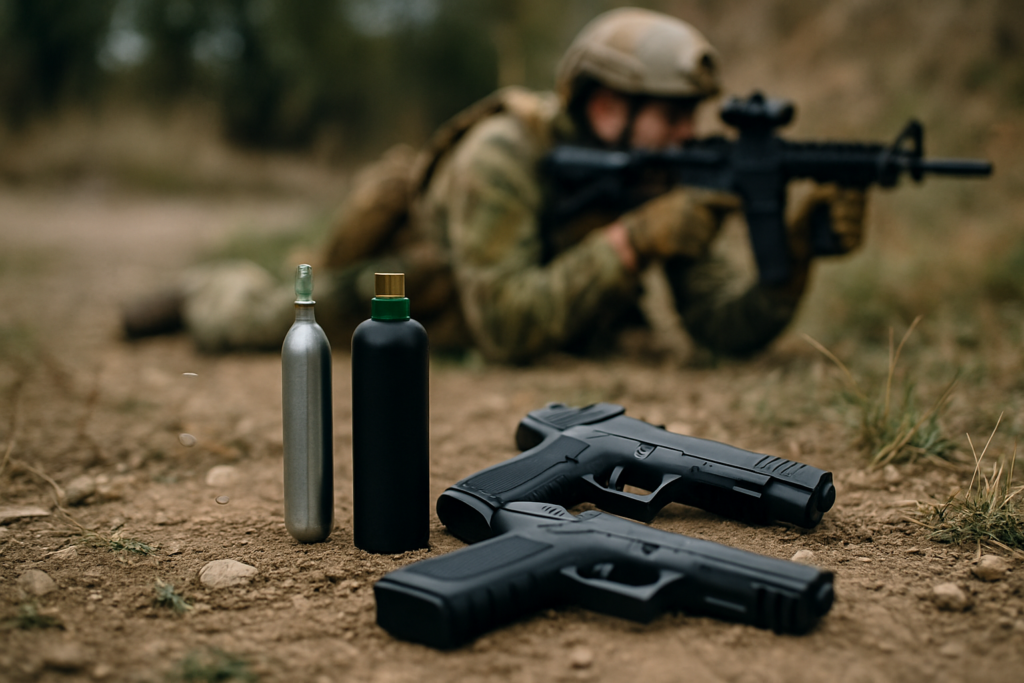
CO2 vs Green Gas is one of the most important choices an airsoft player can make when buying a pistol or gas rifle. The short version is simple: CO2 usually gives stronger performance and handles cold weather better, while Green Gas is usually easier to live with, easier on the gun, and more convenient for regular play. The best option depends less on hype and more on your climate, field limits, maintenance habits, and what kind of shooting experience you actually want.
| Category | CO2 | Green Gas |
|---|---|---|
| Power output | Usually higher and more forceful | Usually lower and more moderate |
| Cold-weather performance | Generally better in cooler conditions | More affected by temperature drops |
| Recoil feel | Often sharper and snappier | Often smoother and softer |
| Magazine system | Uses replaceable cartridges in compatible mags | Filled directly into gas magazines from a can |
| Ease of tuning to field limits | Can be harder if the gun shoots hot | Often easier to stay within pistol limits |
| Maintenance demands | More important to monitor seals, wear, and stress | Usually simpler routine care |
| Operating cost style | Pay per cartridge | Pay per bottle fill |
| Availability by platform | Common in pistols and some mags, but not universal | Very widely supported in gas blowback platforms |
| Beginner friendliness | Good if you need cold-weather utility | Usually easier for most new gas users |
What is CO2?
CO2 in airsoft usually means compressed carbon dioxide stored in small disposable cartridges, most commonly used in compatible pistol magazines. When installed correctly, the cartridge powers the gun by releasing gas through the magazine and valve system. In practical terms, CO2 is known for delivering a stronger shot cycle than many Green Gas setups.
That stronger cycle is a big reason players choose it. A CO2 pistol often feels lively, with a crisp recoil impulse and a sense of urgency in the slide movement. It can also keep performing better than Green Gas when temperatures drop, which matters if you play outdoors during colder months or in places where mornings are chilly for much of the year.
There are tradeoffs. CO2 puts more stress on internal parts than lower-pressure gas systems typically do, so gun design and build quality matter. A pistol built for CO2 can work well, but a platform that is not truly designed for that pressure can wear faster or become less reliable. CO2 also has a more all-or-nothing ownership pattern: once you pierce a cartridge, you are committed to using it or storing it correctly according to the manufacturer guidance. That can be less flexible than simply topping up a Green Gas magazine before a game.
What is Green Gas?
Green Gas is the most familiar propellant for many airsoft players using gas blowback pistols and rifles. It is essentially a pre-mixed airsoft gas sold in refillable cans, used to charge compatible magazines directly through the fill valve. It is popular because it is simple, widely available in the airsoft world, and supported by a huge number of pistols and gas blowback platforms.
For many players, Green Gas hits the sweet spot between realism and practicality. It offers blowback action, a satisfying shooting experience, and straightforward magazine handling without the need to insert a separate cartridge into each mag. You refill the magazine, load BBs, and keep playing.
Its biggest weakness is temperature sensitivity. As ambient temperature falls, Green Gas performance tends to drop too. That can mean lower velocity, weaker blowback, slower cycling, or less consistent operation, especially during rapid fire or long strings of shots. In warm to mild conditions, though, Green Gas is often the easiest and most forgiving gas option for day-to-day use.
CO2 vs Green Gas: The Real Decision Points
Power and FPS
If your first concern is raw output, CO2 usually has the edge. Many CO2-powered airsoft pistols are known for stronger muzzle energy and a more forceful cycle. That can be useful if you want a sidearm that feels punchy or you play in conditions where weaker gas systems struggle.
But more power is not automatically better. In airsoft, the right power is whatever keeps you safely and legally within your field limits. A pistol that shoots too hot may not pass chrono, which means all that extra pressure becomes a problem rather than a benefit. This is especially important for close-quarters fields with strict limits for sidearms. If you need help converting limits, an airsoft FPS to joule calculator is useful because many sites and manufacturers list power in different ways.
Green Gas often lands in a more manageable range for pistol use, particularly in average temperatures. That makes it attractive for players who want gas blowback without constantly worrying that seasonal changes will push them over the chrono line. The exact result still depends on the gun, hop setup, BB weight, and ambient temperature, but as a category Green Gas is often easier to keep field-friendly.
Cold-Weather Performance
This is where CO2 earns much of its reputation. In cooler weather, Green Gas can become sluggish and inconsistent. You may notice weaker blowback, reduced slide lock reliability, or a drop in effective performance as the magazine cools further during use. If your local season regularly includes cold mornings, late autumn games, or winter skirmishes, this matters a lot more than spec-sheet claims.
CO2 generally handles those conditions better. It tends to keep the gun cycling more confidently when Green Gas starts feeling tired. For players in colder regions, that alone can justify choosing a CO2-compatible sidearm.
That said, “better in the cold” does not mean “immune to temperature.” All gas systems are influenced by conditions and usage pace. Fast firing cools magazines, and seals can still be affected by weather. CO2 simply tends to retain usable performance longer when temperatures are less friendly.
Recoil and Shooting Feel
Many players choose gas airsoft because they enjoy the feedback. Here, the difference is less about right or wrong and more about preference. CO2 often delivers a sharper, snappier recoil sensation. The slide can feel more aggressive, and the overall firing cycle can seem more dramatic. If realism and strong feedback are high on your list, that can be very appealing.
Green Gas usually feels smoother and a little more relaxed. Some players actually prefer this because it can make the pistol easier to control in rapid follow-up shots, especially during target transitions or indoor games. The gun still feels like a gas blowback pistol, just with less force behind the movement in many setups.
If your idea of fun is a lively sidearm with a hard kick, CO2 may stand out. If you care more about an easy-shooting, consistent training or skirmish pistol, Green Gas often feels more balanced.
Consistency Through a Magazine
Gas performance is not just about the first shot. It is about how the gun behaves as you continue shooting. Green Gas magazines are affected by cooldown as the gas expands and the magazine temperature drops. When players shoot quickly, they may notice weaker cycling or a changing point of performance over the magazine.
CO2 can feel steadier over a string of shots in many practical situations, especially compared with Green Gas in cool weather. That can be helpful if you need your sidearm to stay decisive under pressure.
Still, consistency is heavily tied to platform quality. A well-designed Green Gas pistol can be more dependable than a poorly designed CO2 one. Magazine condition, seal health, lubrication, and even how long mags sit loaded all play a role. Gas type matters, but the system around it matters too.
Maintenance and Wear
This is one of the most overlooked parts of the CO2 vs Green Gas airsoft debate. CO2 is not automatically bad, but it generally demands more respect from the owner and more confidence from the platform. Higher operating pressure can mean more stress on slides, valves, seals, and internal components over time. If a gun is engineered well for CO2, that may be manageable. If not, wear can become part of the ownership experience sooner than expected.
Green Gas is usually considered gentler for routine use. That is one reason it is so often recommended for new gas-pistol owners. The maintenance routine is still important: magazines need care, seals need attention, and you should follow the manufacturer instructions for lubrication and storage. But as a general rule, Green Gas tends to be the lower-drama choice.
If you know you are disciplined about maintenance and are buying a gun specifically designed around CO2 use, the extra stress may be worth it. If you want a simpler ownership experience, Green Gas is usually easier to recommend.
Magazine Practicality and Reload Style
CO2 and Green Gas also feel different at the gear level. With CO2, each compatible magazine normally needs a cartridge installed. That can be fine if you run a small number of magazines and like a tidy, self-contained setup. It can be less convenient if you own many mags or prefer the ability to top off gas between rounds without replacing cartridges.
Green Gas magazines are simple to refill from a can. That makes pre-game prep and between-game management straightforward. If you are the kind of player who likes to gas up all your mags at the safe zone and get back into rotation quickly, Green Gas is often more convenient.
On the other hand, some players appreciate that CO2 cartridges are easy to carry and do not require bringing a gas can onto the field day. So the practical winner depends on how you stage your gear and how many magazines you typically run.
Cost Per Game
There is no universal winner here because usage patterns vary. CO2 has a pay-per-cartridge model. Green Gas has a pay-per-can model. Your actual spending depends on how often you play, how many magazines you cycle through, local pricing, and how efficiently your platform uses gas.
Instead of chasing claims about one always being cheaper, think in terms of ownership style. CO2 can feel predictable because each cartridge is a defined consumable. Green Gas can feel more economical for frequent users because one bottle can service repeated fills across multiple sessions, depending on the platform and your rate of fire.
The better question is not “Which gas is always cheaper?” but “Which system fits how I play?” If you mostly carry a pistol as a backup and use it sparingly, the cost difference may be minor. If you run gas platforms heavily, your local prices and platform efficiency will matter more. For broader planning, it can help to browse airsoft calculators and tools when comparing loadouts and field setups.
Availability and Platform Choice
Green Gas has a clear advantage in ecosystem support. A huge number of gas blowback pistols and rifles are built around Green Gas magazines, aftermarket parts, and common maintenance practices. If you like having many model choices and easier compatibility between brands and accessories, Green Gas is usually the safer route.
CO2 is common too, especially in pistols, but support can be more platform-specific. Some guns are sold in separate CO2 and Green Gas magazine versions, while others strongly favor one system. Before buying, make sure you are not just comparing gas types in theory. Compare actual magazine availability, spare part support, and whether your preferred model truly performs well on the gas you intend to use.
This matters even more in 2026, when players often buy online and assume every variant has equal support. It does not. A great gas choice on paper can turn into an annoying ownership experience if magazines are hard to find or expensive to replace.
Which Should You Choose?
The best choice comes down to your priorities, not forum arguments. Both gases can be the right answer in the right setup.
Choose CO2 if …
- You regularly play in cool or cold weather and need your pistol to remain useful when temperatures drop.
- You want a stronger, snappier recoil feel and a more forceful cycling action.
- You are buying a platform specifically designed to handle CO2 well.
- You do not mind a little more attention to maintenance, seals, and long-term wear.
- Your field limits and local conditions make the extra performance an advantage rather than a problem.
Choose Green Gas if …
- You play mostly in mild or warm weather where Green Gas works comfortably.
- You want the easiest entry point into gas blowback airsoft.
- You prefer simpler magazine refills and easier top-offs between games.
- You want a gas system that is usually gentler on the gun and easier to manage long term.
- You need a better chance of staying within common pistol limits without the gun shooting unexpectedly hot.
- You want broad platform choice, common magazine support, and familiar maintenance routines.
For most new players buying their first gas sidearm, Green Gas is usually the safer recommendation. It is widely supported, easy to refill, and generally less demanding. For players in cold climates, or those who specifically want stronger recoil and better low-temperature usability, CO2 can absolutely be the smarter choice.
If you are stuck between the two, start with your environment and field rules. Weather and chrono limits will affect your experience more than marketing claims. After that, think about how much maintenance you are willing to do and whether you want convenience or stronger performance. Those answers usually point to the right gas quickly.