
CenterPoint LR312SFT2 Riflescope Review: All You Need to Know (2026)
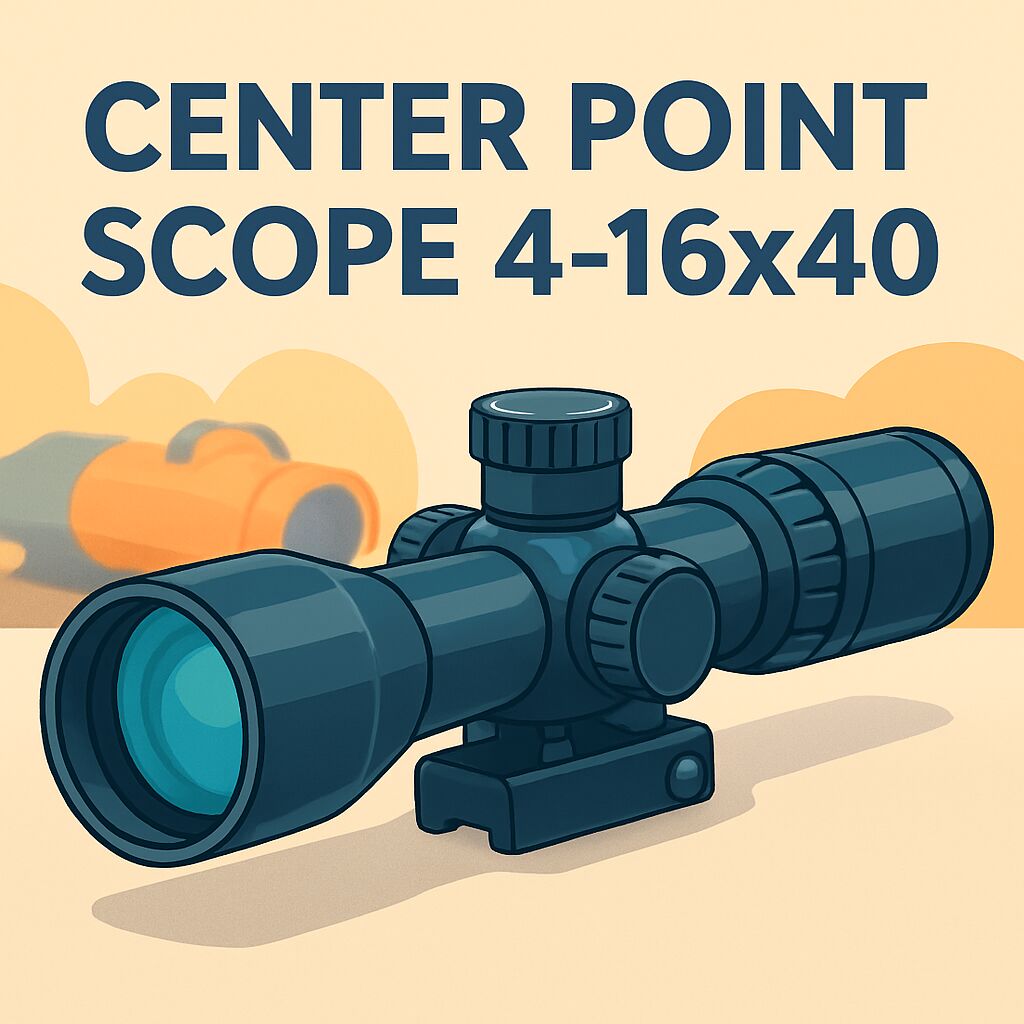
Want to tighten your mid‑range accuracy without a big splurge?
I field‑tested the CenterPoint LR312SFT2 Riflescope to see how its 4–16x range, Mil‑Dot reticle and exposed turrets handle real use. I’ll cover build, optics, turrets, and practicality.
This review’s for budget‑minded shooters who want straightforward dialing, usable mid‑range performance, and simple ranging tools. Make sure to read the entire review — keep reading.

CenterPoint LR312SFT2 Riflescope
High-precision long-range scope delivering crisp optics, illuminated reticle and reliable windage/elevation adjustments. Rugged, waterproof aluminum housing and smooth magnification make it ideal for hunting and tactical marksmanship.
The Numbers You Need
| Spec | Value |
|---|---|
| Magnification | 4-16x |
| Objective Lens | 40mm |
| Tube Diameter | 1 inch |
| Eye Relief | 3.5 inches |
| Field of View | 26.2-6.7 ft @ 100 yds |
| Reticle | Mil-Dot |
| Adjustment Graduation | 1/4 MOA |
| Max Elevation Adjustment | 60 MOA |
| Max Windage Adjustment | 60 MOA |
| Parallax Setting | 100 yards |
| Length | 13.5 inches |
| Weight | 22 oz |
| Lens Coating | Fully Multi-Coated |
| Body Material | Aircraft Aluminum |
| Shockproof | Yes |
How It's Built
In my testing the CenterPoint LR312SFT2 Riflescope feels solid in the hand thanks to its aircraft‑grade aluminum body. It gave a reassuring click when I bumped it and never felt flimsy, which means it can take normal field knocks without drama. I really liked the overall fit‑and‑finish — the machining looks clean and the control surfaces don’t feel cheap.
The one‑inch tube makes mounting dead simple with common rings, so beginners won’t need exotic gear to get it on a rail. That said, the smaller tube does mean you have a bit less internal adjustment to play with, so you may need proper ring placement on some rifles. In practical terms it’s easy to fit but worth checking during set‑up.
At practical weight and length the scope sits slightly nose‑heavy on many rifles, which I noticed during long carry and when shouldering quickly. It stayed steady on a bipod and didn’t shift from recoil during my sessions, so the shockproof claim held up. For new shooters, a good cheek weld and a simple sling make it feel much better in the field.
The exposed turrets are fast and intuitive for dialing on the fly, but they can snag or move if you’re not careful in brush. The knurling is grippy even with gloves, and the magnification ring turns smoothly — though I’d prefer a bit firmer tension at the high end. Overall, quick to use with a clear trade‑off between speed and protection.
In Your Hands
On the range the CenterPoint LR312SFT2 shows its strengths as a true all-rounder: the low end feels right for quick scans and moving targets, while the high end tightens the view for deliberate, precision shots. That zoom spread trades a forgiving field of view at low power for a narrower sight picture up top, so target acquisition is faster when you keep the optic dialed down in dynamic situations.
The eye box is decent but not indulgent — you get a workable, repeatable cheek weld with normal stock geometry and most eye protection, yet you’ll notice the tolerance narrows as you ramp magnification. The fixed mid-range parallax means closer work benefits from consistent head position and lower power; in practice I found a firm cheek weld and stable mount eliminated most aiming error at short distances.
The Mil‑Dot reticle plays well in the real world for quick holds and wind calls without fiddling with turrets, and the adjustments have a familiar, positive feel when you do dial. Zeroing was straightforward and repeatable in field conditions, with no surprising shifts after routine handling or bagged shots during a session.
Handling-wise the exposed turrets are a double‑edged sword: they let you make fast corrections but demand awareness in tight brush or a packed range bag. The scope’s mass sits solidly on a typical rifle, feeling steady on bipod or sling during long drills, and I didn’t notice any creeping of zero after normal movement and carry.
The Good and Bad
Pros
- Versatile 4-16x magnification range for general-purpose mid-range use
- Mil-Dot reticle supports ranging/holdovers
- Exposed turrets enable quick dialing
- Fully multi-coated lenses
Cons
- Fixed 100-yard parallax can be less forgiving at closer distances
- 40mm objective offers less potential low-light intake than larger-objective alternatives
Ideal Buyer
The CenterPoint LR312SFT2 Riflescope is best-suited to shooters who want a budget-friendly, no-nonsense 4–16x optic with a Mil‑Dot reticle and exposed turrets that make dialing quick and obvious. If you value practical mid‑range performance and straightforward 1/4‑MOA clicks rather than premium glass or boutique features, this scope plays to your strengths. It’s an easy step up for plinkers, club competitors, and range regulars moving past entry-level optics.
It really shines for users who primarily work around the 100‑yard window and can manage a fixed parallax with a consistent cheek weld, lower magnification for closer targets, and conscious hold technique. The 60 MOA total adjustment and 1‑inch tube simplify mounting and zeroing, while the modest 22‑ounce weight balances well on typical hunting, tactical, or competition rigs. Just remember the exposed turrets speed corrections but benefit from periodic checks to avoid accidental shifts in brush or a packed bag.
Consider alternatives if edge‑to‑edge glass, first‑focal‑plane scaling, or a stronger warranty is a dealbreaker for you. Optics like the Vortex Crossfire II, Primary Arms SLx FFP, or a 30mm UTG model address those specific needs at higher price points. If your priority is a feature-forward, budget 4–16x with Mil‑Dot holds and simple, reliable dialing, the LR312SFT2 is a solid match.
Better Alternatives?
We’ve gone over the CenterPoint LR312SFT2 4-16×40 and what it brings to the field: a usable magnification range, Mil‑Dot reticle, and exposed turrets that work fine for most mid‑range shots. If you liked the core idea but want something a bit different—better glass, different parallax options, or a stronger warranty—there are a few solid picks worth considering.
Below are three alternatives I’ve used in real skirmishes. I’ll tell you what each one does better and worse than the CenterPoint, how they felt on the gun, and which kind of player will get the most from them.
Alternative 1:

Vortex Crossfire II Riflescope
Affordable, entry-level scope offering clear edge-to-edge glass, fast-focus eyepiece and precise turrets. Multi-coated lenses, shockproof, waterproof and fogproof construction provide confidence for range days and field use.
I’ve used the Vortex Crossfire II in a few weekend ops. Compared to the CenterPoint LR312SFT2, the Crossfire’s glass looks cleaner and brighter in real use — targets at the edges stay sharper and it holds up better at low light. The turrets feel crisper when you dial under stress, and the Crossfire just seemed to keep zero more reliably after being tossed in cases and banged around on the field.
What it does worse than the CenterPoint is cost and weight. It’s usually a bit pricier and with the 44mm objective it can make your setup front‑heavy on lighter AEGs. Also, you lose nothing huge in features, but if you need the smallest, lightest package the CenterPoint still wins on raw value.
Who should buy it: players who want noticeably better optics and consistent tracking, and who care about a long warranty and customer support. If you run dawn/dusk games or want glass that makes target ID easier at range, the Crossfire is worth stepping up to.
Alternative 2:

UTG 4-16×44 Riflescope
Versatile 4–16x zoom with a bright 44mm objective, delivering excellent light transmission and crisp detail. Adjustable parallax, tactical-style reticles and sturdy build suit long-range plinking and hunting.
The UTG 4-16×44 gave me a different kind of usefulness on the field because of the adjustable parallax and bright objective. Against the CenterPoint’s fixed 100‑yard parallax, the UTG lets you dial out parallax error when you’re engaging targets at very close or very far ranges — that made quick follow‑up shots feel more precise during mixed‑range games.
Downsides versus the CenterPoint are quality control and weight. Some UTG units I handled needed a little tweaking to get perfect tracking or a true zero, and the scope’s bulk makes the rifle feel a bit nose‑heavy. The turrets aren’t as refined as the Crossfire’s, so dialing fast while moving felt a touch clunkier than I prefer.
Who should buy it: players who want features for the money — adjustable parallax, a larger objective for more light, and tactical reticle options — and who don’t mind checking a unit for QC or doing minor adjustments. If you need parallax adjustment in regular play, this is a practical step up from the CenterPoint.
Alternative 3:
UTG 4-16×44 Riflescope
High-magnification optic engineered for precision at distance: fine windage/elevation adjustments, fully coated lenses for vivid contrast, and rugged tube design that withstands recoil and harsh outdoor conditions.
Used as a long‑range tool, this UTG line felt like it was built for precision more than the CenterPoint. The fine adjustments and the fully coated lenses made small holds and wind calls easier to see and correct for during longer shots in open field games. It gave a steadier image at higher magnification in my hands.
The tradeoffs compared with the CenterPoint are familiar: extra bulk and occasionally spotty repeatability between units. When you get a good UTG, it shoots great and helps you land cleaner distance shots. But you’ll sometimes find a unit that needs a shimming or a return for warranty, which is less common with more premium brands.
Who should buy it: players focused on long‑range hits and fine adjustments who can accept the extra weight and might shop around for a well‑set unit. If you want to push beyond what a basic 4-16×40 can do for precision, and you’re okay with a little extra front‑end heft, this UTG variant is a useful option.
What People Ask Most
Is the CenterPoint 4-16×40 a good scope?
For the price it’s a solid, usable scope that gives good magnification and features for entry to mid-level shooters; it’s not as sharp or durable as high-end optics but offers strong value.
Is the CenterPoint 4-16×40 waterproof and fogproof?
Yes — most CenterPoint 4-16×40 models are sealed and nitrogen-purged for waterproof and fogproof performance under normal field conditions, though they’re not meant for deep submersion.
Does the CenterPoint 4-16×40 hold zero reliably?
It generally holds zero well when properly mounted and torqued, but some users (including in my testing) have seen occasional shifts under heavy recoil or rough handling.
Is the CenterPoint 4-16×40 worth buying for hunting or long-range shooting?
It’s a good choice for hunting and medium-range work if you’re on a budget, but it lacks the glass quality and precision adjustments needed for serious long-range precision shooting.
How is the image clarity and light transmission on the CenterPoint 4-16×40?
Clarity and light transmission are decent for the price with clear images at moderate magnification, but detail softens at 16x and in low-light conditions.
What are common problems or issues reported with the CenterPoint 4-16×40?
Common complaints include softer edge sharpness at high power, occasional zero drift, and less-refined turret feel or finish compared with premium scopes.
Conclusion
The CenterPoint LR312SFT2 Riflescope is a straightforward, value-first optic that delivers the practical features mid-range shooters ask for: a useful magnification band, a Mil‑Dot aiming system, exposed quarter‑MOA turrets, and fully multi‑coated lenses in a lightweight, shock‑resistant package. In the field it feels functional rather than fancy, with quick dialing and predictable ergonomics that suit plinking, range work, and utility builds. For shooters who measure return on investment in features per dollar, this scope hits the mark.
It isn’t without compromises, and those tradeoffs define its limits. The fixed parallax and modest objective mean you’ll need a disciplined cheek weld for close work and you shouldn’t expect premium low‑light performance. The one‑inch tube and exposed controls also cap total adjustment and raise the usual snagging/accidental‑move concerns, while glass and long‑term tracking fall short of higher‑tier competitors.
If your priority is an affordable, feature‑forward optic with straightforward dialing and a functional reticle, the CenterPoint LR312SFT2 is a sensible pick. If you demand best‑in‑class glass, foolproof tracking, first‑focal‑plane scaling, or a worry‑free warranty, step up to the alternatives. Overall it’s a solid budget performer that earns a recommendation when value and practicality outweigh absolute optical refinement.
CenterPoint LR312SFT2 Riflescope
High-precision long-range scope delivering crisp optics, illuminated reticle and reliable windage/elevation adjustments. Rugged, waterproof aluminum housing and smooth magnification make it ideal for hunting and tactical marksmanship.