
Where to Shoot a Turkey With a Rifle? (2026)
Where to shoot a turkey with a rifle? This guide answers that question clearly and simply.
You will learn why head and neck shots are the best for a quick, humane kill. You will also get the chest alternative, aiming points by bird orientation, and realistic ranges.
The article covers gear and practice too — optics, bipods, rangefinders, and drills to build confidence. Expect diagrams, step‑by‑step aim tips, and ammo advice to protect meat and ensure clean hits.
Safety and ethics are front and center. We will remind you to check laws, use safe backstops, and only take shots you can make cleanly.
Head and neck shot placement
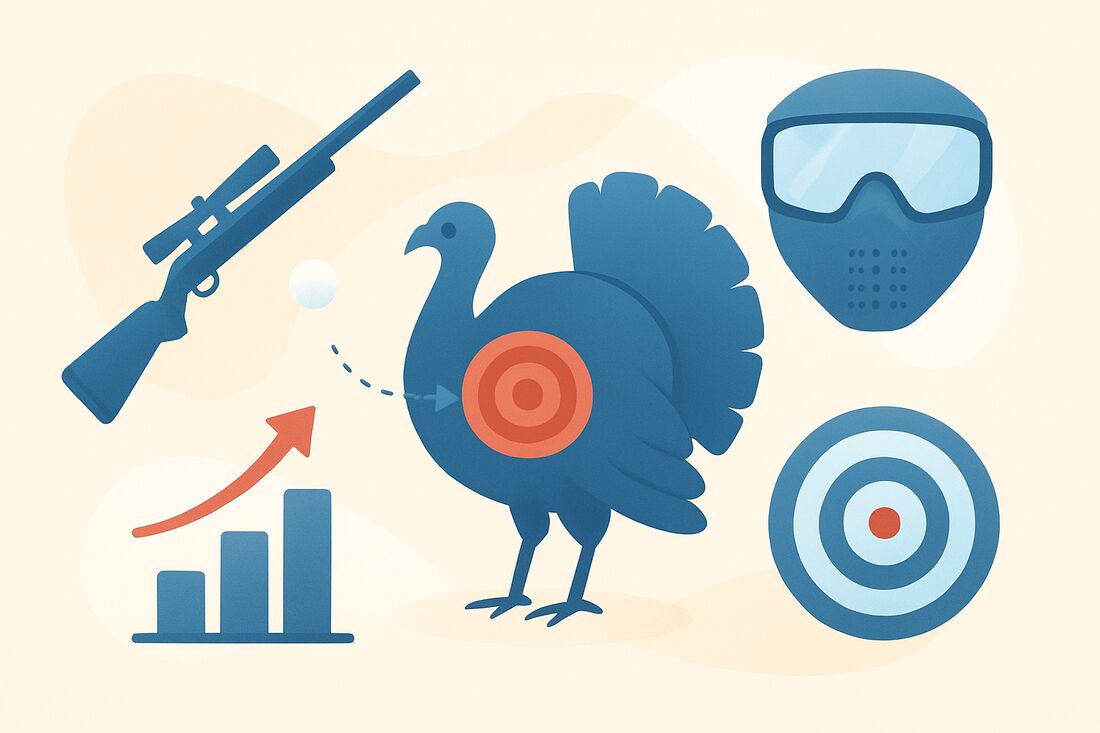
Head and neck are the preferred rifle targets for a quick, humane kill and minimal meat damage.
The anatomy you want to understand is simple: the braincase, the upper cervical spine, the spinal cord and the major blood vessels that feed the head. A direct hit in that zone disables breathing and movement almost instantly while keeping most of the breast meat intact.
If the turkey is facing you, the aim point is very small but clear: place the crosshair between the eyes or on the beak so the bullet enters the brain. Hold slightly low on the beak line because a shot that clips the upper beak can deflect and miss the brain.
For a broadside or a bird quartering away, aim at the junction where the skull meets the neck just behind the head and above the shoulder line. That spot often puts your bullet into the brainstem or upper spinal cord, producing quick incapacitation.
When a turkey is quartering toward you, the angle changes the path to the brain and you must adjust your hold. Use the beak or eye line as your reference and aim a little ahead of center toward the nearest shoulder so the bullet tracks into the skull at an angle.
The head is a very small target and range matters. For most hunters a conservative head/neck range is under 100 yards; comfortable shooters with good optics and calm conditions can work toward 125–150 yards, but the small margin for error grows fast with distance.
Use precise aiming technique: pick a single point in the head and keep the crosshair there as the bird moves, control your breathing, and squeeze the trigger smoothly. Support the rifle with a bipod or shooting sticks and use a low magnification or red dot for close work so you can track movement without losing sight of the target.
Common mistakes include trying headshots at too great a distance, panicked snap shots, forgetting to verify the backdrop, or aiming at the wrong part of the beak instead of the brain. Missing by an inch can cripple the bird and create a long, unnecessary recovery and tracking job.
Good visual aids save time in learning this skill; annotated side and top diagrams that show exact aim circles for each orientation make a big difference. Photos that show a real rifle crosshair on a decoy or silhouette teach what your reticle should look like on a live bird.
Practice and the right gear matter when figuring out where to shoot a turkey with a rifle: a low‑to‑medium magnification scope, a stable shooting rest, a compact rangefinder, and controlled‑expansion game bullets are the basics. For deeper reading on precise angling and points to practice, check this shot placement guide and then replicate those aim points on head‑size targets at the range.
Aim for the base of the skull
The base of the skull — the skull/neck junction — is often the single best point to aim for with a rifle because the bone thins there and the spinal cord sits just beneath. A clean hit here takes out vital neural control and usually stops the bird instantly.
Look for visible landmarks: the junction sits just behind the ear/eye line and appears as the small hump where head meets neck and shoulder. From some angles you can also think of it as the spot just behind the wing where the neck joins the body, which helps you pick the aim point in the field.
From broadside, place your crosshair just behind the head and slightly above the top of the shoulder so the bullet tracks up into the braincase and brainstem. When the bird faces you or is quartering, line up the beak/eye so the bullet will pass through the brain by angling your hold where needed.
Ballistically you want a bullet that will cleanly penetrate thin bone and the upper vertebrae without excessive fragmentation that ruins meat quality. Controlled‑expansion hunting bullets in an appropriate caliber work best; avoid super‑light varmint projectiles that shred and scatter.
Build confidence with drills: start at close range on a head‑sized target and step back in measured increments, then practice the same aim points on decoys in different orientations. Make targets roughly the size of a turkey head and work from 25 to 100 yards before trying any field shots at distance.
ALWAYS check state/regional rules—many states restrict rifle use for turkeys or have specific seasons/methods.
Before you take a shot verify local rules and confirm a safe backstop; state fish and wildlife pages describe permitted methods and vital zones for legal shots. For a concise run‑down of legal and ethical vital areas, review official resources on vital areas so you know what authorities consider acceptable.
Chest shot for distance (when head not feasible)
If a head or neck shot is not possible because of distance, visibility, or the bird’s movement, the upper breast and heart‑lung region are the primary alternatives. Aim to put the bullet into the center of the breast just behind the keel bone to reach the heart and lungs.
The center of the breast can be easier to see and larger to hit, but you must know when to aim high or low depending on posture. Broadside birds take the center of the breast; birds quartering away need a slightly forward and up hold so the bullet reaches the vitals instead of passing under the keel.
Chest shots are more forgiving and work at longer ranges, but they come with tradeoffs: larger meat damage and sometimes a slightly slower incapacitation if the shot is marginal. Expect heavier blood loss and potentially a flight or short run before the bird drops if you miss the perfect center.
Exactly where to place the crosshair depends on angle: with a broadside turkey put the crosshair just behind the keel at the deepest part of the breast, and with a quartering bird hold to the forward corner of the breast to intercept the heart. A frontal bird demands a lower center‑chest hold to make the bullet track through lungs toward the rear.
Pick bullets that open and transfer energy to reach lungs and heart without fragmenting wildly and ruining meat. Conventional game bullets that expand reliably are the right choice; avoid frangible varmint rounds that break apart on thin bones and leave small, scattered fragments.
Set up your rifle for these shots: choose a hunting zero suited to your typical range, use a rangefinder to confirm distance, and keep scope magnification moderate so you can acquire targets quickly. Expect drop at longer ranges, plan for a safe follow‑up shot if needed, and have a tracking plan because a hit turkey can run; practice follow‑up scenarios at the range to know your limits.
For additional insights on non‑head options and long‑range considerations see trusted field advice like these shot placement tips and then work those holds on paper and steel until they are repeatable in calm conditions.
Aim slightly ahead of moving turkey
When a turkey is moving you cannot simply point at its current position; you must lead the bird depending on its speed, angle and your distance. The closer the bird and the faster it moves, the more you must place the crosshair ahead of its head or center of mass so the bullet and bird intersect in the same space.
Smooth tracking is key: swing the rifle with the bird, set a steady pace, and place the reticle a short distance ahead of the bird’s path before you break the shot. For close work use a red‑dot or very low magnification to keep the moving target visible and the lead consistent.
Train with moving target drills and simulated turkey silhouettes to judge how much lead you need at different ranges and angles. Never attempt a moving lead shot beyond your practiced ability; a bad lead often cripples, which is the worst outcome for both hunter and bird.
Head or neck only (ethical shot placement)
The core ethical rule is simple: only take shots that will likely produce a quick, humane kill and minimize suffering. If the only realistic kill shot is head or neck then that is where you should aim; if you cannot clearly see those areas, pass on the shot.
Do not take wing or leg shots — they cripple rather than kill and create difficult tracking and recovery tasks. Also avoid risky long head shots that exceed your proven range, and avoid rounds that will shred the meat if recovery is a priority.
Before you shoot confirm that rifles are legal for turkeys where you hunt, know your effective range and drop, and always identify a safe backstop and zone of fire. If you hit and the bird runs, mark the last seen location, wait a sensible time, then track methodically looking for blood and feathers; call for help if tracking alone is unsafe.
Practice decision drills at the range so the “shoot or pass” decision becomes automatic under pressure. It is always better to pass than to wound — cleaner kills are ethical, legal, and make hunting rewarding for everyone.
How to practice: work head‑sized targets at close and medium ranges, practice moving silhouette drills, and run simulated follow‑up shots so you know where to place a second round. Keep a checklist at your range sessions — optics, rest, rangefinder, proper ammo — and build your confidence step by step before you try these shots in the field.
What People Ask Most
Where to shoot a turkey with a rifle?
Hunters should prioritize humane, quick kills by aiming for the bird’s vital area, while following all local laws and regulations. Always confirm you have a clear, safe backstop and positive identification before shooting.
Is it legal to shoot a turkey with a rifle?
That depends on your state or region—many places restrict turkey hunting to shotguns, archery, or specific firearms. Check local hunting regulations and season rules before you go out.
What distance is safe and ethical for shooting a turkey with a rifle?
Stay within a range where you can consistently place an accurate, humane shot and control your bullet’s path. If you’re unsure of your effective range, practice at the range and only take shots you can make cleanly.
Where should you avoid shooting a turkey with a rifle?
Avoid non-vital areas that can wound and not quickly kill the bird, and never shoot at targets you cannot positively identify or that lack a safe backdrop. Don’t take risky shots through brush, uphill, or over people.
How can a beginner improve shot placement when hunting turkeys with a rifle?
Practice shooting from hunting positions and learn turkey behavior so you can get a clear, steady rest. Use steady fundamentals—sight picture, breathing, and follow-through—and only shoot when you’re confident of a humane hit.
What safety steps should be followed when using a rifle for turkey hunting?
Always treat the rifle as loaded, keep the muzzle pointed in a safe direction, and be certain of your target and what’s beyond it. Wear visible hunter colors if required and communicate with nearby hunters to avoid accidents.
What are common beginner mistakes when choosing where to shoot a turkey with a rifle?
Common errors include taking shots beyond your effective range, shooting at partially obscured birds, and not checking legal restrictions on firearm type. Avoid rushing shots and prioritize a clean, ethical harvest over a difficult shot.
Final Thoughts on Rifle Turkey Shot Placement
You came here wanting to know precisely where to shoot a turkey with a rifle — and the short, honest answer is head/neck first, chest as the backup. If you remember one number from this guide, 270, think of it as a reminder to be conservative with range and deliberate with every shot; we showed aim points for frontal, broadside, and quartering angles so you can put rounds where they count.
That focus gives you fast, humane results and saves more meat, but don’t forget a realistic caution: pushing tiny head shots beyond your proven limits or overlooking legal rules raises the risk of wounding. The piece covered practical technique, gear, and drills so responsible rifle hunters — especially those who practice with rests, optics, and rangefinders — know when a shot is ethical and effective.
You came with a question about where to aim; you’ll leave with clear aim points, leading tips, and an ethical checklist to help you make better calls in the field. Take time on the range, build confidence, and you’ll be ready to shoot cleanly and ethically next season.