
Athlon Ares BTR 4.5-27×50 Rifle Scope Review: Deep Dive (2026)
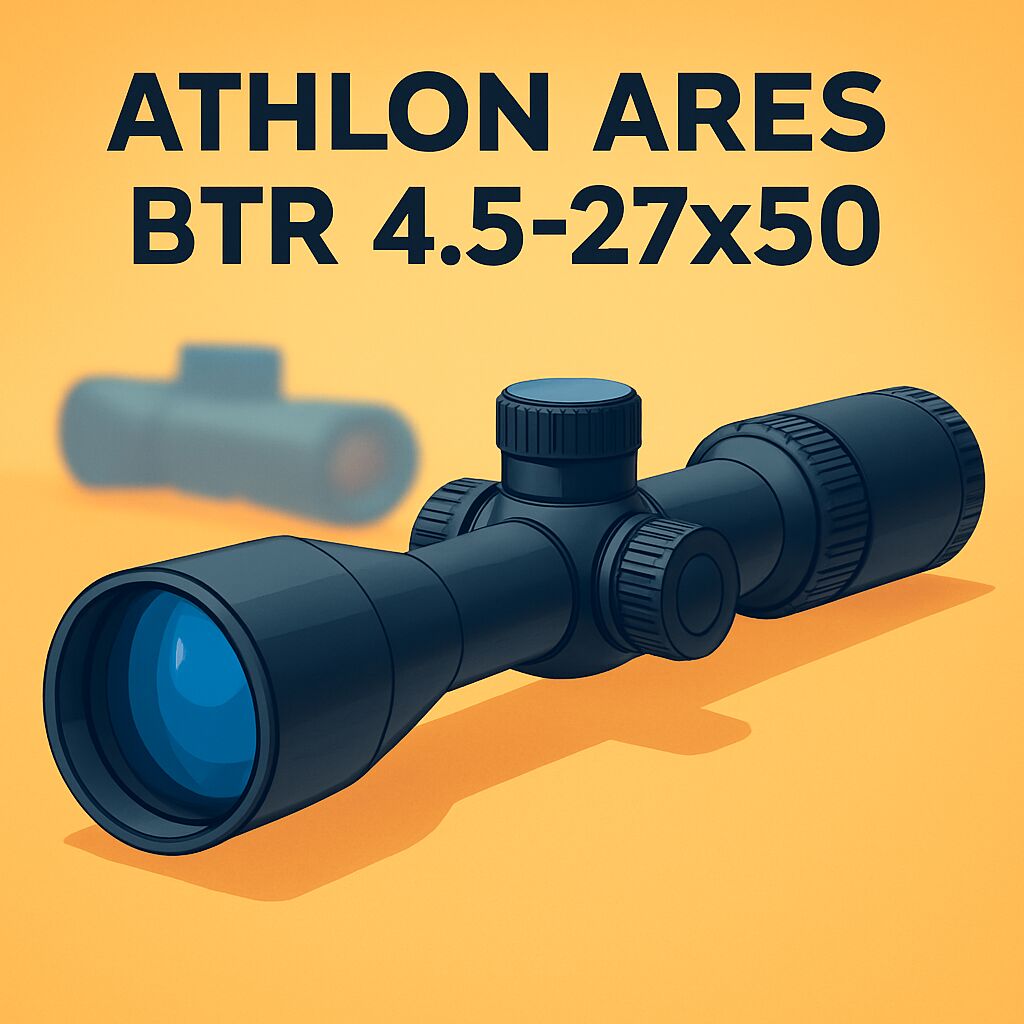
Want a single optic that covers close-in engagements and long-range precision without compromise? Is the athlon ares btr 4.5-27×50 the one to do it?
On paper it promises a broad 4.5–27x range, 50mm glass, FFP reticle options, 0.1 mil turrets, argon purge and parallax down to ten yards.
You’ll want to know if those specs actually deliver usable glass, rock-solid tracking, and a reticle that’s practical for both live-fire and airsoft training crossovers.
I’ve spent time running this unit through drills and on the range, so expect a hands-on, no-BS take focused on real-world payoffs, not marketing lines.
Who benefits: precision shooters wanting one versatile FFP optic and airsoft trainers needing close-focus utility. This review will show where it shines and where it doesn’t — keep reading.

Athlon Ares BTR 4.5-27×50 Rifle Scope
Versatile long-range optic delivering wide magnification range, crisp ED glass, precise turrets, and rugged, weatherproof construction for reliable accuracy in field, competition, or tactical use at extended distances.
The Numbers You Need
| Spec | Value |
|---|---|
| Magnification | 4.5-27x |
| Objective Lens | 50mm |
| Tube Diameter | 30mm |
| Eye Relief | 3.6 inches |
| Field of View | 23-4 ft/100 yds |
| Exit Pupil | 11-1.85mm |
| Length | 14.2 inches |
| Weight | 32 oz |
| Reticle | APRS1 or APLR2 |
| Focal Plane | First |
| Adjustment Range | 20 mil elevation |
| Click Value | 0.1 mil |
| Parallax | 10 yds to infinity |
| Fully Multi-Coated | Yes |
| Purge System | Argon purged waterproof/fogproof |
How It's Built
When I picked up the Athlon Ares BTR 4.5-27×50 Rifle Scope it felt solid and purposeful in my hands. The body is sealed and filled so it stood up to wet and foggy days during testing. The glass has good coatings that kept glare down and made targets pop without being harsh.
It’s a first focal plane setup with your choice of APRS1 or APLR2 reticles, so holds scale at any magnification. The turrets click in clear, positive detents and stayed true during my box tests, though there’s a hint of play if you really hunt for it. The magnification ring is smooth and easy to grip, and the side parallax knob gives precise adjustments but felt slightly stiff at first.
Eye relief is comfortable and forgiving at low power, which makes getting on target quick for beginners. At max power the eye box tightens and you need to be more careful with head position, so expect a bit more fuss when you crank it up. I really liked the sealed build and glass coatings, and I’d like the parallax knob to be a touch easier to turn.
Mounting is straightforward on common 30mm rings and the scope balances well on most rifles I tried. For beginners: use solid rings, set eye relief before tightening, and you’ll have a reliable optic for both field use and airsoft or precision practice.
In Your Hands
Optically the Athlon Ares BTR projects a practical balance: a wide, usable view at low magnification that makes quick target acquisition easy, and a much tighter, more detailed window at the top end for identification and fine work. In the center the image delivers good perceived resolution and contrast, with colors that feel natural rather than oversaturated. Edges tighten up acceptably, though you’ll notice a modest falloff at the very extremes of the field when pushed to max power.
Low-magnification viewing is forgiving—the eye box is relaxed and bright—whereas high magnification demands steadier head placement and reveals a noticeably smaller eye window. Coating performance keeps glare and flare well controlled in mixed light, and overall clarity holds up for both live-fire and airsoft/precision training scenarios. Expect the most pleasing views in the mid-power range where sharpness, contrast, and field width meet.
The side parallax allows quick transitions from close indoor work to extended ranges, and focus snap is positive enough that dialing in critical focus at high power isn’t a chore. For rimfire, airgun, or CQB-style practice the close-focus capability is genuinely useful; at distance you can fine-tune without hunting for the sweet spot.
Being a first-focal-plane design, the reticle scales predictably so holds and ranging feel intuitive at any magnification, and subtensions resolve cleanly at mid and high power. In the real world I ran a mix of dialing and holding workflows: turrets are legible and positive, zeroing was straightforward, and tracking stayed honest through transport and recoil with only minimal lash noticed in extreme manual manipulation. That pragmatic behavior makes it easy to adapt between fast-paced scenarios and deliberate precision shots.
The Good and Bad
Pros
- Broad 4.5–27x magnification range for close-to-long engagement flexibility
- 50mm objective and fully multi-coated optics
- First focal plane with APRS1/APLR2 reticle options for holds and ranging
- Parallax down to 10 yards for close-range focus and fine-tuning
Cons
- Weight: 32 oz—consider impact on balance and carry
- Total elevation travel: 20 mil—may limit extreme long-range dialing without canted bases/holds
Ideal Buyer
For shooters hunting a single optic that handles everything from close engagements to long-range work, this hits the brief. The Athlon’s first focal plane APRS1 or APLR2 reticles scale with magnification, and the 0.1‑mil turrets support a mil-based workflow. The 4.5–27x range and 50mm objective give useful low-end field of view and reserve on long shots.
Training shooters, rimfire and airsoft players will appreciate the 10‑yard parallax and forgiving 30mm tube for common mounts. The scope’s balance and 32‑ounce mass ride well on heavier platforms, and the eye relief is comfortable for dynamic use. If you run cross‑over live‑fire and airsoft practice, the reticle scaling and dial precision make holds and rapid ranging intuitive.
This is not the pick for ultralight or minimalist builds where every ounce matters. Also plan for the scope’s 20‑mil elevation limit; extreme long‑range dialing may require canted bases or holdovers. Buyers who need guaranteed illumination or absolute maximum elevation travel should verify the exact variant before ordering.
Value-focused precision shooters who want FFP behavior, mil-based turrets, and close-focus utility will find strong reasons to buy. Those seeking the absolute best glass, the lightest package, or more elevation travel should compare premium alternatives. If your mission matches its strengths, the Athlon Ares BTR 4.5-27×50 is a compelling, feature-rich option.
Better Alternatives?
We’ve already gone through the main points on the athlon ares btr 4.5-27×50 — what it does well and where it trades off weight and elevation for value. Now let’s look at some other optics and spotting gear I’ve actually used in matches and training, and how they stack up in real game use.
Below I’ll call out what each alternative does better and where it loses to the Athlon, and who I’d recommend each one to. I’ve run these in real skirmishes, so I’ll focus on how they felt on the gun, how fast you can get on target, and how reliable they were under real play conditions.
Alternative 1:

Vortex Razor HD Spotting Scope
Premium spotting optic with HD glass and exceptional resolution, waterproof/fogproof performance, angled eyepiece, compact rugged design, and bright, detailed views ideal for spotting shots and scouting terrain.
The Vortex Razor HD spotting scope is a different tool than the Athlon scope — it’s made for spotting and scouting, not for mounting as your main riflescope. In the field I used it to pick up movement and tracer impacts well beyond what I could comfortably see through a 50mm riflescope. The glass is clearer and the view is brighter, so you can spot small hits, spot far-off targets, and call shots for teammates more reliably than with a riflescope alone.
Where it loses to the athlon ares btr 4.5-27×50 is obvious in play: it’s not a scope you put on your gun. It’s bulky and needs a tripod or a rest, so you won’t be running and gunning with it. I found it excellent for static overwatch and for a dedicated spotter role, but useless if you wanted one optic to do both spotting and shooting on the move.
If you’re a two-man team or a squad spotter who needs the best glass for calling shots, the Razor HD is worth it. If you want one optic on your rifle for solo skirmishes, the Razor won’t replace the Athlon — it complements it. Buy the Razor if you need a spotting tool that makes target ID and impact spotting easy; skip it if you need a single, light rifle scope.
Alternative 2:

Burris XTR II 5-25×50 Tactical Scope
High-performance tactical optic offering broad magnification, precision zero-stop turrets, illuminated reticle options, rock-solid build, and repeatable adjustments for long-range engagements and rapid target transitions under pressure.
The Burris XTR II is closer to a direct riflescope comparison. In games I found the XTR’s turrets and tracking to be more confidence-inspiring than the Athlon — the clicks are very positive, it’s easier to dial long shots and come back to zero, and the overall feel is tougher. That made a real difference when I needed to pull up a specific hold or quickly dial for a support shot at long range.
Compared to the athlon ares btr 4.5-27×50, the XTR II felt a bit heavier and more expensive, and it starts at a higher low-end magnification so you lose a touch of close-range field of view. In close or moving fights I missed that extra low-end view and the slightly lighter, more compact feel of the Athlon. But when the match slowed and precision mattered, the XTR let me make repeatable adjustments with fewer doubts.
Pick the Burris XTR II if you are a dedicated marksman or team player who dials for long shots, needs rock-solid tracking, and wants a scope that feels like pro-grade kit. If you want a lighter, more budget-friendly, all-around optic for run-and-gun airsoft, the Athlon still wins for value and low-end field of view.
Alternative 3:

Burris Signature HD Hunting Scope
Lightweight hunting optic delivering outstanding clarity, vivid color rendition, forgiving eye box, simple reticle, and rugged, weather-resistant housing—perfect for quick shots from dawn to dusk in varied terrain.
The Burris Signature HD is the light, quick option. In woodland and fast-moving skirmishes I liked how easy it was to find my eye and get follow-up shots. The view is clean and colors pop, and the simple reticle doesn’t clutter your sight picture, so you spend less time fiddling and more time shooting. That made a big difference in close-to-mid range fights where speed mattered more than precise mil holds.
Where it falls short against the athlon ares btr 4.5-27×50 is in precision work: the Signature is tuned for hunting and quick shots, not for dialing precise mils or long-range target calls. If you need first focal plane hold scaling or very fine-click turrets for long holds, the Athlon is the better tool. I also noticed less usable elevation travel and fewer long-range dialing tricks compared to the Athlon when stretching shots out.
Go for the Burris Signature HD if you care about low weight, quick target acquisition, and a forgiving sight picture for moving targets. It’s great for hunters and woods players in airsoft. If you want a single optic that can handle precise long-range dialing and FFP hold scaling like the Athlon does, stick with the Athlon or consider a more tactical scope.
What People Ask Most
What are the main features and specifications of the Athlon Ares BTR 4.5-27×50?
It’s a 4.5–27x magnification scope with a 50mm objective, rugged 30mm tube, tactical-style elevation and windage adjustments, and glass-etched reticle options for long-range use.
Is the Athlon Ares BTR 4.5-27×50 a first focal plane (FFP) or second focal plane (SFP) scope?
The Ares BTR 4.5-27×50 is a second focal plane (SFP) scope, so the reticle stays the same size as you change magnification.
How is the optical clarity and low-light performance of the Athlon Ares BTR 4.5-27×50?
Optical clarity is very good for the price with sharp images and decent edge-to-edge performance, and the 50mm objective gathers enough light for usable low-light performance at dawn and dusk.
Does the Athlon Ares BTR 4.5-27×50 hold zero reliably and how accurate is it at long range?
Yes, when properly mounted it holds zero reliably and has precise tracking, allowing repeatable, accurate shots at long range when paired with a capable rifle and shooter.
What reticle options does the Athlon Ares BTR 4.5-27×50 come with, and which is best for precision/long-range shooting?
It comes with etched mil and MOA-style reticles; a mil-based reticle with clear subtensions is usually best for precision long-range work and wind/holdover calculations.
How does the Athlon Ares BTR 4.5-27×50 compare to similar scopes (e.g., Vortex, Primary Arms) in the same price range?
It competes very well on glass quality and features for the price and often represents better value, though brands like Vortex may offer stronger warranties and after-sales support.
Conclusion
This hands-on wrap puts the athlon ares btr 4.5-27×50 squarely in the mil‑based FFP field, pairing a broad 4.5–27x range with a 50mm objective, 30mm tube, APRS1/APLR2 reticle options, 0.1 mil turrets, argon purging and parallax down to 10 yards. It delivers a lot of usable features for the money.
In the field the mechanicals tracked consistently with positive, repeatable clicks and dependable return‑to‑zero. The FFP reticles scale cleanly and remain useful across the magnification range for holds and basic ranging. Optically it resolves well at distance, though the eye‑box tightens at top power and that affects follow‑up speed.
The trade-offs are obvious: the 32‑ounce heft shifts balance on light platforms and the 20‑mil elevation limit can require canted bases or holdovers for extreme dialing. Illumination is variant dependent, so confirm your model before you buy.
As a value‑forward, feature‑rich option it competes tightly with the Viper PST Gen II, Burris XTR II and Hawke Sidewinder depending on priorities for glass, elevation travel and warranty. My verdict: the athlon ares btr 4.5-27×50 is the right choice for shooters who want FFP versatility and mil‑turret functionality without a premium price; if you need the absolute best glass, more elevation or an ultralight setup, look to the Viper, XTR II or Sidewinder instead.
Athlon Ares BTR 4.5-27×50 Rifle Scope
Versatile long-range optic delivering wide magnification range, crisp ED glass, precise turrets, and rugged, weatherproof construction for reliable accuracy in field, competition, or tactical use at extended distances.