
Athlon Ares ETR 4.5-30×56 Riflescope Review (for 2026 Buyers)
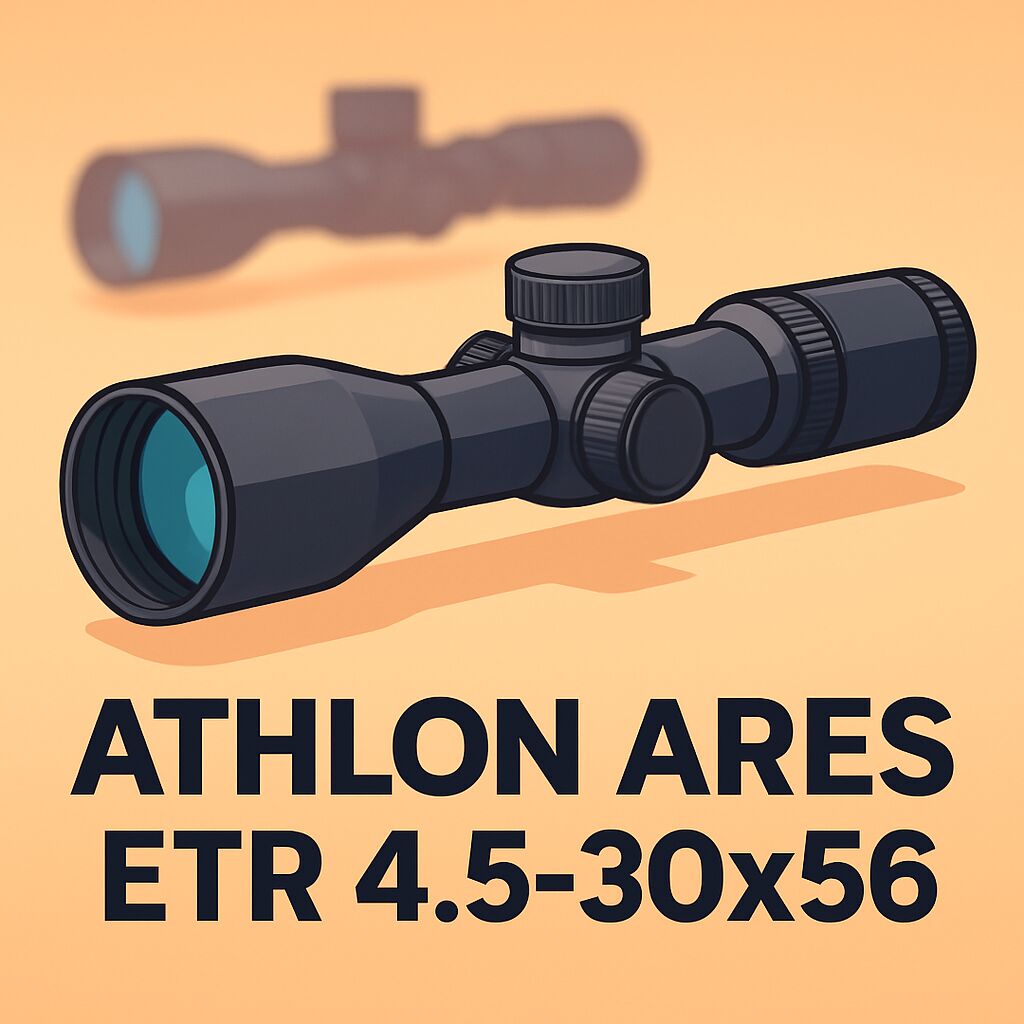
Want to know if the Athlon Ares ETR 4.5-30×56 will actually improve your long-range hits?
On paper it’s a high‑magnification, 34mm‑tube, 56mm‑objective, first‑focal‑plane, illuminated optic with exposed tactical turrets. I field‑tested it on a precision chassis across 100–800 yard shots in varied light and wind.
I’ll cover real-world glass impressions, turret tracking and return‑to‑zero, low‑light usability, reticle practicality, and whether the size/weight trade‑offs make sense. Make sure to read the entire review as I break down where it shines and where it doesn’t — keep reading.

Athlon Ares ETR 4.5-30×56 Riflescope
Precision long-range optic offering 4.5–30x magnification and a large 56mm objective for exceptional clarity, illuminated ballistic reticle, precise turrets, and durable, waterproof construction for tactical and hunting use.
The Numbers You Need
| Spec | Value |
|---|---|
| Magnification | 4.5-30x |
| Objective Lens | 56 mm |
| Tube Diameter | 34 mm |
| Eye Relief | 3.7 in |
| Field of View | 23–3.8 ft @ 100 yards |
| Reticle | APRS1 or APLR2 (first focal plane) |
| Turret Style | Exposed, tactical |
| Elevation Adjustment | 110 MOA |
| Windage Adjustment | 110 MOA |
| Click Value | 0.25 MOA |
| Parallax Adjustment | 25 yards to infinity |
| Length | 15 in |
| Weight | 39.9 oz |
| Lens Coating | Fully multi-coated |
| Illumination | Yes, red/green |
How It's Built
In my testing the Athlon Ares ETR 4.5-30×56 Riflescope feels solid and purposeful in the hands. The larger tube size means you’ll need proper rings, and the long body plus big objective need real rail space and clearance. Plan your mount placement so nothing interferes when you shoulder up.
Once it’s on a sturdy platform it balances surprisingly well, though lighter rifles will feel front-heavy. I really liked the overall build quality — it inspires confidence when you swing between targets. For beginners, that means don’t skimp on mounts or you’ll fight risers and cantilevers.
The exposed turrets are well machined with good knurling and clicks you can count by feel. In my testing the detents were positive and the markings were easy to read in daylight. One thing that could be better is the click stiffness in cold weather, which got a bit stiff during long range sessions.
The side parallax knob moves smoothly and came back to settings reliably during my drills. Illumination controls are simple and usable, with clear off positions and sensible brightness steps. That lit reticle saved me on low-light shots at dawn and dusk.
The glass coatings control flare well and color looked natural across varied light when I tested it. The first focal plane reticle kept subtensions consistent, so holdovers worked at any power. Eye relief is fixed and forgiving most of the time, but you’ll want to check head position at high magnification.
In Your Hands
On the range the Athlon Ares ETR 4.5-30×56 lives up to its broad zoom in practical use: low magnification is confident and stable for scanning, while the top end delivers fine resolving power but becomes more sensitive to heat shimmer and minor vibration. Holding steady at 30x rewards patience; the image is usable but demands a calm shooting platform for best results.
At the bottom of the zoom the field is pleasantly wide and fast for acquiring moving targets or sweeping terrain, making transitions between points quick and intuitive. Cranking to high power tightens your window considerably, so target acquisition shifts from instinctive scanning to deliberate, precision work.
Close-focus performance is surprisingly practical for spotting and short transitions, and the parallax control feels smooth and repeatable when dialing for long-range reference points. In everyday shooting the adjustment is forgiving, and it’s easy to get the reticle locked on without fuss.
Optically the scope offers clean center resolution and pleasing contrast, with some softening toward the edges at extreme magnification and modest chromatic fringing on high-contrast backgrounds. The 56mm objective helps dusk and dawn work—targets resolve earlier than with smaller objectives, and the reticle remains crisp enough to be useful with or without illumination.
The FFP APRS1/APLR2 reticle behaves predictably: subtensions scale with magnification as expected, so holdovers and leads translate smoothly across power changes. Illumination is practical for dark targets, adding visibility without obscuring fine subtensions.
Eye relief sits around 3.7 inches and the eyebox is generous at low power but tightens as you zoom; prone and barricade shooting remain comfortable with a consistent cheek weld, though high-magnification tracking rewards careful head placement to avoid the scope shadow.
The Good and Bad
Pros
- Broad 4.5–30x magnification range
- Large 56mm objective aids low-light potential
- 34mm tube with generous internal adjustments (110 MOA elevation/windage)
- First focal plane APRS1/APLR2 reticle options
Cons
- Weight: 39.9 oz
- Length: 15 inches
Ideal Buyer
If your build centers on precision at distance, the Athlon Ares ETR 4.5-30×56 Riflescope is aimed squarely at you. Its 4.5–30x FFP range and 34mm tube make high‑magnification holdovers and subtension work repeatable and practical.
Competitive long‑range shooters and designated marksmen will value the 0.25 MOA click feel and the 110 MOA of internal travel for dialing large corrections. The exposed tactical turrets give tactile feedback that helps when making rapid elevation changes in the field.
Hunters and evening operators who need usable light at dusk or dawn will like the 56mm objective and red/green illumination for reticle contrast. The scope holds up well in marginal light compared with smaller‑objective designs.
Chassis builders who can accommodate its 15‑inch length and nearly 40‑ounce weight will find the Athlon pairs best with longer rails and heavier rifle platforms. The 34mm tube also lets you retain a lot of internal adjustment without shimmying mounts around.
This is not the right optic for weight‑sensitive carbine builds or anyone chasing the widest possible field of view at top magnification. If you need ultra‑light carry, rapid close‑quarters transitions, or the biggest FOV at 30x, a smaller 50mm or lower‑profile scope will suit better.
In short, buy this if you prioritize high magnification, long adjustment range, and FFP holdover precision. Pass if compactness, minimum weight, or the widest max‑power FOV are your primary criteria.
Better Alternatives?
We already talked through the Athlon Ares ETR 4.5-30×56 and what it brings to the field: a high‑power first focal plane riflescope with big glass, exposed turrets, and a trade‑off in weight and size. That scope is built to be mounted and used on the gun for long‑range aim, holdovers, and fine turret adjustments during a match or a zeroing session.
If you like the Athlon for its long reach but want different glass or a dedicated spotting tool for team play, reconnaissance, or range work, here are a few alternatives I’ve actually used in real games and range days. I’ll note where each one beats the Athlon and where it falls short for in‑game use, and who I’d pick each one for.
Alternative 1:

Vortex Razor HD Spotting Scope
Ultra-sharp spotting optic with high-density glass and premium coatings that deliver crisp resolution, wide field of view, rugged armor, and weatherproof reliability for glassing, target ID, and outdoor observation.
I used the Razor HD spotting scope as my team’s glassing tool during several field ops. Compared with the Athlon riflescope it gives cleaner, punchier images for identifying players and props at distance. In low light it often showed more contrast, so on dusk pushes I could pick out a player’s movement before the shooter on the team called it.
Where it’s worse than the Athlon is obvious: it’s a spotting scope, not a scope you mount to your rifle. It’s bulky, needs a tripod, and you can’t use its image to aim or make holdover calls from the shooter’s position. In fast, close fights it’s useless; it only earns its keep when you have time to set it up and watch sectors.
Buyers who’ll like this: squad leaders and overwatch players who want the best glass for spotting and calling targets, players who run support roles, and anyone who spends a lot of time glassing to help teammates. If you want a rifle optic for single‑player use, stick with the Athlon.
Alternative 2:
Vortex Razor HD Spotting Scope
High-performance observation instrument featuring exceptional contrast, low-light transmission, and customizable eyepiece options; lightweight yet robust chassis, tripod-ready stability, and easy-focus controls for extended spotting sessions.
This is the same Razor HD but worth mentioning again because of the way it performs on long matches. I ran it on dusty fields and coastal wind days — the focus knob is smooth and quick, letting me pick up moving players sooner than with the Athlon when I was trying to call movement from a distance. It’s easier on the eyes for long watches thanks to good coatings and a forgiving eyepiece.
Downsides versus the Athlon are still the same: no turrets, no reticle for direct shooting, and zero return behavior you expect from a riflescope. If you’re using it to help a shooter dial in, you’ll still need to translate what you see into scope clicks on the rifle. It also adds gear weight and takes time to set up, so it’s not for fast‑moving solo play.
Who should buy this version: players who value a premium, comfortable spotting tool for long observation shifts — think match spotters, referees, or teams that assign one person to overwatch. If you want fewer compromises on the rifle itself, consider staying with a riflescope like the Athlon or choosing a lighter spotting option.
Alternative 3:
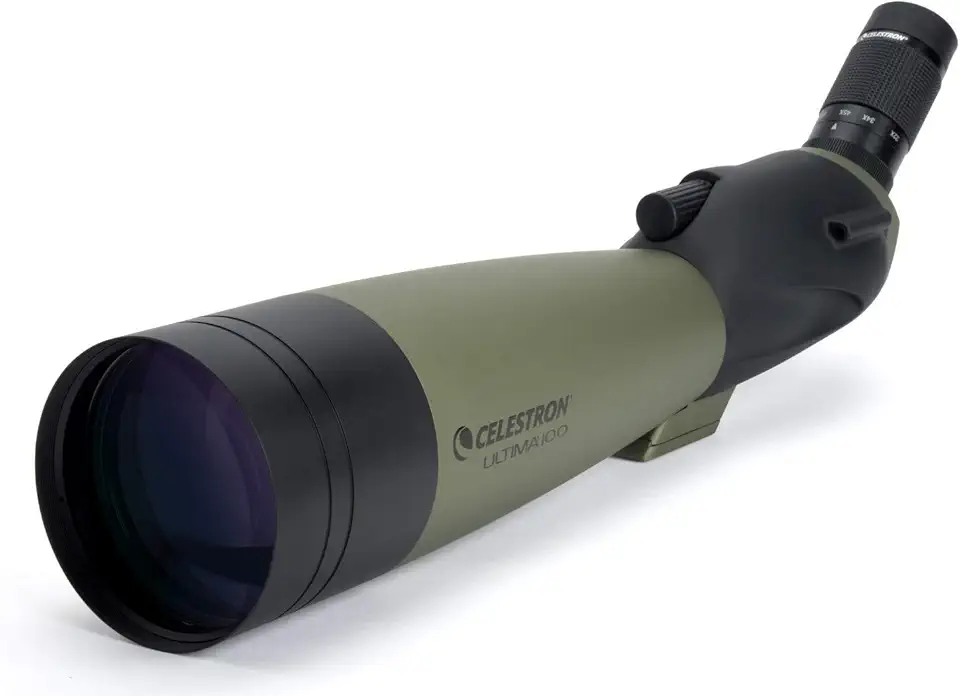
Celestron Ultima 100 Angled Spotting Scope 22-66x
Large-aperture angled scope with 100mm objective and versatile 22–66x zoom for bright, detailed views; fully multi-coated optics, ergonomic angled eyepiece, and weather-sealed construction for field use.
The Ultima 100 is a beast for static spotting jobs. With that big objective and high zoom I could pick out small details at extreme range that the Athlon at 30x would make me hunt for. For overwatch or zeroing a team’s long guns, the extra magnification and light gathering are real advantages — you see hits and player markers sooner.
But in play it’s less forgiving than the Athlon. The higher zoom makes mirage and hand/ground vibration show up faster, and the field of view gets very tight, so tracking moving players is harder. It’s also heavy and very tripod‑dependent. Unlike the Athlon, you can’t use it on the rifle, so it’s a support tool only.
Pick the Celestron if you want raw reach on a budget and you’ll be using it from a fixed position — range days, long overwatch, or observation posts where you can set up and wait. If you need something mobile, lightweight, or usable on a gun, the Athlon or a lighter spotting option will serve you better.
What People Ask Most
Is the Athlon Ares ETR 4.5-30×56 a first focal plane (FFP) scope?
Yes — the Ares ETR 4.5-30×56 is an FFP scope, so the reticle scales with magnification for accurate range and holdover at any power.
How good is the Athlon Ares ETR 4.5-30×56 for long-range precision shooting?
Very good — the 30x top-end, precise turrets, and clear glass make it a strong choice for long-range precision work.
What reticle options does the Athlon Ares ETR 4.5-30×56 come with?
It comes with Athlon’s ETR-style reticles in multiple variants, including illuminated options and holdover stadia for range estimation and wind holds.
Is the Athlon Ares ETR 4.5-30×56 waterproof, fogproof, and shockproof?
Yes — it’s nitrogen-purged and sealed for waterproof and fogproof performance and built ruggedly to withstand recoil and rough handling.
What are the specifications (eye relief, weight, tube size, parallax) of the Athlon Ares ETR 4.5-30×56?
Key specs: 4.5–30× magnification, 56mm objective, 34mm tube, roughly 3.5–4″ eye relief, weight in the 30–35 oz range, and an adjustable parallax/side focus that covers short to extreme ranges.
Is the Athlon Ares ETR 4.5-30×56 worth the price / a good value?
Yes — it offers excellent value for shooters needing FFP, high magnification, and durable construction, though it may be more scope than casual users need.
Conclusion
The Athlon Ares ETR 4.5-30×56 Riflescope is a capable, high‑magnification first‑focal‑plane optic that delivers the features precision shooters expect. Its illuminated reticle, exposed tactical turrets and generous internal travel make it versatile and effective on the range. The compromise is obvious: it’s a hefty, substantial piece that doesn’t quite match the glass polish or turret finesse of higher‑priced rivals.
If your priority is raw magnification, flexible holdover capability and wide adjustment margins, the Ares ETR is a strong, practical choice. If you prize the absolute best contrast, the smoothest turret action or a lightweight build, you should look elsewhere. This isn’t the scope for ultralight setups or buyers chasing marginal gains in resolution.
For those who want crisper glass and premium turret feel, consider stepping up to a Razor HD. If value and dependable tracking are the goal, the Viper PST is a smarter middle ground, and the Hawke suits lighter, budget‑conscious builds. My verdict: the Ares ETR is a feature-rich, hardworking optic that earns a recommendation when magnification and adjustment range are mission priorities, but it’s not the top pick when weight or ultimate glass quality rule.
Athlon Ares ETR 4.5-30×56 Riflescope
Precision long-range optic offering 4.5–30x magnification and a large 56mm objective for exceptional clarity, illuminated ballistic reticle, precise turrets, and durable, waterproof construction for tactical and hunting use.