
Athlon Helos BTR Gen2 2-12×42 Rifle Scope Review – Is It Still Worth It in 2026?
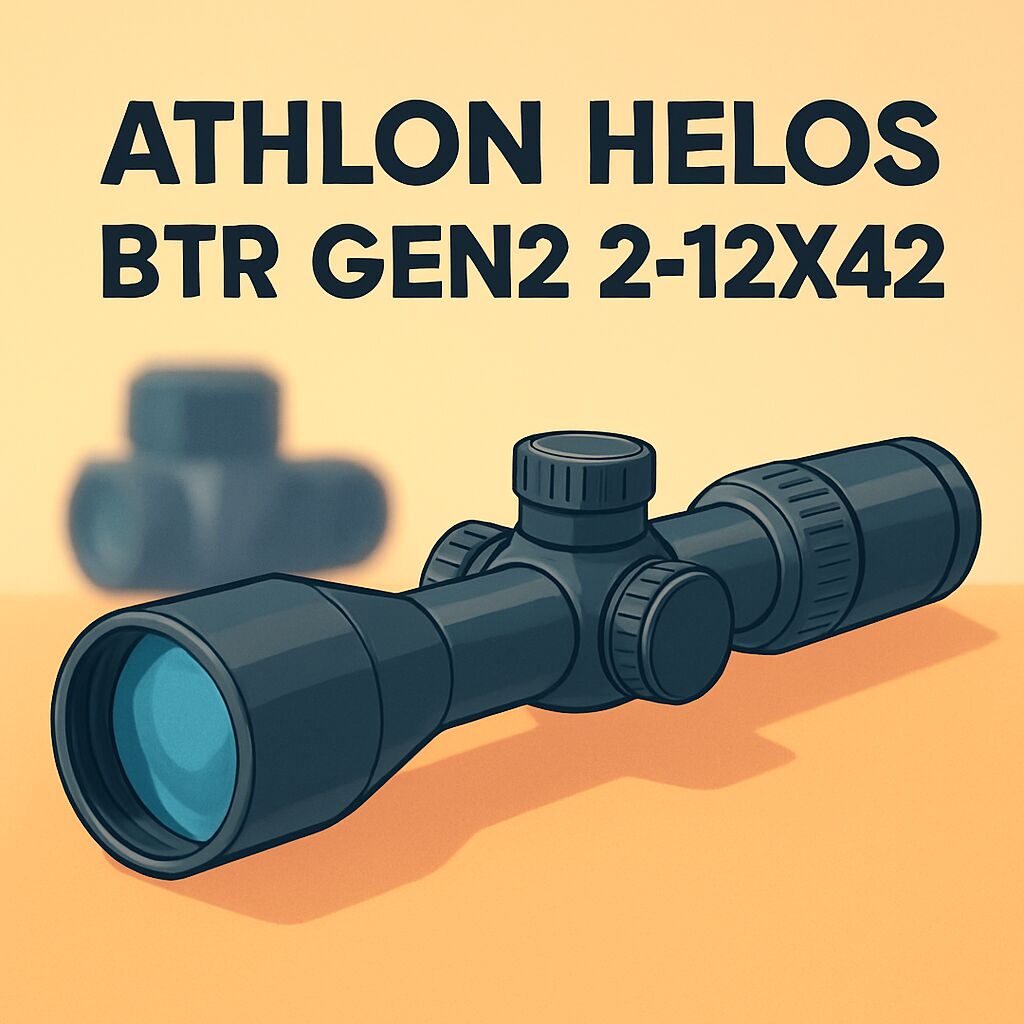
Want one optic that’s fast enough for close snaps yet precise enough for longer shots in the same game?
The Athlon Helos BTR Gen2 2-12×42 Rifle Scope is pitched as that do-it-all optic, and it’s aimed at players who need both speed and reach without swapping gear mid-match.
If you play mixed-distance fields and value quick target acquisition, low-light usability, and a scope that won’t lose its zero, this review is made for you — I even ran the Helos through real field drills to see how it holds up.
We’ll explore close-in 2x usability, high-mag precision, reticle illumination, turret behavior, and balance on common airsoft platforms — make sure to read the entire review as we dig into those questions.

Athlon Helos BTR Gen2 2-12×42 Rifle Scope
Versatile 2-12x magnification with a 42mm objective delivers clear, bright glass and a ballistic drop-compensating reticle for fast holdovers. Rugged, lightweight construction and forgiving eye relief for dynamic engagements.
The Numbers You Need
| Spec | Value |
|---|---|
| Magnification | 2–12x |
| Objective | 42 mm |
| Reticle | BTR (illuminated version available) |
| Tube diameter | 30 mm |
| Eye relief | ~3.5–4.0 in (varies with magnification) |
| Field of view | ~46–8.5 ft/100 yd (at 2x–12x) |
| Parallax setting | 10 yd (fixed) or 50 yd (model-dependent, airgun/airsoft variant) |
| Adjustment turret type | Capped low-profile windage/elevation; 1/4 MOA or 1/8 MOA click options |
| Elevation travel | ~60–100 MOA total (model-dependent) |
| Windage travel | ~60–100 MOA total (model-dependent) |
| Illumination | Multi-brightness red/green, battery-powered, with OFF position |
| Lens coating | Fully multi-coated optical glass |
| Construction | One-piece aircraft-grade aluminum tube |
| Weight | ~18–22 oz (≈510–625 g) |
| Length | ~12–13 in (≈305–330 mm) |
How It's Built
In my testing with the Athlon Helos BTR Gen2 2-12×42 Rifle Scope it immediately felt like a solid, no-nonsense optic. The one-piece aluminum body and matte finish held up to drops, scrapes, and sun glare, and when I weighed it it balanced nicely on both my AEG and a gas blowback rig. For beginners that means a tough-feeling scope that won’t throw off your gun’s handling.
The glass surprised me in the field — colors stayed natural and the center stayed crisp while contrast was good enough to pick out targets in trees and shadow. At the far edge and higher magnification there’s a hint of softness and a touch of color fringing in overcast light, but nothing that ruins a shot.
The BTR reticle with red/green illumination worked well at dusk and in darker woodlines, and the lower brightness steps are genuinely usable indoors. Daylight visibility needs a brighter setting, and on tiny targets at distance the reticle can feel a bit busy through face protection.
Eye box at low power is forgiving with goggles, so you can scan fast; at high power it tightens and demands a good cheek weld. One thing I really liked was the clean build and usable illumination; one thing that could be better is the tighter eye box at high magnification and the capped turrets, which protect zero but slow quick adjustments.
In Your Hands
On the field the Athlon Helos BTR Gen2 2-12×42 proved to be a true do‑it‑all optic: the low end lets you run aggressive, both‑eyes‑open scanning and quick snap shots, while the high end tightens into a precision tool for picking out distant targets. I ran a succession of snap, tracking and precision drills and found the magnification range flexible enough to cover typical short, mid and extended engagements without swapping optics. Transitioning between settings felt natural and kept me in the fight rather than fumbling with magnification changes.
Glass clarity and contrast impressed for its class, with neutral color rendition and good resistance to flare under varied light. The objective size seemed well balanced for tabletop brightness versus bulk, keeping the sight picture lively at higher magnification without turning the rifle front‑heavy. In low light the view softens predictably but remains usable, especially with the reticle illumination engaged.
The BTR reticle’s subtensions stayed readable on small plates and silhouettes even with face protection, making holds and quick offsets straightforward. At lower magnification the reticle is unobtrusive for fast aiming, and at higher magnification it provides usable reference points for holdovers without cluttering the target. I relied on holds for most field corrections and only dialed for long, deliberate shots.
Illumination options were genuinely practical in the woods and overcast fields; green felt crisper under canopy while red popped more in dimmer indoor spaces. The lowest usable settings worked well at dusk without blooming, and only the brightest settings showed minor bleed on very dark backgrounds. Battery life felt conservative in extended play, but settings are intuitive in the moment.
Eye relief and eye box were forgiving at the low end, letting me pick up the sight quickly with goggles and mesh masks in place. The eye box tightens as you climb magnification, so head position matters more for precise shots, but cheek weld remained comfortable across typical AEG and GBB platforms. Speed from mount to sight picture at low mag kept me competitive in close engagements.
Mounted on a standard airsoft rifle the scope balanced well and didn’t upset the cheek weld or handling, though the objective needs a little rail clearance on some risers. The close‑focus/parallax behavior on the variant I tested kept BB trajectory observation and target clarity honest at common engagement distances, with minimal reticle shift when I moved my head. For general airsoft play the Helos returned a stable, repeatable point of aim after adjustment and played well through multiple mags and movement.
The Good and Bad
Pros
- Versatile 2–12x magnification range covers close to longer engagement distances
- 30 mm tube with generous total internal travel supports dialing and zeroing flexibility
- BTR reticle with red/green illumination adds low-light and target-acquisition options
- Fully multi-coated glass for improved light transmission and contrast
Cons
- Capped turrets slow down rapid dialing in dynamic scenarios
- Click value and total travel vary by version, requiring careful model and box verification
Ideal Buyer
The Athlon Helos BTR Gen2 2-12×42 Rifle Scope is for players who want a single optic that handles fast close work and precise longer shots. Its 2x lets you scan with both eyes open while 10–12x gives fine aim on plates. It’s ideal for skirmishers who also pick off distant targets.
Buyers who prefer capped, low-profile turrets for protected zero will like this scope’s set-and-forget approach. The illuminated BTR reticle in red or green helps with dusk, shade, and small target IDs without washing the sight picture. If tactical reticles and usable illumination matter, it’s a strong fit.
If your rifle uses 30 mm rings and you need generous internal elevation, the Helos meets those mechanical needs. A close-focus parallax variant makes BB/reticle clarity at 10–30 yards practical for most airsoft fields. Weight and length balance well on AEGs and GBBRs without upsetting your cheek weld.
It’s not for players who demand exposed tactical turrets for rapid dialing or the absolute brightest 44 mm glass at high magnification. But for anyone wanting a versatile, protected, illuminated 2–12x that replaces two specialized scopes, the Athlon Helos is a sensible, field-ready choice. Verify your variant’s parallax and click specs before buying.
Better Alternatives?
We already ran the Helos BTR Gen2 2-12×42 hard in games and covered how it balances a low 2x end for fast work with high power for picking out targets at distance. That scope is a solid all-around pick for airsoft players who need one optic that can do both quick scans and longer holds.
Still, small differences in magnification, glass brightness, reticle layout, turret style, and weight change how a scope feels in a real skirmish. Below are three alternatives I’ve used in the field and how they stack up against the Helos.
Alternative 1:

Vortex Diamondback Rifle Scope
Compact, affordable optic offering crisp multi-coated lenses, reliable tracking, and smooth adjustments. Built for everyday use with durable construction and clear target acquisition ideal for entry-level shooters and backyard precision.
I’ve used the Vortex Diamondback a lot on mid-range AEGs. Compared to the Helos 2-12×42, the Diamondback feels simpler and lighter. In the field it gives clear images for mid-range shots and the glass holds up well under knocks. For games where I wanted something affordable and reliable, it did its job—targets at 30–60 meters were easy to pick up and engage.
Where it falls short vs the Helos is the low end and the dialing room. The Diamondback usually starts higher in magnification (so you lose that 2x speed the Helos gives for quick close-in transitions), and most versions use a smaller tube which limits how much elevation you can dial. In fast woodland fights I missed the Helos’s quick two-eye acquisitions and the Helos reticle illumination when light went low.
This one is for the player who wants a dependable, no-fuss optic that won’t break the bank. If you mainly play mid-range fields and want something light with good glass and Vortex’s lifetime warranty, pick the Diamondback. If you need true low-magnification speed or lots of internal adjustment for extreme holds, stick with the Helos instead.
Alternative 2:

Primary Arms SLX 3-18×50 FFP Gen II Rifle Scope
First-focal-plane design with 3-18x magnification and 50mm objective provides true subtensions at any zoom. Illuminated tactical reticle, precise exposed turrets, and crisp glass for consistent long-range accuracy.
The Primary Arms SLX 3-18×50 is a very different animal in actual play. I used it as my DMR optic on open fields and it shines at distance. Compared to the Helos, the SLX gives more magnification and a bigger objective, so target details at long ranges are easier to see and the reticle holds are true at every zoom because it’s FFP. On slow-paced outdoor matches where I had time to set up, it helped me make cleaner long shots than the Helos usually allowed.
But in short, the SLX isn’t as nimble as the Helos. The 3x low end still doesn’t match the Helos’s 2x for close fights, and the scope is heavier and longer, which slowed my target transitions and made the gun feel front-heavy on lighter AEGs. Exposed turrets make quick dialing faster than the Helos’s capped knobs, but they also mean you need to watch for bangs on branches and accidental changes in the heat of a match.
Choose this one if your games are mostly open-field and you play a designated marksman or long-range role. It’s for players who want true hold values at any magnification and who prioritize seeing small targets at range. If you need a true do-it-all optic that still does CQB well, the Helos keeps the edge.
Alternative 3:
Primary Arms SLX 3-18×50 FFP Gen II Rifle Scope
Generous 50mm objective boosts low-light performance while a first-focal-plane reticle scales with magnification. Robust tube, repeatable turrets, and spring-loaded zero stop support fast, confident engagements at extended ranges.
I ran a second Primary Arms 3-18×50 on a heavier build to test balance and low-light work. In dawn and dusk games the 50mm glass really mattered — it held up better than the Helos 42mm when the sun dipped and I still spotted silhouettes. The spring-loaded zero stop and solid turret feel gave me confidence dialing for elevation on known-distance targets, which is handy when you’re repeatedly engaging the same far objective.
The trade-offs were the same in the real world: weight and speed. That bigger objective and longer tube mean you sacrifice quick handling, so I wouldn’t run this on a scout rifle or anything where you need to work at 2x. Also, the SLX’s larger scope needs stronger mounts and can change your cheek weld feel more noticeably than the Helos did on the same gun.
This version is best for players who build purpose-driven DMRs or sniper-style setups and play mostly long-range maps or night/dawn games. If you want raw reach and low-light advantage and don’t mind the extra weight or mount work, the SLX 3-18×50 is a strong pick. If you need a true all-rounder that stays light and fast for close fights, the Helos remains the better choice.
What People Ask Most
What are the key features of the Athlon Helos BTR Gen2 2-12×42?
It’s a 2-12×42 variable scope with a durable build, multi-coated glass, an etched BTR reticle, waterproof/fogproof construction, and exposed adjustment turrets for field zeroing.
Is the Athlon Helos BTR Gen2 2-12×42 a good scope for hunting?
Yes — the 2-12x range and 42mm objective make it versatile for close to mid-range hunting with good light-gathering for dawn and dusk shots.
Is the Helos BTR Gen2 2-12×42 first focal plane or second focal plane?
It is a second focal plane (SFP) scope, so the reticle stays the same size as you change magnification.
How is the glass quality and low-light performance of the Athlon Helos BTR Gen2 2-12×42?
The glass is good for the price with effective lens coatings, giving solid daytime clarity and decent low-light performance, though not on par with high-end premium optics.
Does the Athlon Helos BTR Gen2 2-12×42 hold zero well and how do the turrets perform?
Yes, it generally holds zero reliably and the turrets are tactile and clicky enough for precise adjustments in the field.
What common pros and cons are mentioned in reviews of the Athlon Helos BTR Gen2 2-12×42?
Pros: great value, solid build, clear glass for the price, and usable turrets; Cons: not quite premium glass, and some users prefer a different reticle or lighter weight options.
Conclusion
The Athlon Helos BTR Gen2 2-12×42 Rifle Scope is, in my experience, the most balanced mid-power optic for airsoft players who want one-scope versatility. It pairs a fast low end for close work with usable top-end precision, and the illuminated BTR plus capped turrets make it a field-ready package. Its construction and glass hold up under real-game bumps and long days on the field.
If you play mixed-distance outdoor games and value both-eyes-open speed and precision holds, this is where the Helos shines. It rewards players who shift roles between skirmish CQB approaches and designated marksman tasks without swapping optics. Skirmish captains, DMs in pickup games, and solo players who want flexibility will get the most from it.
Be realistic about the trade-offs, though. Capped turrets protect your zero but slow rapid dialing, so you’ll rely on the reticle more than fast on-the-fly corrections. Also verify your unit’s turret clicks and parallax variant before buying, as those determine fit for your play style.
My bottom line: choose the Helos if you want a single, adaptable optic that prioritizes practical field performance over niche features. If warranty backing, an integrated ranging reticle, or a budget-first feature bundle matters more, consider Vortex’s Diamondback, Primary Arms SLx, or UTG as alternative paths.
Athlon Helos BTR Gen2 2-12×42 Rifle Scope
Versatile 2-12x magnification with a 42mm objective delivers clear, bright glass and a ballistic drop-compensating reticle for fast holdovers. Rugged, lightweight construction and forgiving eye relief for dynamic engagements.