
Athlon Talos 20-60×80 Spotting Scope Review – Is It Still Worth It in 2026?
Want to call BB impacts and read mirage lines without squinting through your old binoculars?
This is a hands-on, airsoft-focused look at the Athlon Talos 20-60×80 Spotting Scope, aimed at spotters, DMRs, and field coaches who need reliable long-range observation. I field-tested it during real game sessions and range days to see how it actually performs.
If you care about long-range visibility, weatherproof reliability, and precise focus for hit confirmation, this review’s for you. I’ll show how those real-world payoffs play out on the field versus typical rivals.
I’ll cover build and ergonomics, optical performance, practical airsoft uses, pros and cons, who should buy, and alternatives — so keep reading to see whether the Talos earns a spot on your kit list.

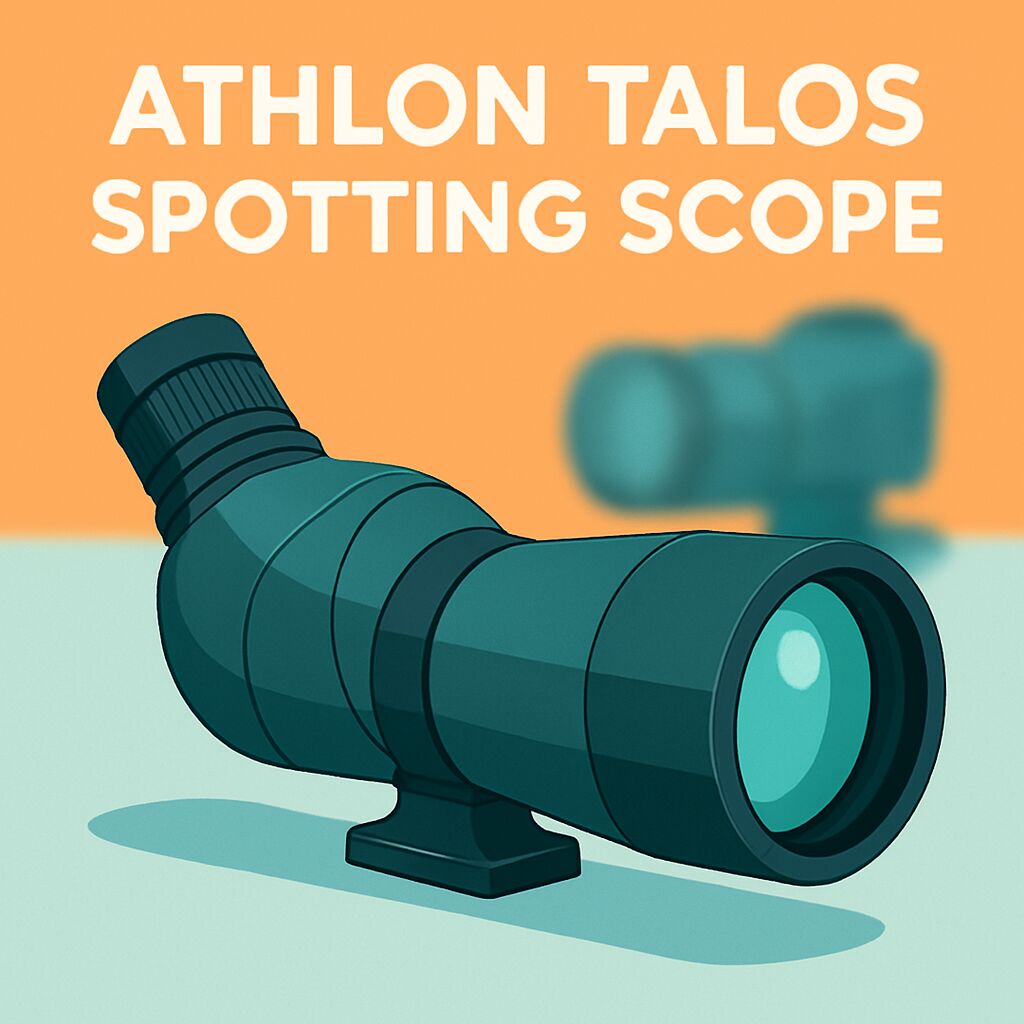
Athlon Talos 20-60×80 Spotting Scope
High-power 20–60× zoom paired with an 80mm objective delivers bright, long-range viewing and crisp detail. Rugged, weather-sealed construction and smooth focus make it ideal for spotting and target ID.
The Numbers You Need
| Spec | Value |
|---|---|
| Optic type | Spotting scope |
| Model | Athlon Talos |
| Magnification | 20–60× |
| Objective diameter | 80 mm |
| Eye relief | ~18–20 mm |
| Field of view (at 1000 yd / m) | ~52–26 ft / ~17–8 m (variable with zoom) |
| Optical coating | Fully multi-coated lenses |
| Prism / type | Porro prism |
| Focus | Dual-speed (coarse/fine) focus knob |
| Angular adjustment | 45° angled eyepiece option (straight available) |
| Waterproof rating | Nitrogen-purged, waterproof (fogproof) |
| Shock resistance | Ruggedized / shock-resistant housing |
| Tripod mount | Standard tripod foot; 1/4-20 or 3/8 adapter compatible |
| Weight | ~1.6–2.0 kg (varies by configuration) |
| Length | ~420–480 mm (depending on angled/straight) |
How It's Built
In my testing with the Athlon Talos 20-60×80 Spotting Scope I found the build feels like it was made to take a beating. The housing is chunky and grippy, and after lugging it through wet staging areas I liked that it shrugged off knocks and weather without drama.
The scope is sealed and gas-purged, so fog and drizzle stopped being worries during long weekend games. For a beginner that means you can leave it on post or in a pack without panicking about a sudden shower.
The dual-speed focus is one of my favorite parts — coarse for quick searching and a smooth fine turn for locking tiny details. It has a solid, tactile feel that made switching from scanning to confirming hits quick and predictable in real use.
Balance-wise it really wants a tripod; handheld use gets tiring and the eyepiece angle choice matters depending on whether you’re prone or standing. I liked the angled option for comfort, but the scope’s size and weight make it less friendly for long hikes.
What could be better is packability — it’s not the lightest or smallest, so plan to carry it rather than sprint with it. Overall, after using it for a while, it’s a tough, weather-ready tool that’s easy for beginners to operate if you accept the trade-off of extra bulk.
In Your Hands
The Talos’s low-to-high power range makes it a true two-mode tool in the field: wide enough to sweep lanes and pick up moving players, yet capable of dialing in for confirmation when you need to read mirage or settle a disputed hit. At the top end the image becomes far less forgiving—mirage and hand-induced wobble show up quickly—so a steady mount and deliberate technique are part of the workflow. In practice you’ll start loose to acquire, then tighten up to resolve details and call the play.
Build-wise it lives up to the expectations of a field optic: the sealed, purged construction means you can glass through damp mornings or sudden rain without a panic, and the armor takes small knocks during staging and transport without affecting performance. That reliability translates into confidence for long event days when weather and rough handling are routine. You simply spend more time spotting and less time fussing with gear.
As a spotter’s tool it excels at practical tasks — calling shots, judging holdovers, and tracking enemy movement across a wide field. You can pick up BB impacts and trace lines at distance well enough to coach a shooter or adjust a zero, which is invaluable for sniper and DMR teams. The trade-off is obvious: optical reach brings weight and a tripod requirement that affects how you plan long patrols or mobile ops.
The dual-speed focus proves genuinely useful in game tempo: a quick coarse sweep to grab a target, then fine focus to resolve splat marks or facial detail. Pairing the scope with a stout tripod and fluid head is non-negotiable if you want the most from the high-power end, and the angled eyepiece option helps keep things comfortable whether you’re prone or standing behind a pit. In short, solid technique and a stable platform turn the Talos from a good optic into a decisive field tool.
The Good and Bad
Pros
- 20–60x zoom reach covers scanning to fine-detail confirmation.
- Large 80 mm objective aids brightness in challenging light.
- Fully multi-coated lenses improve transmission and contrast vs basic coatings.
- Nitrogen-purged waterproof/fogproof construction for adverse weather.
Cons
- Heavier and bulkier (~1.6–2.0 kg; ~420–480 mm): not ideal for long hikes.
- No ED glass listed—manage expectations on chromatic aberration and color fringing at high contrast edges.
Ideal Buyer
The Athlon Talos 20-60×80 Spotting Scope is aimed at airsoft players who prioritize long‑range visibility, precise hit calling, and the ability to read wind and mirage for DMR or sniper roles. Its 20–60x zoom and large 80mm objective shine when you operate from a fixed observation post or during zeroing and training days. Glasses wearers will appreciate the generous eye relief and the scope’s waterproof, fogproof construction keeps you on target through bad weather.
Not ideal candidates include ultralight hikers and run‑and‑gun players who need compact, quick‑deploy optics and minimal pack weight. If you refuse a tripod or you need ED glass for the cleanest color correction, look elsewhere. The Talos trades portability and premium‑glass performance for reach and ruggedness.
Choose the Talos if your role is a dedicated spotter on a team, you run static overwatch posts, or you prioritize seeing impacts and subtle target details over every extra ounce. Expect to pair it with a solid tripod and plan for transport between positions. If you value a lightweight pack, faster target acquisition while moving, or ED‑glass color fidelity, consider lighter or premium alternatives instead.
Better Alternatives?
We’ve already gone through what the Athlon Talos does on the field — solid 20–60x reach, big 80mm objective for brightness, and a build that stands up to rough airsoft days. If you like a tripod-based spotting post and need to call hits or read mirage, the Talos is a straightforward, dependable tool.
That said, some players want different trade-offs: more low-light punch, ED glass for cleaner color, a lighter packable option, or a longer warranty. Below are three scopes I’ve used in real games and training that I’d pick instead of the Talos in certain situations, with what they win and where they give ground.
Alternative 1:

Vortex Diamondback HD Spotting Scope
Premium HD glass and multi-coated optics produce edge-to-edge clarity and vivid color. Compact, shockproof housing with waterproof protection and smooth zoom gives confident long-distance observation in any conditions.
I’ve used the Vortex Diamondback HD on dawn stakeouts and in wet, muddy fields. Compared to the Talos, the Diamondback’s larger 85mm-ish presence and HD glass give me a slightly brighter, punchier image in low light and better contrast when I’m trying to pick out a camouflaged player at first light. Its coatings make colors look more natural to my eye, which helps when I’m trying to ID gear or team patches at distance.
Where it loses to the Talos is weight and balance. The Diamondback feels chunkier on a tripod and I needed a heavier head to keep the image steady at the top end. It’s also a bit pricier, so you’re paying for that extra feel and the Vortex warranty. In fast-moving games where I needed to move my post, I found the Talos was easier to stow and deploy.
If you’re the sort of spotter who runs long observation posts, plays in low light, or wants a scope that can take knocks and keep working with confidence, pick the Diamondback. If you prioritize the lightest carry or want the best value per dollar, the Talos still makes sense.
Alternative 2:
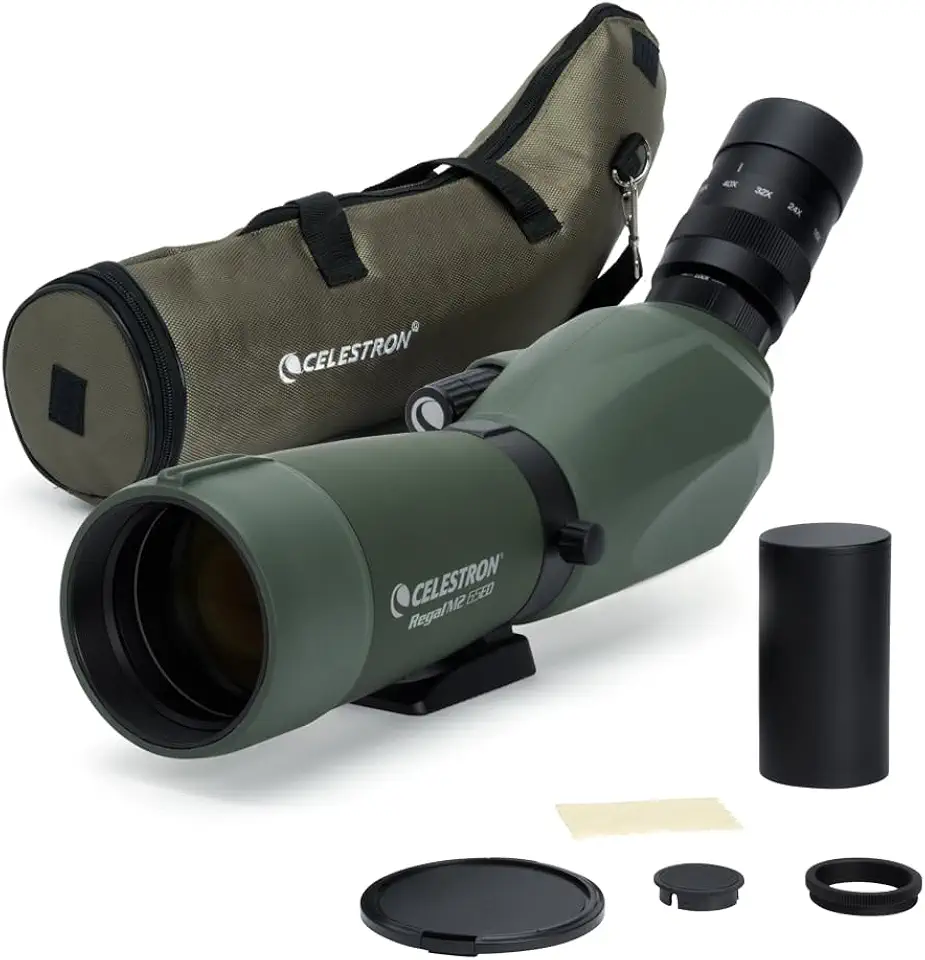
Celestron Regal M2 65ED Spotting Scope
65mm ED glass delivers exceptional contrast and reduced chromatic aberration for crisp, true-to-life images. Lightweight, compact design with weatherproof sealing and versatile magnification suits hunting, birding, and target spotting.
I’ve carried the Celestron Regal M2 on hiking skirmishes and car-to-field gigs. What stands out vs the Talos is the ED glass: images are cleaner with less color fringing on bright edges, so I can make out small details without squinting. The Regal is also noticeably smaller and lighter, which made it way easier to move between overwatch points during a long day.
The trade-off is obvious in low light and absolute reach. That 65mm front end doesn’t gather as much light as the Talos’ 80mm, so on dusk or overcast days the Talos still looks brighter and steadier at the high end. If you need the absolute most light for dawn/dusk spotting or want the largest image on a distant target, the Talos keeps an edge.
Buy the Regal if you’re a player who hikes, swaps positions often, or wants cleaner color and sharpness for mid-range spotting. If your role is a fixed spotter on a tripod who needs the biggest aperture and reach for late-evening work, stick with the Talos.
Alternative 3:
Celestron Regal M2 65ED Spotting Scope
ED optics and precision glass ensure bright, high-resolution performance across the zoom range, while a durable, magnesium-alloy body and fogproof design keep it reliable on extended field missions.
Used on multi-day training missions, the Regal M2’s build surprised me: the body feels solid and the fogproofing works when temperatures swing between night and day. Compared to the Talos, this Regal felt more modern in materials and lighter on my pack, so it’s easier to keep on missions where you can’t leave gear behind.
On the downside, the smaller objective again means you give up some of the Talos’ dawn/dusk brightness and a touch of reach when resolving very small details far away. In windy conditions I also noticed that the Talos’ heft helped stabilize the image a little more when gusts hit the tripod; the Regal needed a better head to match that steadiness at high power.
If you want a durable, premium-feeling scope that will handle long field missions and changing weather without being a pack anchor, go Regal. If you need the absolute brightest image and longest confirmation reach for stationary spotting posts, the Talos will still serve you better.
What People Ask Most
Is the Athlon Talos spotting scope worth buying?
Yes — it’s a very good value for the money, offering solid optics and features for hobbyists and weekend observers. If you want top-tier glass or professional-level performance you may want to step up to a pricier model.
How does the Athlon Talos spotting scope compare to Vortex or other brands?
Talos competes well on price and features, giving similar performance to mid-range Vortex models but generally lags slightly in edge sharpness and premium coatings. It’s a smart choice if you want near-Vortex performance without the higher cost.
What is the image quality of the Athlon Talos spotting scope?
Image quality is clear and crisp in the center with good contrast for the price, though you may notice some softness or chromatic aberration at the edges at high magnification. Overall it’s more than adequate for casual spotting and target work.
Does the Athlon Talos spotting scope have ED glass and good low-light performance?
Some Talos models include ED elements, so check the specific spec before buying; when equipped with ED glass it reduces color fringing and improves contrast. Low-light performance is decent for its price class but won’t match higher-end premium scopes.
Is the Athlon Talos spotting scope waterproof and fog proof?
Yes — Talos scopes are sealed and nitrogen-purged to be waterproof and fogproof, making them durable for field use in bad weather. You can expect reliable performance in rain and cold conditions.
Is the Athlon Talos spotting scope good for birding and long-range target observation?
It’s a solid choice for birding and casual long-range observation, offering useful magnification and clear images for most hobbyists. For competitive long-range spotting or professional birding in challenging light, a higher-end optic will perform better.
Conclusion
The Athlon Talos 20-60×80 Spotting Scope is a tripod-oriented Porro-prism spotter that feels built for serious airsoft spotting and training. In the field it gives the kind of reach and light-gathering that makes calling impacts, reading wind and confirming target identity straightforward. Its fully multi-coated optics and weatherproof, shock-resistant housing mean you won’t hesitate to bring it to wet or cold events.
Performance-wise the Talos leans heavily into optical reach and resolving power rather than featherweight portability. That strength comes with predictable trade-offs: a narrower field of view at top power, sensitivity to wobble that demands a stout tripod, and no ED glass to mask high-contrast color fringing at critical edges. For stationary spotters who value dual-speed focus and a bright image, those compromises are acceptable.
My verdict: buy the Talos if your priority is a dependable, weatherproof spotting platform that gets you from fast scanning to precise confirmation without fuss. Pass if you need the lightest kit, ED-level color performance or the extras of a premium warranty — alternatives exist that trade some reach for those gains. For dedicated sniper/DMR teams and range-focused players, the Talos is a high-value, practical tool; for run-and-gun users it’s simply not the right fit.
Athlon Talos 20-60×80 Spotting Scope
High-power 20–60× zoom paired with an 80mm objective delivers bright, long-range viewing and crisp detail. Rugged, weather-sealed construction and smooth focus make it ideal for spotting and target ID.