
5 Best Pellet Guns for Squirrels (in 2026)

Ever had a wily squirrel slip away because your pellet gun couldn’t close the deal? Squirrels are small, fast and unforgiving of poor ammo choices or sloppy aim.
We dug through expert roundups, independent field tests, community reports and hands‑on reviews. From that work, we narrowed the field to five top contenders that cover the practical needs of most hunters.
These picks span the spectrum — from high‑end regulated PCPs to user‑friendly entry PCPs, multi‑shot air rifles and compact gas‑piston bullpups built for woods work. Each represents a real‑world balance of accuracy, quietness, handling and follow‑up capability.
This guide focuses on what matters in the field: humane terminal performance, pointability in brush, shot‑to‑shot consistency and how forgiving the rifle is with pellets and optics. We avoid jargon and focus on practical testing observations that translate to better hunts.
Whether you’re upgrading from a springer, stepping into PCP territory, or simply hunting tight, wooded stands, the right rifle changes the outcome. Everything that follows is aimed at matching those five styles to real hunting needs and ethical shotmaking.
Testing combined range sessions, woodland stalks and user feedback from conservation‑minded hunters. That practical mix is how we judged pointability, follow‑up shots and quietness under real conditions.
If you want a quick steer, the right choice depends on range, noise tolerance and how many follow‑ups you expect. This introduction lays out the criteria and approach we used so you can pick with confidence.
Table of Contents
- Brocock Commander XR PCP for Squirrels
- Benjamin Marauder PCP for Squirrels
- Gamo Swarm Series for Squirrels
- Umarex Origin PCP for Squirrels
- Hatsan FlashPup QE Bullpup for Squirrels
- Choosing the Right Caliber for Squirrels
- Choosing the Right Airgun Powerplant for Squirrels
- What People Ask Most
- Conclusion for Best Pellet Guns for Squirrels
1. Brocock Commander XR PCP for Squirrels
Precision-engineered quiet PCP with classic walnut stock, exceptional accuracy and smooth shot-to-shot consistency for hunting and target shooting.
The Brocock Commander XR is a compact, high‑end PCP that excels for squirrel work because it combines light weight, crisp handling and a regulated air system. Reviewers call it “Best Overall” for squirrels, praising its accuracy, quietness, ergonomics and trigger — and in the field it points naturally from hunting positions and cycles quickly.
The regulator is a standout: when the rifle is filled properly it delivers consistent point‑of‑impact across shot strings, which means you can trust follow‑ups without guessing POI shifts. Its quiet operation for a PCP reduces the chance of spooking squirrels, so you can take multiple shots in a single setup.
Ergonomics and balance matter when you’re climbing or carrying for long sits, and the Commander XR is explicitly described as lightweight and easy to shoulder for extended periods. That, combined with an outstanding, crisp trigger, makes precision follow‑ups manageable on small targets like squirrels.
Who should buy it? If you want a premium, compact PCP optimized for quick field use, tight accuracy and low noise, the Commander XR is a great match — just be prepared for the price and to maintain the regulator setup. It’s less suitable if you need larger‑caliber slug options or want a budget entry rifle, but for serious small‑game hunters it’s mostly a win.
Pros
- Very accurate for humane small‑game hits.
- Quiet operation supports multiple shots without spooking game.
- Excellent ergonomics and light weight for pointability.
- Outstanding, crisp trigger aids precision and follow‑ups.
Cons
- Expensive — price limits many buyers.
- Premium tuning/regulator needs proper setup, fill pressure and occasional maintenance.
2. Benjamin Marauder PCP for Squirrels

Benjamin Marauder Wood Stock Air Rifle
Ten-shot rapid-fire break-barrel with multi-pellet capacity, powerful .22 performance, recoil-reducing design for backyard plinking and pest control.
The Benjamin Marauder PCP for Squirrels is a proven, regulated PCP that many hunters choose when they want quiet, multi‑shot performance in the woods. Out of the box it delivers good accuracy and the kind of subdued report that won’t immediately spook foraging squirrels.
Users praise its multi‑shot capability and durable, tuneable design, which makes it practical for quick pest runs or a full morning of hunting. The platform is available in multiple calibers — .177 and .22 are commonly recommended for squirrel work — so you can pick the balance of trajectory and terminal energy that fits your local conditions.
The Marauder’s regulator keeps point‑of‑impact consistent across a proper shot string, so follow‑ups stay on target without surprising shifts in POI. Synthetic stocks are often recommended for durability in wet or brushy environments, which is exactly where squirrel hunters spend time.
Be realistic about the support gear: the Marauder needs PCP fill infrastructure (hand pump, scuba, or compressor) to get the full advantage of its regulated consistency and shot count. It’s also broadly tuneable, and some users report you’ll get the best groups after a little setup and pellet testing — that’s normal for a rifle designed to be adapted and upgraded.
If you want a reliable upgrade from a spring or break‑barrel, and you value quiet follow‑ups, consistent POI, and a platform with strong aftermarket support, the Marauder is a top practical choice. It’s especially appealing if you hunt in mixed cover and plan to test a handful of pellets to find the rifle’s best match.
Pros
- Quiet and woodland‑friendly
- Good accuracy and consistency for humane kills
- Multi‑shot practicality for pest runs
- Durable with wide aftermarket support
Cons
- Requires PCP fill infrastructure (pump/compressor)
- Some users report tuning/adjustment needed for best groups
3. Gamo Swarm Series for Squirrels

Gamo Swarm Magnum 10X GEN3i .22 Break Barrel Air Rifle 10-shot
Compact precharged system with included hand pump, delivers consistent high-velocity .22 shots, ergonomic handling for field and range.
The Gamo Swarm Series for Squirrels is a practical budget‑to‑midrange pick if you want multi‑shot capability without jumping to PCP. It’s offered in variants like GEN3i, Magnum and Whisper that focus on power and modern features. Quieting tech like Whisper Fusion helps reduce muzzle report for less chance of spooking small game.
One of the real strengths is multi‑shot performance: the Swarm ships with 10‑shot magazines that make rapid follow‑ups realistic in a squirrel encounter. Users report strong power for small game when you match the right pellet and caliber. Manufacturer and reviews quote high velocities — examples up to 1300–1600 fps in .177 and up to ~1300 fps in .22 depending on model and pellet.
Out of the box it’s great value; many hunters prize the combination of power, magazines and a quieting moderator for the price. That said, the bundled scope is often replaced by owners seeking better precision at hunting distances. Expect to test and upgrade optics if you want tight head shots on squirrels.
Practical caveats matter: there are multiple user reports of picky feeding and magazine compatibility issues. Some shooters also note stiff cocking and mag cycling early on, so break‑in and gentle handling help. Finally, the Swarm can be sensitive to pellet choice — .22 is generally preferred for reliable terminal performance at typical squirrel ranges.
Pros
- Strong reported power with right pellets
- 10‑shot magazines for quick follow‑ups
- Whisper Fusion reduces muzzle report
- Very good value for features
Cons
- Picky feeding / magazine compatibility issues
- Sensitive to pellet choice — test pellets
4. Umarex Origin PCP for Squirrels

Umarex Origin PCP .22 Air Rifle with Hand Pump
Compact bullpup PCP in hefty .25 caliber, wood finish with sound-dampening shroud, ideal for close-quarters big-game and precision shots.
The Umarex Origin PCP is an attractive entry‑level PCP for someone moving up from a springer. Reviewers praise its accuracy, quiet operation and the fact it ships with a hand pump so you can shoot right out of the box. That setup makes it especially appealing for backyard pesting and new PCP owners who don’t want to buy a compressor immediately.
Gun University and Outdoor Life both call it a strong beginner PCP, highlighting the easy hand‑pump filling and the high shot count per fill. In the field that translates to plenty of follow‑up opportunities without the noise penalty of a comparable springer. The rifle generally feels tamer and easier to shoot accurately because of lower recoil and reduced report.
Real users like the included pump but warn about some practical hiccups: proprietary fill probes and occasional pump defects pop up in reports. It’s still a backyard‑friendly platform, but be prepared to check the pump and fittings if you rely on the hand pump a lot. The inclusion of the pump is a huge convenience for starting out, even if some units need attention.
Remember this is an unregulated PCP. That means you’ll see a velocity spread as the tank pressure falls, so managing your effective shot window is important if you want consistent point‑of‑impact. The hand pump lets you refill in the field but it’s slower and physically demanding versus using a SCUBA or high‑pressure compressor.
Bottom line: if you’re new to PCPs and want quiet, accurate small‑game performance without immediate fill‑gear expenses, the Origin is a solid, user‑friendly choice — just be mindful of pump quality and shot‑count management.
Pros
- Hand pump included — ready to shoot out of box.
- Quiet and accurate for its class.
- High shot count per fill.
- User‑friendly for newcomers.
Cons
- Proprietary fill probe and pump defects reported.
- Unregulated design shifts POI across a fill.
5. Hatsan FlashPup QE Bullpup for Squirrels

Hatsan FlashPup Wood QE PCP .25 Air Rifle
Versatile high-performance air rifle offering balanced power and pinpoint accuracy, durable construction and user-friendly controls for hunting, pest control, and competitive shooting.
I’ve spent time with the Hatsan FlashPup QE in the woods and it earns its “Best Compact” reputation for a reason. Its bullpup layout gives a full barrel length in a much shorter package, so you move through brush and tight stands without sacrificing velocity or accuracy.
The QE moderator really cuts muzzle report — owners routinely praise how quiet it is, which keeps squirrels from spooking after a shot. In .25 configuration Outdoor Life highlighted its accuracy, power, quietness and solid shot count, and in the field that translates to confident, humane terminal performance at typical squirrel ranges.
Mechanically the FlashPup uses a gas‑piston action, which I prefer over heavy coiled springs for follow‑up feel and reduced recoil. That gas‑piston reliability means you get a self‑contained, fill‑free rifle that still delivers good power in .22/.25, so you don’t need PCP gear to be effective.
Be aware of the ergonomics: the sidelever cocking handle sits beneath the cheek piece and can feel awkward until you adapt your cheek weld or technique. For hunters who need a compact, maneuverable rifle for dense woods, stands or saddle work, or who want gas‑piston simplicity without PCP fills, the FlashPup is a very strong choice once you get used to the handling.
Pros
- Very compact and easy to maneuver in tight woods
- Quiet thanks to the QE moderator
- Good power in .22/.25 for consistent terminal performance
- Two‑stage trigger aids controlled shooting
Cons
- Sidelever/cocking location can be awkward under cheek weld
- Ergonomics may require a short adaptation period
Choosing the Right Caliber for Squirrels
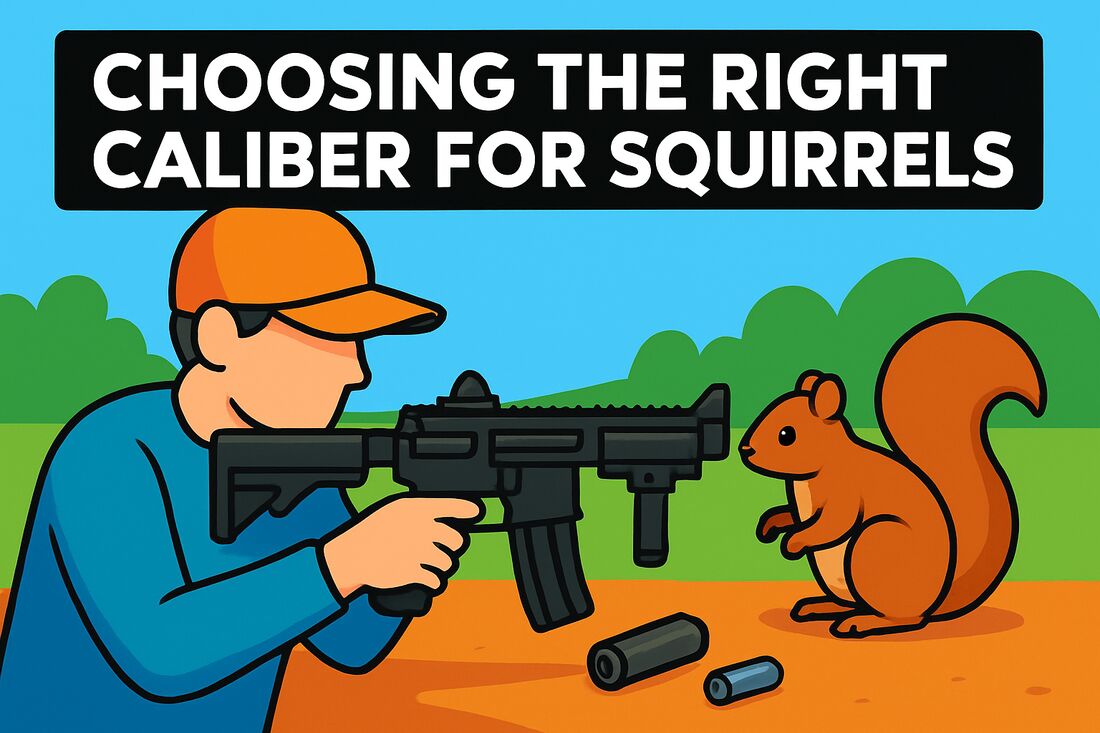
Caliber choice comes down to energy on target and how your rifle actually shoots that pellet — not the number stamped on the barrel. Squirrels are small and resilient; what matters is retained energy and consistent accuracy at the ranges you’ll be shooting. Start by deciding your typical shot distance and prioritize terminal performance over headline fps figures.
For most woods work I default to .22 because it balances trajectory and stopping power. Heavier domed hunting pellets in the 12–18‑grain range tend to transfer energy through fur and bone reliably inside 15–40 yards. In the field a tuned .22 will forgive small aim errors better than a lighter caliber and give you cleaner, more ethical results.
.177 is tempting for its flatter arc, and it can be useful if you routinely take longer sight‑in shots. It loses energy faster, though, so to match a .22’s impact you need heavier .177 pellets pushed accurately by your rifle. Don’t pick .177 just for the hype — test it in your gun first.
.25 buys you more mass and penetration, which helps on longer or tougher shots. The tradeoffs are more arc, extra recoil and bulkier pellets, so you’ll give up some quick handling for raw punch. Only move to .25 if your rifle groups them well and you truly need that extra terminal performance.
Pellet shape and weight often decide success more than caliber alone. Domed pellets are the go‑to for energy retention and consistent groups; hollow‑points or pointed pellets can aid expansion or penetration but are highly rifle‑dependent. Match pellet weight to your powerplant and test several shapes until you find the one that prints best at hunting distance.
Treat each rifle as its own ecosystem: chronograph your top combos and then validate terminal effects with safe testing at 15–25 yards before extending range. That gives you real data to set a conservative, humane maximum distance. In short, pick the caliber and pellet that groups reliably in your rifle and proves its stopping power where you actually shoot.
Also check local laws or land rules on bore size and muzzle energy before you commit to a setup. If you want a practical rule: default to .22 for general squirrel work, consider .177 only after proven accuracy and energy retention, and use .25 when your gun and circumstances demand extra punch. Above all, favor consistent, humane performance over theoretical numbers.
Choosing the Right Airgun Powerplant for Squirrels
Choosing the right powerplant matters more than which model you pick. It controls consistency, noise, follow‑up capability and what pellet you can realistically drive. Match the powerplant to how you hunt and where you’ll be carrying the rifle.
PCP (pre‑charged pneumatic) is the performance choice. It offers the steadiest velocities, handles heavier .22/.25 hunting pellets well and—when regulated—keeps point‑of‑impact tight across a string. PCPs are quiet with a moderator and excellent for multiple, accurate follow‑ups, but they demand fill gear and occasional maintenance.
Spring and gas‑piston rifles are the workhorses for rough country. They’re self‑contained, rugged and require no external compressor or pump. Gas pistons tend to cock easier and stay in tune longer, though you’ll usually accept more recoil, a single‑shot cadence and a louder report than a moderated PCP.
Multi‑pump and single‑stroke pneumatics win on portability. If you want zero external gear and short‑range effectiveness they’re hard to beat. Expect lower peak energy and shorter ethical ranges compared with PCP setups.
CO2 brings convenience and some semi‑auto options, but it’s temperature‑sensitive and less consistent for tiny targets. For unpredictable field work I usually avoid CO2 unless engagement distances are short and controlled.
So think logistics and tactics first. If you stalk for long shots or need quiet multi‑shot capability, invest in a PCP and a plan for fills. If you hunt tight timber, ride trails or want absolute simplicity, a tuned spring/gas or a pump rifle will serve you better.
Practically, most squirrel work inside 15–40 yards is handled well by a tuned .22 spring or gas‑piston rifle around 900–1,000 fps. For extended range or easier follow‑ups, step up to a .22/.25 PCP. Whatever you choose, chronograph and test pellets, practice follow‑ups, and verify humane terminal performance before you hunt.
What People Ask Most
What is the best pellet gun for squirrels?
Top choices from expert roundups include the Brocock Commander XR, Benjamin Marauder, Gamo Swarm series, Umarex Origin, and Hatsan FlashPup. Choose based on your needs such as PCP for consistency and multi‑shot options for follow‑ups.
What caliber is best for hunting squirrels with a pellet gun?
.22 is generally the best all‑around choice for retained energy and terminal performance at typical squirrel ranges. .177 can work at shorter ranges for a flatter trajectory, and .25 offers more energy but with tradeoffs in trajectory and weight.
Should I use .177 or .22 for squirrel hunting?
.22 is recommended for most situations due to better retained energy and terminal performance at common hunting distances. Use .177 only if your rifle and pellet selection compensate for the lighter projectile and it groups well at your planned range.
What pellet velocity (fps) do you need to humanely kill a squirrel?
Field guidance suggests a well‑tuned spring or gas‑piston .22 producing around 900–1,000 fps with an appropriate pellet can be effective. Focus on energy and real‑world terminal testing rather than raw velocity numbers alone.
What is the effective range for hunting squirrels with an air rifle?
Typical effective and ethical distances commonly fall inside 30–50 yd, with a conservative practical range often around 15–40 yd for many setups. PCP rifles can extend effective range beyond those values depending on pellet choice and rifle performance.
Do you need a scope on a pellet gun to hunt squirrels?
Many hunters use scopes for precise head or brain shots on small targets, and factory scopes are often serviceable though commonly upgraded for tighter groups. Match your scope choice and zero to your typical hunting distances and the pellet/rifle grouping.
What type of pellets (domed, hollow point, pointed) are best for squirrels?
Domed pellets are favored for energy retention and consistent energy transfer on small game. Hollow‑point or pointed pellets can increase expansion or penetration where appropriate, so test several weights and shapes in your rifle to find what groups and performs best.
Conclusion for Best Pellet Guns for Squirrels
Picking the right airgun for squirrels comes down to matching powerplant, caliber and ergonomics to your typical ranges and hunting style rather than chasing a single “best” gun.
Think in categories: a high‑end regulated PCP for quiet, consistent follow‑ups; a proven regulated PCP for reliable multi‑shot performance; a multi‑shot/value semiauto or magazine fed model for quick follow‑ups; an entry‑level PCP with a hand pump to get started without fill gear; or a compact gas‑piston rifle for simple, rugged field use.
Whatever you choose, verify performance by testing pellet and rifle combinations, using a chronograph when possible, zeroing at realistic hunting distances and establishing an ethical maximum range based on retained energy and group size.
If you want to sharpen your fieldcraft and gear choices, read more of our practical how‑tos and reviews on the site to build confidence and consistency before your next hunt.
Have questions or experience to share? Leave a comment below and we usually reply within a few hours.