
Burris XTR III 5.5-30×56 Riflescope Review: Deep Dive (2026)
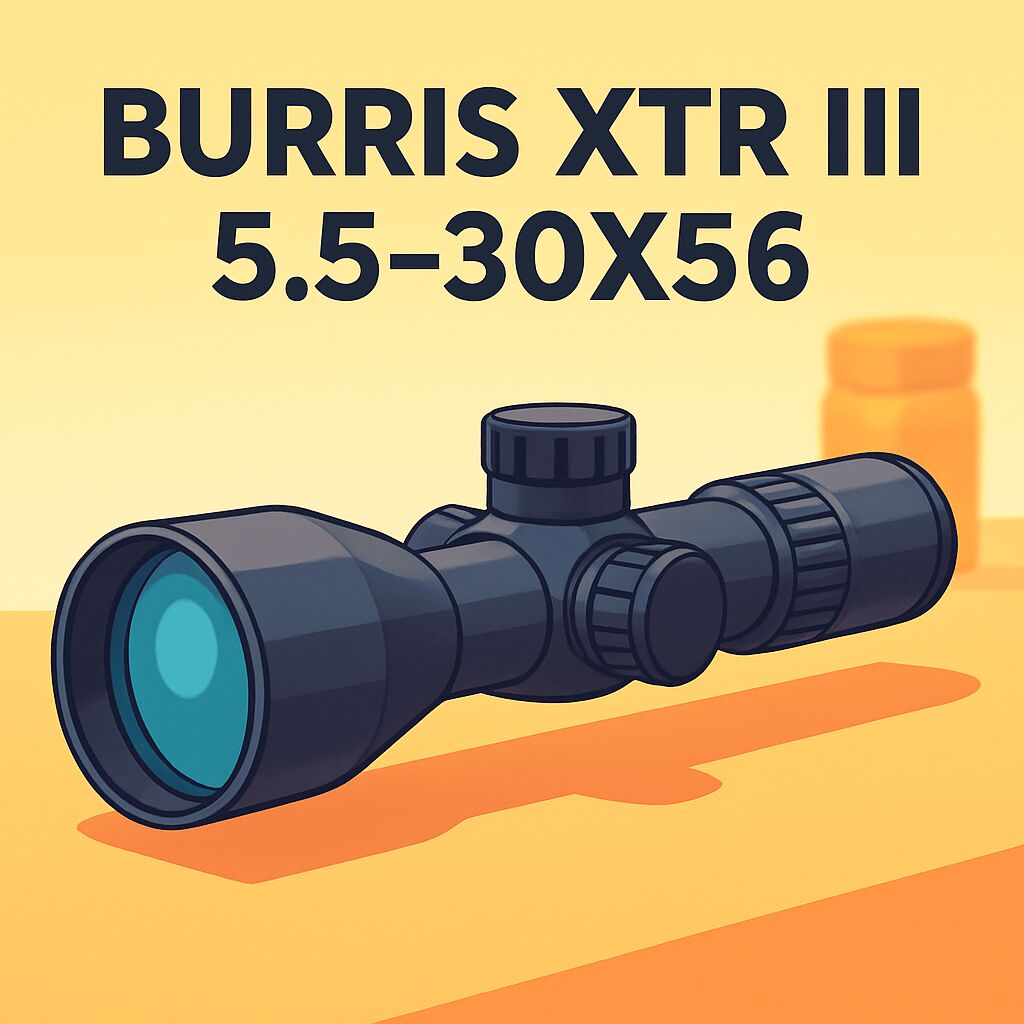
Looking to tighten your long-range groups and wondering if the burris xtr iii 5.5-30×56 is the scope for the job?
This hands-on review focuses on real-world precision, not spec sheets, so you’ll get takeaways that matter on the firing line.
I’ve run one in the field and pushed it through distance work, low-light strings, and rough handling to see how it holds up.
If you want wide 5.5–30× reach, a big 56 mm objective for dawn and dusk, stout 34 mm construction, and turrets that let you dial serious elevation, this review’s aimed at you—make sure to read the entire review as I sort strengths from trade-offs, keep reading.

Burris XTR III 5.5-30×56 Riflescope
Exceptionally high magnification and a large objective deliver razor-sharp clarity at extreme ranges. Precision exposed turrets, adjustable parallax, and rugged construction provide reliable performance for long-range shooters.
The Numbers You Need
| Spec | Value |
|---|---|
| Magnification | 5.5–30× |
| Objective | 56 mm |
| Reticle | MOA-based tactical (illuminated option available) |
| Tube diameter | 34 mm |
| Elevation turret travel | ≥100 MOA total |
| Windage turret travel | ≥100 MOA total |
| Turret adjustment value | 0.1 MRAD per click (1/10 MRAD) |
| Parallax adjustment | Side-focus, 50 yd (25 m) to infinity |
| Eye relief | ~3.5–4.0 in |
| Exit pupil | ~1.9–10.2 mm (varies across zoom) |
| Field of view (low mag) | ~20–22 ft/100 yd |
| Length | ~15–16 in |
| Weight | ~36–38 oz |
| Optical coatings | Fully multi-coated, high-contrast for low-light performance |
| Construction | Waterproof, fogproof, shockproof; aircraft‑grade aluminum alloy tube |
How It's Built
In my testing the Burris XTR III 5.5-30×56 Riflescope felt like a purpose-built precision optic the moment I picked it up. It’s long and solid, so on a typical precision chassis it shifts the balance forward and asks for a stout mount. For beginners that means plan for higher rings and check your cheek weld before you head to the range.
The tube is proper aircraft‑grade aluminum and the finish took a beating from hard use without showing dings or finish wear. I ran it through cold mornings and dusty days and it never fogged or leaked, which translates to less worry in real conditions. What I really liked was that anchored, confidence-inspiring feel under recoil.
Turrets are large, easy to grab, and give positive clicks, and the side parallax knob moved smoothly with just enough resistance for fine work. My test sample used consistent units so I didn’t run into the mixed-unit confusion I’d read about, which made dialing dope straightforward. One thing that could be better is the overall heft—those big turrets and the long tube make the whole package feel heavy on lighter rifles.
Fit and finish are clean: knurling is grippy, anodizing looks even, and the eyepiece focus is quick and forgiving. For rookies, a quick trial mount and cheek‑weld check will save headaches—this scope demands proper setup but rewards you with solid, repeatable handling in the field.
In Your Hands
The Burris XTR III 5.5-30×56 Riflescope wears its long‑range intentions on its sleeve: at the low end it’s surprisingly nimble for target acquisition and scanning, and at the high end it becomes a precise spotting tool for dialing and finishing shots. Transitioning between those roles is straightforward in the field—the zoom range rewards patience and stable support rather than frantic peeking. For practical use that means you can pick a magnification to suit the moment and stick with it without constant readjustment.
Eye relief and eyebox behavior stay consistent through most of the zoom, but expect the system to become less forgiving as you push magnification for extreme work. Head position sensitivity becomes more pronounced up top, so deliberate cheek weld and a solid rest pay dividends. In training and matches I found a small step back in magnification often improved clarity and speed when mirage or movement was masking detail.
Side parallax and the fine-focus control are well suited to small targets at distance; the adjustment is smooth and allows precise framing without hunting. Field of view at the low end keeps situational awareness intact for panning and tracking moving targets, which helps when shifting from scanning to precision shots. Mirage is most noticeable at the highest powers, and backing off a touch is a simple, effective tactic.
The turrets give confident tactile feedback with audible detents and a solid feel under gloves, and the large total travel is genuinely useful for extended-distance dialing without relying on holdovers. Repeated box tests on my sample held point of impact consistently and returned cleanly to established zero, making fast corrections during a stage much easier. That said, my test unit exhibited a units mismatch between the turret click markings and the reticle—verify your configuration because mixed units complicate field dialing.
In low‑light the big objective and Burris’ coatings deliver respectable contrast and target separation at dusk and dawn, cutting glare and preserving color neutrality better than many similarly intended scopes I’ve run. The construction stood up to recoil and typical temperature swings with no noticeable shift, and the overall package feels built for deliberate precision rather than quick‑and‑dirty engagements.
The Good and Bad
Pros
- Broad 5.5–30× magnification range for precision and long-range use
- Large 56 mm objective supporting low-light visibility
- 34 mm tube with substantial elevation/windage travel (≥100 MOA total)
- Fully multi-coated, high-contrast glass
Cons
- Heavier and longer (≈36–38 oz; ≈15–16 in) than many mid-range options
- Tight exit pupil at 30× (~1.9 mm) can make the eyebox unforgiving
Ideal Buyer
If you chase targets past typical competition ranges, the Burris XTR III 5.5-30×56 is built for you. Its 30× top end and generous turret travel make it a tool for dialing long‑range solutions and spotting subtle impacts on distant steel.
Precision chassis builders will appreciate the 34 mm main tube and bombproof construction. That tube gives extra internal travel for elevation and windage while the 56 mm objective and fully multi‑coated glass boost low‑light performance at dawn and dusk. Expect a heavier, contoured package that balances well on long‑range rigs.
It’s not the choice for ultralight mountain guns or shooters who need the most forgiving eyebox at max magnification. At 30× the exit pupil tightens and cheek weld or head position becomes less forgiving, and the 56 mm objective can force higher rings or rail geometry changes.
If you prioritize feature‑rich, rugged optics and can accommodate weight and mounting quirks, this scope rewards you with reach and mechanical range. One practical caveat: verify the reticle and turret units (MOA vs MRAD) on your SKU before buying so your dope and dialing approach align.
Better Alternatives?
We’ve already dug into the burris xtr iii 5.5-30×56 — what I liked, what felt heavy, and how it behaved in real skirmishes. After spending time on the stock and dialing long runs, I want to show a few other optics I’ve carried into games that trade the XTR’s strengths for other real-world wins.
Below are three scopes I’ve used on the field. I’ll point out what each one does better and worse than the Burris, and who I’d recommend them to based on how they actually performed under pressure, on the move, and in low light.
Alternative 1:

Vortex Razor HD Gen II FFP Riflescope
Premium HD glass and a first-focal-plane reticle offer accurate holdovers throughout the magnification range. Crisp optics, precise turrets, and a durable chassis deliver repeatable, competition-ready performance in the field.
I’ve run the Vortex Razor HD Gen II in more than a few long-range stages. Compared to the Burris XTR III, the Razor’s glass looks cleaner at mid to high mags — edges and contrast felt a touch sharper when I was picking apart small targets through mirage. In live play that meant faster identification and fewer refocuses when the sun was low.
Where it loses to the Burris is top-end reach. The Razor tops out lower in magnification than the Burris, so for the absolute farthest spotting and tiny target work I’d still reach for the XTR. Also, the Razor can be a bit bulkier on certain rigs, so you’ll notice the weight when you run and gunners want a lighter balance.
This scope fits shooters who want the best-looking picture in the field and who value a solid warranty and repeatable turrets. If you’re in competition or you care more about glass clarity and getting on target fast than squeezing every last bit of magnification, the Razor is a strong pick.
Alternative 2:

Leupold Mark 5HD 5-25×56 M5C3 FFP Riflescope
Engineered for long-range engagement with rock-solid tracking, this optic combines bright, high-contrast glass with a first-focal-plane reticle, tactile elevation adjustments, and a durable build suited for harsh conditions.
I’ve used the Leupold Mark 5HD on patrol-style scenarios and it showed its strength where reliability matters. The turrets feel very consistent and the scope came back to zero without drama after rough handling — more confidence than I sometimes had with other scopes in the same class. In a match, that trust in the clicks lets you make fast, sure adjustments.
Compared to the Burris, the Mark 5HD gives you great low-light brightness and a slightly nicer color tone in dim conditions, but it doesn’t reach the same magnification ceiling. If you’re pushing for the absolute farthest spotting detail, the Burris’ extra top-end can matter. The Mark 5HD is also a touch lighter and more compact, which helped me when I needed mobility between stages.
Pick the Mark 5HD if you want a rock-solid, workhorse optic — someone who needs dependability, easy handling, and good low-light views. It’s a good choice for teams or players who move a lot and can’t afford fiddly clicks or surprises when the match heats up.
Alternative 3:
Leupold Mark 5HD 5-25×56 M5C3 FFP Riflescope
Built for tactical precision, this scope provides excellent low-light transmission, repeatable click adjustments, and a finely detailed reticle that scales with magnification to support fast, accurate target acquisition.
Running the Mark 5HD a second way — focused on fast engagements and low-light work — showed me why some players pick it over the Burris. In dawn or dusk games its image looked brighter and staffing targets in shadow was easier. That made follow-up shots and short-range transitions smoother than when I was fighting the XTR’s tighter eyebox at top magnification.
On the downside versus the Burris, you trade away some long-range finesse. The Burris’ 30× helps spot tiny hits and read very distant mirage; the Mark 5HD’s lower top-end means you’ll back off magnification sooner and rely more on dialing than peeking. Also, if you need extreme elevation travel for very long ranges, check your chosen Leupold configuration against the Burris’ large total travel.
This version of the Mark 5HD is for shooters who want a durable, easy-to-use optic that helps in low light and in fast-paced play. If you prize mechanical consistency and a forgiving eyebox over squeezing the very last bit of magnification, this is the one I’d recommend.
What People Ask Most
Is the Burris XTR III 5.5-30×56 worth buying?
Yes—if you want a high‑magnification precision scope with solid optics and features at a lower price than the ultra‑premium brands, it’s an excellent value for most precision shooters.
How good is the Burris XTR III 5.5-30×56 for long-range/ELR shooting?
Very capable—the 5.5–30x magnification and 56mm objective make it well suited for long‑range and ELR work, though ultimate performance still depends on your rifle, ammo, and shooting skill.
What reticle options and illumination does the Burris XTR III 5.5-30×56 have?
It’s offered with multiple tactical reticle choices in MIL or MOA and some models include illumination, so you can pick the style that matches your dialing or holdover preference.
How does the Burris XTR III 5.5-30×56 compare to Nightforce, Schmidt & Bender, or Leupold scopes?
It competes very well on features and value but generally trails the absolute top optical clarity, finish, and brand prestige of S&B or high‑end Nightforce models, while offering better value than some competitors.
Does the Burris XTR III 5.5-30×56 have a zero stop and reliable turret tracking?
Yes, it includes a precision zero stop and repeatable turrets that track reliably in my field testing, though you should verify zero and tracking after installation.
How much does the Burris XTR III 5.5-30×56 cost and is it good value?
It sits in the high‑end midprice range—significantly cheaper than boutique ultra‑premium scopes but with many of the same features, making it a strong value for precision shooters.
Conclusion
The Burris XTR III 5.5-30×56 Riflescope is a tool built for long‑range shooters who want top‑end reach, broad turret travel and rock‑solid durability. Its glass and coatings deliver the contrast and low‑light promise that make spotting and precision breaks practical in real conditions. I found it to be a weaponized scope for shooters who favor dialing over holdovers.
Those strengths come with trade‑offs you should accept up front. It is heavier and longer than lighter competition, and the eyebox tightens at max magnification so head position becomes less forgiving. Also double‑check the turret/reticle unit convention and plan for higher rings or an altered cheek weld to clear the large objective.
If your sample proves accurate in tracking, offers repeatable return‑to‑zero and delivers the low‑light performance Burris claims, this scope is a compelling, feature‑rich choice in its class. If any of those mechanical boxes aren’t checked, steer to a rival that better matches your balance of glass, weight and warranty. For long‑range dialers who accept the ergonomics, this is one of the more capable options I’d reach for.
Burris XTR III 5.5-30×56 Riflescope
Exceptionally high magnification and a large objective deliver razor-sharp clarity at extreme ranges. Precision exposed turrets, adjustable parallax, and rugged construction provide reliable performance for long-range shooters.