
Crosman Air Pistol Review – Complete Guide (2026)
Want a simple, tunable .22 air pistol that won’t leave you chasing CO2?
If you’re after low running cost and upgrade potential, this hands-on look at the Crosman Air Pistol — the crosman 1322 multi-pump — is for you.
I field-tested it to judge pumping effort and cadence, power across pump counts, handling, sight usability, trigger feel, and mod potential.
This review’s aimed at tinkerers, backyard plinkers, and target shooters who value simplicity and tunability; you’ll see where it shines and where it slows you down. Make sure to read the entire review as I break down real-world payoffs and practical upgrades — keep reading.
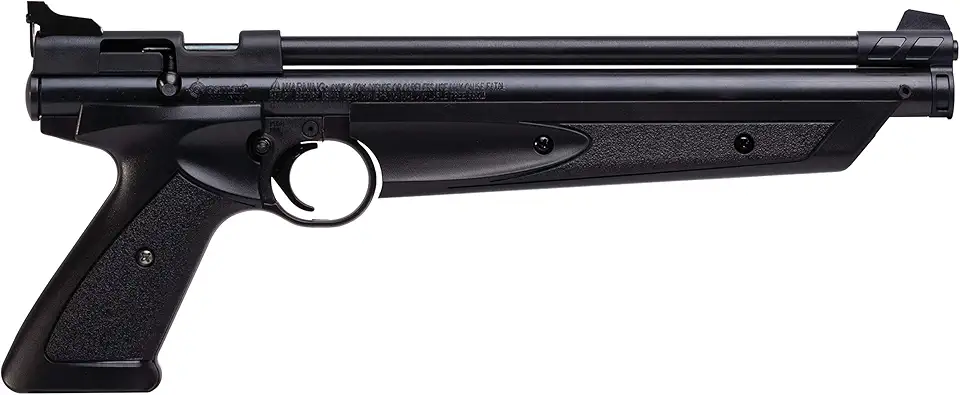
Crosman Air Pistol
Compact, reliable CO2-powered sidearm delivering consistent accuracy for backyard plinking and target practice. Ergonomic grip and simple operation make it perfect for beginners and experienced shooters seeking casual precision fun.
The Numbers You Need
| Spec | Value |
|---|---|
| Caliber | .22 (5.5 mm) |
| Action | Multi-pump pneumatic |
| Powerplant | Manual multi-pump pneumatic |
| Velocity | Approx. 600–700 FPS (varies with pumps & pellet type) |
| Barrel | Rifled steel barrel |
| Sights | Adjustable rear sight; fixed front sight |
| Trigger | Single-stage trigger (external cocking via pump) |
| Safety | Manual thumb safety |
| Stock/Grip | Synthetic pistol grip (wood or other variants available) |
| Capacity | Single-shot (manual pellet loading) |
| Weight | Approximately 2.0–2.5 lb (varies by model) |
| Length | Approximately 13–14 in (varies by model) |
| Power adjustment | Variable — number of pumps controls power (0–10+ pumps typical) |
| Accessories | Accepts aftermarket barrels, stocks, optics; some models have receiver rail |
| Moddability | Highly moddable — common upgrades: heavier hammer/spring, improved seals, longer barrel |
How It's Built
In my testing the Crosman Air Pistol is a .22 multi-pump pneumatic that gives you control over power by how much you pump. That pump-only setup means no CO2 cans or batteries to fuss with, which is great for new shooters. It’s simple in concept and easy to understand at the range.
The fit and finish feel honest and functional rather than flashy. The rifled steel barrel and single-stage trigger are straightforward and predictable to shoot. The manual thumb safety is easy to reach and actually useful in the field when you’re loading single shots or moving between targets.
Sight-wise you get an adjustable rear and a fixed front, and I was able to dial in a repeatable zero with a little practice. The synthetic grip is comfortable for long plinking sessions and keeps the pistol steady without being heavy. Single-shot loading does slow follow-ups, but it teaches good trigger control and ammo discipline for beginners.
One thing I really liked was how friendly this platform is to upgrades and repairs—you can swap seals, barrels, or add a stock on some models without a headache. One thing that could be better is minor play in the pump on some units; after lots of use it can feel a bit loose. Overall it’s easy to field-strip and service, so fixing that slop is straightforward for a new tinkerer.
In Your Hands
The Crosman 1322 responds predictably to the number of pumps — each additional stroke noticeably alters its punch and trajectory, letting you tailor shots to the task. I typically use a mid-range pump count for a balance of flatness and reliable knockdown.
Pumping is straightforward but imposes a deliberate cadence on a session, so you manage ammo and aim rather than spray. Single-shot loading further enforces a paced shooting style that favors accuracy over volume.
Not needing CO2 or cartridges makes the pistol dependable across temperatures and keeps maintenance simple in the field. Its weight and length give a stable sight picture, trading some portability for steadier holds and better groups.
Common upgrades—improved seals, a longer rifled barrel, or a firmer hammer—sharpen both the trigger feel and the overall consistency, changing how the pistol feels in use. If you want optics, confirm a receiver rail on your model; when fitted, it turns the platform into a practical, scoped trainer.
My routine: pump to that mid-range feel, select a pellet that holds a steady point-of-impact for that setting, and shoot slow groups to build repeatability; new users quickly internalize the pumping and reload rhythm. For backyard plinking and tuning projects the 1322 rewards patience and hands-on adjustments more than rapid-fire sessions.
The Good and Bad
Pros
- Variable power via multi-pump; tune velocity to task.
- No CO2 logistics or temperature sensitivity typical of gas systems.
- Rifled steel barrel aids practical accuracy.
- Highly moddable platform with deep aftermarket support.
Cons
- Manual pumping slows cadence; effort accumulates over longer sessions.
- Single-shot loading limits follow-up speed.
Ideal Buyer
If you want a .22 multi-pump pistol with tunable power and no CO2 costs, the Crosman Air Pistol is a solid pick. It’s ideal for shooters who like to dial power for pest control or backyard plinking. Single-shot simplicity keeps maintenance and long-term running costs minimal.
Tinkerers and DIY modders will love the platform’s aftermarket ecosystem. Barrel swaps, seals, stocks, and hammer upgrades are common and straightforward. If you enjoy wrenching and improving performance, this pistol rewards that effort.
Comfortable with manual pumping and a slower cadence? This is your shooter. Target shooters and backyard plinkers who prize consistency, simplicity, and durability will appreciate it. The adjustable rear sight and rifled barrel make it versatile for accuracy work.
Not ideal for skirmish players or anyone who needs rapid follow-up fire or magazine-fed semi-auto action. If you want fast strings or CO2 convenience, consider other platforms. For budget-conscious, hands-on shooters the Crosman Air Pistol hits a sweet spot.
Novices on a budget get forgiving ergonomics and an easy learning curve for pumping cadence and sighting. Experienced shooters will appreciate the tunability as a platform to build a specialized plinker or informal range pistol. Either way, this pistol rewards patience and a willingness to tinker.
Better Alternatives?
We’ve already gone through the Crosman 1322 hands-on — how it pumps, how it shoots, and why a rifled steel barrel plus a tuneable pump system makes it a favorite for folks who like to tinker. That platform is great when you want no CO2, easy long-term running costs, and a pistol you can upgrade over time.
If that style isn’t exactly what you need on the field, there are a few other pistols worth looking at. Below I’ll run through three alternatives I’ve actually used in skirmishes and range sessions, what they do better or worse than the Crosman Air Pistol (the 1322), and who each one suits best.
Alternative 1:
Crosman Air Pistol
Lightweight, easy-maintenance pistol with durable construction and crisp trigger response for confident shots. Adjustable sights and balanced handling deliver consistent groups, ideal for training and recreational shooting.
I’ve run this lightweight Crosman Air Pistol through backyard plinking and a few casual skirmish drills. Compared to the Crosman Air Pistol (the 1322) it feels easier to carry and quicker to bring on target — you don’t have the same pumping routine, and the trigger feels crisper out of the box. In short sessions it lets you get more shots off with less fuss.
Where it loses to the 1322 is in raw tweakability and sustained knockdown. The 1322’s multi-pump system and mod community let you squeeze more power or change handling, while this lighter pistol is more of a plug-and-play piece. I also noticed its groups widen a bit at longer ranges compared to a well-set 1322 with a steady pump count.
This version is best for someone who wants a simple, low-maintenance pistol for training or casual shooting — players who value light weight and fast handling over the ability to heavily mod or push power. If you want a dependable shooter that’s ready right away, this is a good pick.
Alternative 2:
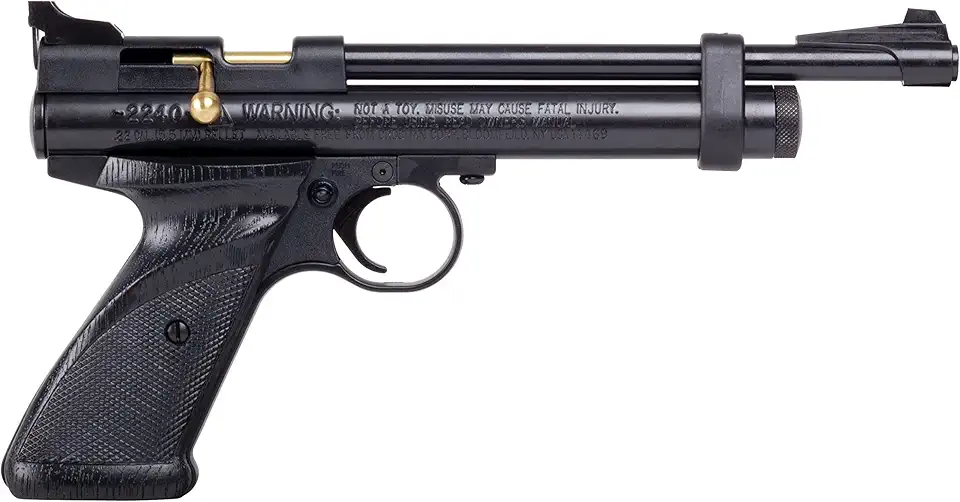
Crosman 2240 Pistol
Classic .22-caliber single-shot CO2 pistol prized for its simplicity and tunability. Heavy barrel offers excellent accuracy; ideal for target tuning, competition prepping, or hobbyists who enjoy customizing performance and handling.
I’ve used the 2240 in both field drills and bench testing, and it’s a favorite for players who want quick follow-ups and a very tunable valve platform. Compared to the Crosman Air Pistol (1322), the 2240 gives faster shot-to-shot rhythm because you don’t need to pump between shots — that’s a big advantage in scenarios where cadence matters.
On the downside, the 2240 depends on CO2 cartridges, so in cold weather or long events you’ll see performance shifts and you’ll need to carry spares. The 1322’s pump system is more consistent across temperatures and cheaper to run. Also, while the 2240 is moddable, leaks and CO2 upkeep are real issues I’ve had to manage in the field.
This pistol suits the player who wants faster shooting and likes to customize internals for accuracy or power without dealing with pumping. If you run scenario play or want quicker follow-ups at the cost of carrying CO2, pick the 2240. If you want no-gas reliability, stick with the pump-style 1322.
Alternative 3:
Crosman Air Pistol
Affordable, user-friendly shooting solution offering smooth cycling and predictable accuracy for casual plinking. Compact frame and comfortable grips make it a go-to choice for beginners seeking dependable performance.
This other Crosman Air Pistol model is more of an entry-level, user-friendly option I’ve taken to the range and field for warm-up drills. Versus the Crosman Air Pistol (1322), it’s easier for a new shooter to get consistent shots fast — the cycling feels smooth and it holds a predictable point of impact without worrying about pump counts or advanced setup.
What it doesn’t do as well as the 1322 is offer long-term upgrade paths or higher power. The 1322 is built for folks who want to swap barrels, seals, or springs and tune the pistol; this affordable model stays reliable but limited. In my skirmishes I found it great for steady practice rounds but not the first choice when I wanted to push energy or accuracy through mods.
Choose this if you’re a beginner or someone who wants a cheap, dependable pistol for casual plinking and basic training. If you plan to tinker heavily or need variable pump power and higher tweaks, the 1322 remains the better platform.
What People Ask Most
What caliber is the Crosman 1322?
The Crosman 1322 is a .22 caliber (5.5 mm) single-shot pneumatic pistol.
How fast is the Crosman 1322 (FPS/velocity)?
Velocity varies with pump count and pellet weight but typically runs about 400–600 FPS with multiple pumps and light pellets.
Is the Crosman 1322 accurate for target shooting?
Yes—it’s reasonably accurate for close-range target shooting and plinking, especially at 10–15 yards with good pellets and a steady hold.
How do you cock, load, and operate the Crosman 1322?
Pump the forearm 3–10 times to pressurize, pull back the bolt to expose the breech, drop a pellet into the loading trough, close the bolt, aim, and pull the trigger.
Can the Crosman 1322 be upgraded or tuned for more power?
Yes—there are many aftermarket seals, barrels, and tune parts to improve consistency and slightly boost performance, but major power gains are limited by the multi-pump design.
Is the Crosman 1322 a good airgun for beginners and backyard plinking?
Absolutely—it’s affordable, simple to use, and safe for backyard plinking where allowed, making it a popular choice for beginners.
Conclusion
The Crosman Air Pistol earns its stripes as a hands‑on favorite for folks who value adjustable, mechanical simplicity. Its multi‑pump personality, rifled barrel and adjustable rear sight deliver a tuned, repeatable shooting experience that rewards practice and aftermarket work. Add in single‑shot economy and the ability to avoid CO2 logistics, and you have a platform built for customization and low long‑term costs.
Those strengths come with clear tradeoffs: pumping between shots and single‑shot loading blunt follow‑up speed and fatigue during long sessions. The platform is straightforward but not a rapid‑fire solution, and accessory fit (like receiver rails) varies by model and can influence upgrade choices. For many shooters that’s an acceptable compromise for consistency and field reliability.
Bottom line: if you’re a tinkerer, backyard plinker or target shooter who prizes tunability, low running cost and a rugged, serviceable pistol, the Crosman Air Pistol is a smart, satisfying buy. If you need quicker cadence, magazine‑fed fire, or a flatter .177 trajectory for longer targets, consider CO2 or .177 alternatives instead. For its niche this pistol is hard to beat; the value comes from patience, upgrades and straightforward, hands‑on use.
Crosman Air Pistol
Compact, reliable CO2-powered sidearm delivering consistent accuracy for backyard plinking and target practice. Ergonomic grip and simple operation make it perfect for beginners and experienced shooters seeking casual precision fun.