
Crosman Destroyer .177 Pellets Review – Is It Still Worth It in 2026?
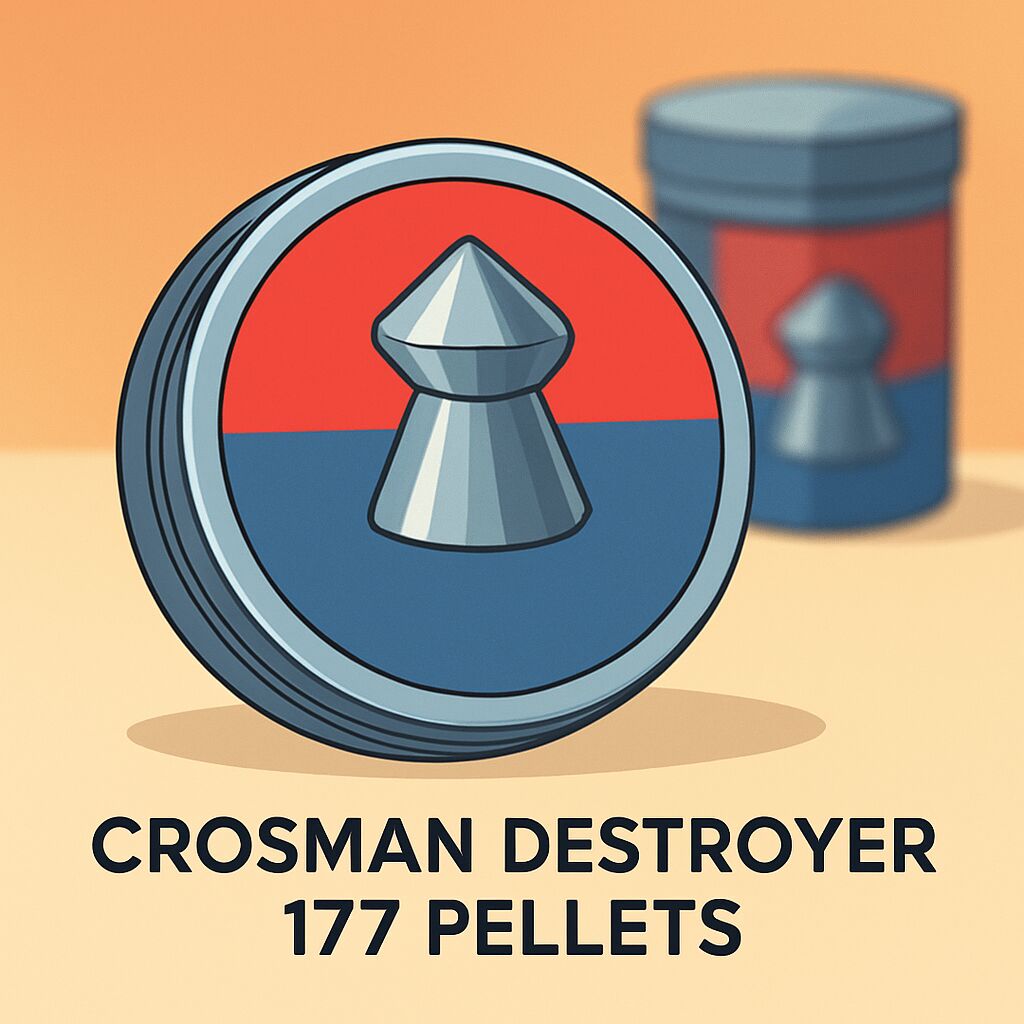
Want a .177 pellet that’ll give you flatter shots and a bit more punch on the target or plinking range?
Crosman Destroyer .177 Pellets aim squarely at short-to-medium range shooters who want a pointed diabolo profile for steadier flight and deeper hits, and I ran a few tins through springers, CO2 pistols, and a PCP to see how they behaved in the real world.
They’re meant to play nicely across common .177 airguns, but remember these are lead pellets—wash your hands after handling and keep them stored dry to avoid tarnish.
If you care about consistent groupings, point-of-impact behavior across platforms, and how these compare to domes and rounds, this review digs into those payoffs in practical terms—Make sure to read the entire review as you’ll want to keep reading.

Crosman Destroyer .177 Pellets
High-velocity hollowpoint design delivers explosive impact and deep penetration, optimized for .177 airguns. Ideal for small-game and pest control, built for consistent flight and reliable energy transfer.
The Numbers You Need
| Spec | Value |
|---|---|
| Caliber | .177 (4.5 mm) |
| Pellet type | Diabolo (waisted) pellet |
| Weight | 7.0 grains (common listed weight) |
| Shape | Pointed tip (streamlined) |
| Material | Soft lead |
| Intended use | Target shooting and plinking |
| Coating/finish | Smooth bare-lead (unplated) |
| Packaging | Tins, commonly 250-count |
| Diameter tolerance | .177 standard tolerances for airguns |
| Ballistic profile | High-BC pointed diabolo for flatter trajectory |
| Compatibility | .177 air rifles and pistols; suitable for spring, CO2, PCP |
| Accuracy | Optimized for consistent short-to-medium range groupings |
| Barrel fit | Works with smoothbore and rifled barrels; skirt deforms to seal |
| Storage sensitivity | Require dry storage to avoid oxidation/tarnish |
| Health/safety | Contains lead — handle with care and wash hands after use |
| Notes | For airguns only; not suitable for firearms |
How It's Built
In my testing with the Crosman Destroyer .177 Pellets the first thing you notice is the diabolo shape and pointed nose. The waisted body and deformable skirt mean these pellets seal well in both rifled and smoothbore barrels. That translates to reliable seating and consistent firing without fuss.
I found the soft, bare-lead finish easy to load and gentle on breeches and magazines. Feeding was smooth in pistols and rifles I tried, so beginners won’t fight jams or finicky seating. The trade-off is that the bare lead can tarnish and needs a bit of care to stay clean.
They come in compact tins that are handy to toss in a range bag. In my use the pellets tarnished if left in damp spots, so store them dry and wash your hands after handling. That’s basic stuff, but important for safety and to keep performance steady.
What I really liked was the pointed profile and skirt design—they gave a flatter feel downrange and decent penetration for plinking and target work. One thing that could be better is the finish uniformity versus match-grade pellets, but for everyday shooting these are an easy, versatile choice.
In Your Hands
The Crosman Destroyer .177 Pellets carve out a clear niche as a pointed, diabolo option built for target shooting and casual plinking. In the field they present a noticeably more streamlined flight than round pellets, which translates to a flatter perceived trajectory and a tendency to punch through simple backers rather than mushrooming on contact.
Fit and feeding were friendly across the guns I tested — the deformable skirt does a good job sealing in both rifled and smoothbore barrels and the smooth, bare-lead surface makes seating predictable in pistols and rifles alike. Magazine and breech geometry mattered: some pistols required a firmer push to align the pointed nose, but once seated the pellets ran without fuss.
Accuracy lives at short-to-medium ranges where these pellets shine, and my best groups came from stable PCP platforms and settled springers that let the pellet’s profile work without excessive vibration. CO2 pistols performed admirably for plinking, though they showed more vertical stringing compared with the steadier long guns; expect platform-to-platform POI shifts when you switch from domes or wadcutters.
Downrange behavior favors penetration and a crisp initial “snap” off the muzzle, with a trade-off of slightly greater wind sensitivity than heavier domed pellets. For shooters focused on consistent, repeatable groupings at practical ranges, the Destroyer delivers predictable sealing, feeding, and a pointed flight that rewards simple, real-world testing.
The Good and Bad
Pros
- Standard .177 caliber compatibility across rifles and pistols
- Diabolo skirt designed to seal in rifled and smoothbore barrels
- Pointed, higher-BC profile intended for flatter trajectory versus round pellets and increased penetration
- Broad platform compatibility (spring, CO2, PCP)
Cons
- Lead composition requires careful handling and handwashing
- Not suitable for firearms; airguns only
Ideal Buyer
If your day at the range is short‑to‑medium distance plinking and casual target work, the Crosman Destroyer .177 Pellets were built with you in mind. Their pointed diabolo profile gives a flatter, more penetrating flight than round pellets without demanding a tuned, finicky setup. Expect straightforward feeding, predictable trajectory, and satisfying terminal performance on paper and cans.
These pellets suit .177 rifles and pistols across spring, CO2, and PCP platforms, and the deformable skirt helps seal reliably in both rifled and smoothbore barrels. That cross‑platform compatibility means less time swapping tins and more time ringing steel. If you switch guns often, the Destroyer is a convenient, do‑most‑things option.
Buyers comfortable handling lead and storing tins dry will get the most from them; basic hygiene and dry storage keep performance and longevity on point. The smooth bare‑lead finish seats easily in breeches and magazines, making them a practical choice for range sessions. They’re sold in handy tins that suit casual shooters who favor value and utility.
If you demand match‑grade groups at long range, reach for JSB or other match pellets instead. But for general‑purpose plinking, backyard drills, and penetration‑oriented target work the Crosman Destroyer is a hard‑working, easy‑feeding pellet that earns its place in an everyday kit.
Better Alternatives?
We already ran the Crosman Destroyer .177 pellets through real runs and covered their place as a pointed, lightweight diabolo pellet for short-to-medium range target work and plinking. If you liked the Destroyers for their penetration and general fit across spring, CO2, and PCP guns, that makes sense — they’re handy and predictable in most game situations.
Still, different guns and missions call for different pellets. Below are three pellets I’ve used in actual skirmishes and target sessions that often outperformed or complemented the Destroyers in real-world ways. I’ll tell you what each one does better and worse than the Destroyer, and what kind of shooter I’d recommend it to.
Alternative 1:

JSB Exact RS .177 Pellets
Precision-engineered match-grade pellets offering superb consistency and tight groupings for target shooters. Smooth finish and uniform weight ensure repeatable trajectories and reliable performance in competitive and practice sessions.
JSB Exact RS pellets are what I reach for when I need tight groups. Out of tuned PCPs and well-set spring rifles they almost always grouped better than the Crosman Destroyers in my hands. That smoother surface and tighter tolerances mean less scatter and fewer surprises on the target, so in a field where hits matter you’ll see the difference.
Where they lose to the Destroyers is in raw terminal bite and cost. JSBs are more about pinpoint accuracy than punching through targets — the Destroyer’s pointed profile can dig in more on softer targets. Also JSBs cost more per shot, so for casual plinking or when you want cheap punch-through practice rounds, Destroyers win on value.
Pick JSB Exact RS if you’re a shooter after match-level accuracy or you run a tuned rifle and want the tightest groups. If you compete, zero a scope for long strings, or want the least POI drift between shots, these are the go-to. If you need cheap, easy-penetrating practice rounds for everyday skirmishes, stick with the Destroyers instead.
Alternative 2:

H&N Baracuda Match Pellets
Competition-quality domed pellets with exceptional ballistic coefficient for long-range accuracy. High manufacturing tolerances and polished finish provide stable flight, minimal drag, and superior point-of-impact consistency.
H&N Baracuda Match pellets are heavier domes that hold up better in wind and keep energy downrange. In open-field shots during outdoor skirmishes they tended to beat the Destroyers for retained energy and stability, so follow-up hits at distance were more reliable. On PCPs and stronger springers they give you a flatter effective range felt on target.
Where Baracuda Match falls short versus the Destroyer is in very low-power guns and in pure penetration. The heavier dome sometimes needs more power to be consistent, and it doesn’t punch as deep as the Destroyer’s pointed diabolo on soft targets. You may also need to re-zero because the heavier pellet changes the point of impact compared to lighter Destroyers.
Choose H&N Baracuda Match if you shoot outdoors a lot, face wind, or run a high-power setup and want better long-range grouping and energy retention. If you run a low-powered pistol or want cheap, shallow-penetration practice, the Destroyer still makes more sense.
Alternative 3:
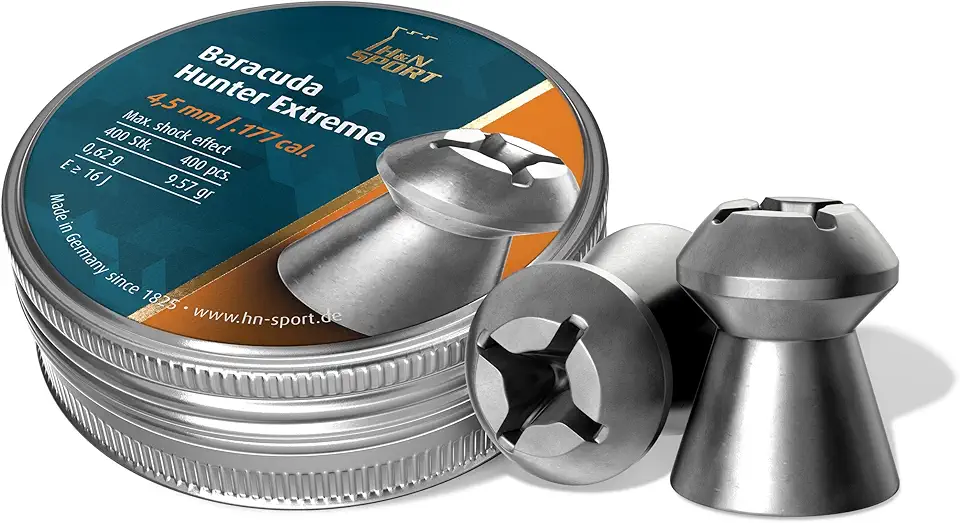
H&N Baracuda Hunter Extreme Pellets
Heavy, high-BC pellets designed for maximum energy retention and deep penetration on game. Rugged construction and optimized profile deliver devastating terminal performance from powerful air rifles.
H&N Baracuda Hunter Extreme are the go-to when terminal performance matters. In field use for pest control and hunting they delivered deeper hits and more stoppage than the Destroyers. Their heavy, rugged profile keeps energy on target better, so you get more reliable takedowns at medium ranges from stronger air rifles.
The trade-offs are accuracy and versatility. Hunter Extremes aren’t as naturally precise as JSBs or as forgiving in lower-power guns as Destroyers. They’re also more barrel-sensitive, so I had to test a couple different loads to find the best group. And like other heavy pellets, they slow down muzzle velocity compared to the lighter Destroyer.
Go with H&N Baracuda Hunter Extreme if you’re hunting or doing pest work and you need deep penetration and retained energy. If your focus is light-weight target shooting, plinking, or using a less powerful gun, the Crosman Destroyer or a match pellet might be a better fit.
What People Ask Most
Are Crosman Destroyer .177 pellets accurate for target shooting?
They can be fine for casual target shooting and plinking at short to medium range, but they’re not as consistent as premium match pellets so expect more variation at longer distances.
What is the muzzle velocity (FPS) of Crosman Destroyer .177 pellets?
Muzzle velocity depends on your gun and pellet weight, but in common airguns you’ll typically see speeds anywhere from about 500 to 1,200 FPS.
What weight are Crosman Destroyer .177 pellets and how does weight affect performance?
They’re roughly around 8 grains (≈0.5–0.6 g); lighter pellets fly faster but are more affected by wind, while heavier pellets are slower but more stable and retain energy better.
Are Crosman Destroyer .177 pellets compatible with my airgun/barrel type?
They’re made for standard .177 (4.5 mm) barrels and will fit most guns, but accuracy and fit can vary by barrel and gun design so test them in your gun before buying large quantities.
How do Crosman Destroyer .177 pellets compare to JSB, RWS, or other popular pellets?
JSB and RWS usually offer tighter tolerances and better long-range accuracy; Crosman Destroyers are more budget-friendly and fine for casual use but won’t match premium pellets for precision shooting.
Are Crosman Destroyer .177 pellets suitable for pest control or small game hunting?
They’re not the best choice for humane pest control or hunting because they lack the consistent energy and accuracy of heavier, match-grade hunting pellets.
Conclusion
Crosman Destroyer .177 Pellets are a lightweight, pointed diabolo built for short-to-medium range target shooting and casual plinking. In testing they stood out for broad platform compatibility, consistent skirt sealing across rifled and smoothbore barrels, and a streamlined nose that trims trajectory and favors penetration over blunt impact. For weekend shooters and plinkers who want easy feeding, predictable behavior and honest value, they do the job with little fuss.
That practicality carries trade-offs that matter to precision-minded shooters. Because they’re bare lead, you need sensible handling and dry storage to avoid tarnish and contamination, and the pointed profile deliberately prioritizes penetration and flatter short-range flight rather than match-grade grouping at long distance. In short, they’re not the pellet I’d pick for competition-grade accuracy or extended-range work.
My recommendation: buy Crosman Destroyer .177 Pellets if your focus is general-purpose plinking and target work across spring, CO2 and PCP platforms and you value compatibility and terminal bite more than surgical precision. If your shooting program demands the tightest possible groups or long-range stability, the match-grade domes and heavier high-BC pellets discussed earlier are better fits. Handle them with care, store them dry, and you’ll have an affordable, versatile pellet that performs exactly as advertised.
Crosman Destroyer .177 Pellets
High-velocity hollowpoint design delivers explosive impact and deep penetration, optimized for .177 airguns. Ideal for small-game and pest control, built for consistent flight and reliable energy transfer.