
How to Apply Face Paint? (2026)
How to apply face paint so you blend with the terrain and stay unseen on the field?
This guide gives simple steps to paint fast, safe, and effective for airsoft. You will learn a clear step‑by‑step method, the best gear, color choices, and removal tips.
I cover safety basics like patch tests, using cosmetic‑grade paints, and keeping applicators clean. You will also get field tips for touch‑ups, mirrors, and choosing colors for different terrain.
Read on to see a quick three‑color checklist, pattern ideas, and a printable touch‑up list. By the end you will know how to apply face paint like a pro and protect your skin.
Table of Contents
- How to apply face paint (step‑by‑step)
- What to use for face painting in airsoft?
- Choose your color camouflage paint based on topography of the land
- Airsoft camouflage technique (patterns, methods & pro tips)
- How to undo the Army face paint (safe removal & aftercare)
- What People Ask Most
- Final Thoughts on Face Paint for Airsoft
How to apply face paint (step‑by‑step)
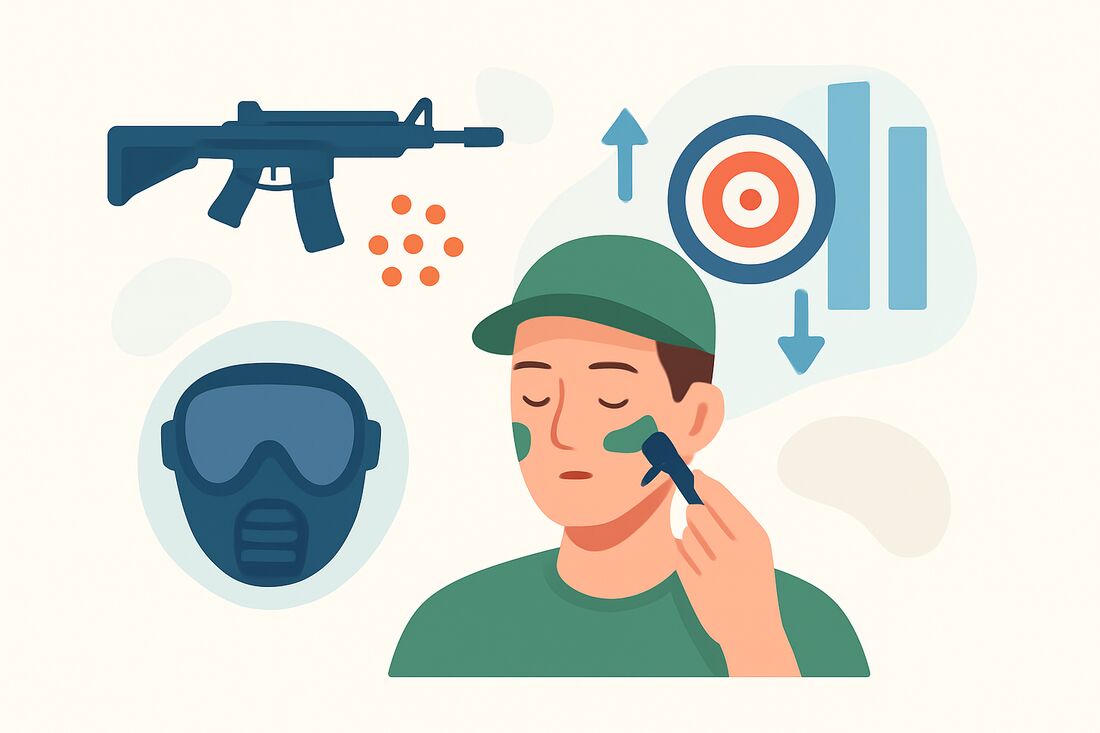
Here’s how to apply face paint: use three tones to break up your face shape and match the terrain. Work from dark to light and keep edges soft and irregular so you do not look like a clean mask.
Step 0: Prep your skin before any paint. Clean, dry skin helps paint stick; do a patch test 24 hours earlier to check for reactions and avoid broken skin, and if you use sunblock or moisturizer pick a light formula and let it absorb so paint adheres.
Step 1: Inspect your surroundings and the light before you start. Note the dominant colors around you and the sun direction so you can mimic natural shadows and highlights.
Step 2: Start with the darkest color on the most prominent features: nose, forehead ridge, cheekbones, chin and ears. Dark tones remove highlights and flatten contours so the face reads less like a human shape.
Step 3: Apply the second‑darkest shade, such as brown or olive, around and between your dark spots to begin breaking up the face into uneven patches. Keep these patches irregular and avoid tidy borders that give away form.
Step 4: Use the lightest color in natural hollows and shadow areas like eye sockets, under the nose and under the chin. Apply sparingly to add depth and contrast rather than to highlight features.
Step 5: Blend and stipple edges with a sponge or fingertip to soften transitions and avoid smooth, symmetric lines. Random blotches and soft edges are better than neat stripes — the sloppier the pattern, the more it hides you.
Step 6: Extend paint to the neck, behind the ears and hairline so there is no bright skin seam showing under gear. Put your goggles or helmet on, check for smudges, then do a mirror test in similar light and tweak as needed.
Quick checklist for a basic three‑color paint: dark on prominences, mid‑tone to fill, light in hollows. For quick field touch‑ups carry a small paint stick, a spare sponge and wipes, dab to re‑stipple after sweating rather than repainting large areas, and if you want an even simpler routine try these four simple steps.
What to use for face painting in airsoft?
Start with a basic kit: face paint sticks or compacts, water‑based grease paint, sponges, a stipple sponge, a small brush, a pocket mirror, wipes and baby oil or a remover. Use cosmetic‑grade, non‑toxic, hypoallergenic paints and avoid craft or house paints that can harm skin.
Pick sweat‑resistant formulas if you expect long, hot matches, but know grease paint lasts longest and usually needs oil to remove. Carry travel paint tubes, a spare sponge and a zip bag to keep gear dry, and for pattern ideas check army face paint.
Poor‑man alternatives like charcoal or fresh mud will work in a pinch but bring hygiene risks and stubborn stains; always clean before you apply and never use anything from the ground directly on skin.
Choose your color camouflage paint based on topography of the land
Match the dominant tones and the overall lightness or darkness of the area rather than trying to copy every plant species. If the landscape reads dark and green, go darker; if it is sandy or bright, lean tan and khaki to blend with the value of the ground.
Suggested palettes are simple: woodland pairs dark green, brown and black; desert uses tan, brown and light khaki; urban favors grey, muted brown and black; snow mixes white, grey and muted brown. In seasonal or mixed terrain shift toward the dominant color nearby and break patterns vertically or horizontally to match the environment.
Airsoft camouflage technique (patterns, methods & pro tips)
Use the starfish method for close‑quarters work and simple stripe or blot patterns for longer ranges. Starfish splits the face into irregular limbs that read as background; stripes and blotches help at distance where shapes blur.
The key is irregular, asymmetrical patterns — the sloppier the better for concealment, so avoid painting a smooth solid mask. Coordinate paint with your helmet, goggles and vest, paint hands and exposed neck, avoid painting where goggles will smear and step into sun and shade to test visibility before you move out.
How to undo the Army face paint (safe removal & aftercare)
Water‑based paints usually come off with wipes, warm water and a mild soap, while grease or cream paints need an oil‑based remover or baby oil rubbed in, then washed away with a gentle cleanser. Massage gently and repeat if needed until all residue is gone; do not scrub harshly.
After removal rinse, use a mild face wash and apply moisturizer to restore the skin barrier, and treat any irritation promptly. Sanitize sponges and brushes, dry paints fully before storing to avoid mold, and remember to review how to apply face paint before your next match so you arrive ready and safe.
What People Ask Most
What are the basic steps for how to apply face paint?
Start by cleaning and drying your face. Apply a thin base with a sponge then build details with brushes. Finish by setting with translucent powder.
How do I choose safe face paint as a beginner?
Pick water-based, cosmetic-grade face paints labeled for skin use. Avoid craft or acrylic paints and always do a small patch test on your arm before full application.
What brushes and tools should I use to learn how to apply face paint?
Use a soft sponge for base layers and small synthetic brushes for lines and details. Keep a damp cloth or water cup nearby to clean tools between colors.
How can I make face paint last longer without cracking?
Prep the skin by cleaning and using a light moisturizer or primer. Apply thin layers, let each dry, and set with translucent powder to prevent cracking.
What common mistakes should beginners avoid when learning how to apply face paint?
Don’t use too much paint at once, or details will smear. Also avoid skipping a patch test and never share unclean brushes.
How do I remove face paint safely at the end of the day?
Remove face paint with a gentle makeup remover or baby oil and warm water. Wash your face afterward and apply a light moisturizer to soothe the skin.
Can I use face paint on sensitive skin and how to apply face paint safely?
If you have sensitive or baby skin, choose hypoallergenic paints and do a patch test first. Avoid painting too close to the eyes and rinse immediately if irritation occurs.
Final Thoughts on Face Paint for Airsoft
The right approach trims shine and breaks your features so you blend into cover — a simple three‑color routine gives you a real concealment advantage, and with a little practice you’ll have about a 270-degree edge on staying unseen. This low‑fuss method works best for weekend skirmishers, mil‑sim players, and newcomers who want reliable camouflage without a lot of gear.
Don’t expect magic — bright sun, heavy sweat, or a poorly chosen pattern will still give you away, so plan to test and touch up in the field and mind hygiene. As we asked at the start — how to apply face paint — this piece walked you through prep, color selection, pattern choices, and safe removal so you can do each step confidently.
Practice in similar light, match your palette to the terrain, and keep a small touch‑up kit handy so the effect holds through a long game. You’ll get better each time you test your setup, and that steady improvement makes the difference between being noticed and staying part of the background.