
What Does a Mosfet Do in Airsoft? (2026)

What does a mosfet do in airsoft? This article gives a clear, simple answer and shows why many players add one to their guns.
At a basic level a MOSFET is an electronic switch that routes motor current and protects the mechanical trigger contacts. You will learn how it stops arcing, improves trigger response, and enables features like active braking, burst fire, precock and low-voltage cutoffs.
We also cover how MOSFETs work inside an AEG, the main types to choose from, and safe installation tips. I’ll explain who really needs one and which setups get the most benefit.
Read on for wiring diagrams, a quick glossary, a simple decision box, and step-by-step install guidance so you can decide if a MOSFET is right for your build.
What Does an Airsoft MOSFET Do?
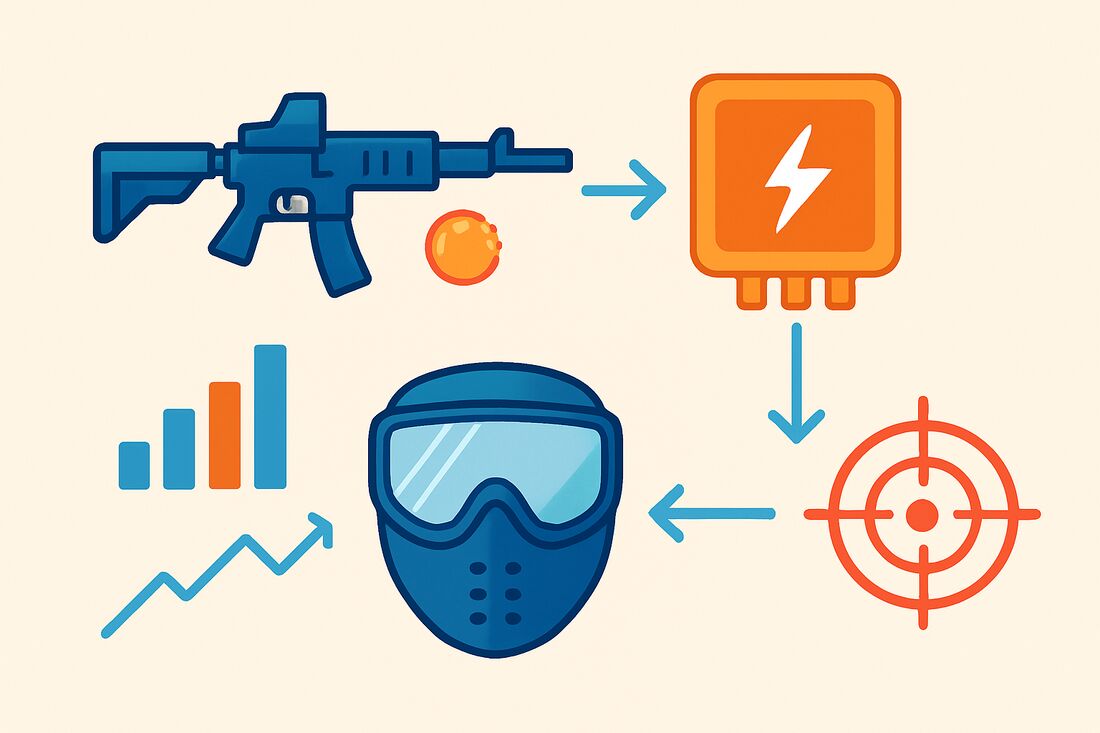
A MOSFET is an electronic switch that routes the high current for the motor instead of the mechanical trigger contacts, protecting the contacts and enabling electronics-based firing features.
If you’re asking what does a mosfet do in airsoft, it stops arcing and contact wear by taking the motor current away from tiny trigger blades that can burn and pit over time. It also switches motor current electronically which reduces the stress on those contact points and improves long-term reliability.
A MOSFET unlocks programmable features like active braking, burst modes, precocking, debounce and low-battery cutoffs that mechanical switches cannot provide. It also usually gives a firmer, snappier trigger feel because the trigger only needs to send a small control pulse to the MOSFET gate.
A common myth is that a MOSFET raises FPS — it does not alter the spring or barrel physics, though better wiring and lower losses can slightly affect rate of fire or battery life. If you want a deeper read on how MOSFETs and ETUs differ, see ETU and MOSFET guide.
Think of a MOSFET as a remote-controlled gate valve for motor current: Battery → MOSFET → Motor for the heavy path while the trigger just opens the gate. That simple wiring sketch helps you visualize why MOSFETs protect the delicate trigger contacts and handle the big current safely.
How a MOSFET Works in an AEG
At a practical level a MOSFET uses three pins called gate, drain and source, and most airsoft MOSFETs use an N-channel device as a low-side switch. The trigger still exists, but instead of carrying motor current it only drives the gate with a small current or voltage pulse.
Rds(on) is the on-resistance that matters in practice; a low Rds(on) keeps heat and voltage drop down when the MOSFET conducts. You must choose a MOSFET with a current rating comfortably above your motor’s draw, because undersized devices will run hot and lose performance.
Knowing what does a mosfet do in airsoft at this level helps you pick the right rating and mounting method for your build. If a MOSFET is undersized or wired poorly it will heat, reduce effective voltage to the motor and may fail, so match specs to the motor and battery.
MOSFETs prevent arcing by doing the actual switching electronically while the mechanical contacts only handle a tiny control signal, and many units include suppression to tame back-EMF from the motor. They come as internal drop-ins, custom harnesses or external inline boxes, with negative (ground) switching being most common in AEGs.
Simple labeled diagram in words: Trigger switch -> MOSFET gate; Battery+ -> Motor+; Motor- -> MOSFET drain -> MOSFET source -> Battery-. Keep wire runs short and use proper gauge to minimize voltage drop and heat in the circuit.
Benefits and Key Features of Using a MOSFET
The practical benefits are easy to spot: longer gearbox and trigger contact life, reduced arcing damage, and a more consistent, snappier trigger response on every shot. That cleaner response often feels like a faster, more dependable trigger pull in play.
MOSFETs enable programmable fire modes such as burst (3-round or adjustable), active braking to stop the piston quickly, debounce to ignore noisy triggers, and precocking for nearly instant lock time. For a concise overview of features and common setups see airsoft MOSFET basics.
Safety features are another big plus: low-voltage cutoff to protect LiPo cells, reverse-polarity protection, and the recommendation to use an inline fuse on the battery positive to guard against faults. These protections are particularly important on high-draw setups where batteries and wiring see real stress.
Be cautious with certain features: precocking improves trigger feel but increases stress on springs and gears if set aggressively, and active braking can be overzealous and wear parts if misconfigured. Use conservative settings at first and monitor wear when you change tuning.
Who benefits most? Players running high-ROF motors, LiPo batteries, or those who want burst and FCU-style control see the most value. Casual players with stock, low-current guns may only need a simple contact-protect MOSFET or even nothing beyond regular maintenance.
Example: a stock M4 with a basic MOSFET will stop contact arcing and tidy up the trigger without changing FPS or adding complexity. Example: a high-ROF LiPo build with a full FCU provides burst, precock and battery management but demands proper setup, wiring and investment.
Types of MOSFETs and How to Choose One
MOSFETs range from basic switching units that simply protect contacts, to mid-tier modules with active braking and basic modes, up to full programmable Fire Control Units (FCUs) that offer burst, precocking, logging and deep tuning. You can buy drop-in modules, custom internal harnesses, or external inline boxes depending on space and skill level.
When choosing, checklist the essentials: current rating and low Rds(on), gearbox and trigger compatibility, battery type support (LiPo-safe features), physical fit inside your receiver or grip, and the exact features you actually want. Measure the space and confirm connector and trigger plate compatibility before buying.
If money is tight a basic MOSFET gives the most important protection and a nicer trigger for minimal cost. If you want burst modes, fine precock or logging, move up to a mid-tier or FCU but accept higher cost and a learning curve.
Cost versus complexity is simple: cheap basic MOSFETs are easy and reliable, mid-tier units add useful modes, and FCUs give full control but require programming and tuning. For side-by-side comparisons and a deeper look at options consult this comprehensive guide.
When you ask what does a mosfet do in airsoft, let that answer guide your choice of part and how much you spend. Matching the MOSFET to your motor, battery and play-style avoids wasted money and potential damage.
Installation, Setup & Practical Tips
Plan your install before cutting any wires: photograph your current wiring, disconnect the battery, and gather the right tools and heatshrink. Starting clean and organized will save time and avoid mistakes.
For internal installs know the gearbox version, where the trigger plate sits, and how to route wires away from gearing. Some MOSFETs mount to the trigger plate or sit in the pistol grip, so plan physical placement and secure mounting points.
Use the correct wire gauge and upgrade thin stock leads when moving to LiPo or higher current motors, and always use an inline fuse on the battery positive. Prefer Deans or XT60 over stock Tamiya connectors on high-current builds, and insulate every solder joint with good heatshrink.
Start programming conservatively: set light active braking, disable aggressive precock, and enable low-voltage cutoff to protect batteries. Dry-fire with a low charge and then perform short live tests into foam before fielding the gun.
Troubleshooting basics: if the gun won’t fire, check battery charge, the inline fuse, connectors and MOSFET wiring; if the motor runs continuously inspect trigger wiring for a short or a stuck gate. Overheating MOSFETs usually mean undersized components or poor wiring and should be corrected immediately to avoid failure.
Simple wiring diagram in text: Battery+ -> Motor+ ; Motor- -> MOSFET drain ; MOSFET source -> Battery-. The trigger switch only connects to the MOSFET gate so the gate handles a tiny control signal while the MOSFET handles the heavy current.
Should you install one? Pros include protecting trigger contacts, a sharper trigger feel, programmable modes and better LiPo safety. Cons are extra cost, more wiring complexity, and the potential for added wear if features like precock or aggressive braking are misused.
If you are unsure about soldering or routing inside a gearbox, get a pro to install it; a bad joint or a shorted MOSFET can damage expensive parts. Always remove the battery before opening the gun and follow fusing and polarity protection best practices for safety.
MOSFET — Metal Oxide Semiconductor Field Effect Transistor; it acts like an electronic gate that controls large currents with a tiny control signal. In airsoft it routes motor current away from the trigger contacts so those contacts do not arc and fail.
Rds(on) — the MOSFET’s on-resistance, measured in milliohms; lower values mean less heat and less voltage drop when the device conducts. Choosing a MOSFET with a low Rds(on) and a proper current rating is key for high-current motors and LiPo setups.
AB (Active Braking) — a feature that applies a counter-voltage or short to the motor to stop the piston quickly after a shot. It shortens lock time and can help control single-shot behavior or reduce cycle time when tuned correctly.
Pre-cocking — the MOSFET holds the piston partway or fully cocked so the gun fires with very little delay on trigger pull. This gives near-instant trigger feel but increases stress on gears and springs if overused.
FCU — Fire Control Unit, a fully programmable MOSFET system that offers burst modes, logging, adjustable braking and other advanced features. FCUs are best for experienced users who want detailed control and tuning options.
Debounce — an electronic filter that ignores rapid on/off chatter from a mechanical switch so the MOSFET sees a clean trigger signal. It prevents accidental double-fires or misreads caused by contact bounce during trigger actuation.
What People Ask Most
What does a mosfet do in airsoft?
A mosfet acts as an electronic switch that routes power to the motor instead of the metal trigger contacts. It protects wiring and trigger parts while giving cleaner, more reliable electrical flow.
How does a MOSFET protect my airsoft gun’s trigger?
It takes the heavy current away from the mechanical trigger contacts so they don’t spark and wear out. This reduces arcing and keeps the trigger working smoothly longer.
Will a MOSFET make my gun shoot harder or increase FPS?
No, a MOSFET does not change spring power or muzzle energy. It can improve electrical efficiency and trigger response, but not the actual shot strength.
Can a MOSFET improve trigger response and rate of fire?
Yes, by switching power electronically a MOSFET gives crisper trigger pulls and can reduce electrical delay. That often feels like a faster, more responsive gun.
Do I need a MOSFET for basic airsoft play?
Not strictly, but a MOSFET is recommended for reliability, especially if you use modern batteries or high-speed setups. It prevents common electrical problems and cuts down on maintenance.
Will a MOSFET damage my battery or electrical system?
A correctly installed MOSFET protects the battery and wiring by reducing heat and arcing. Poor installation or the wrong wiring, however, can cause issues, so proper setup is important.
Are MOSFETs only for advanced players or expensive upgrades?
No, MOSFETs benefit beginners too by improving reliability and reducing trigger wear. They are a practical upgrade for anyone who wants fewer electrical problems in the field.
Final Thoughts on MOSFETs in Airsoft
As you saw from the start—whether you’re tuning a 270 build or upgrading a competition gun—a MOSFET is the electronic gate that takes motor current off fragile trigger contacts, giving you cleaner, snappier performance. It protects parts and unlocks programmable modes and a sharper trigger feel you’ll notice in the field.
In plain terms, it shifts the heavy current to electronics so your gearbox and contacts last longer and shots stay consistent. Realistically, precocking and aggressive settings can stress gears, and an undersized unit or poor wiring may overheat, so keep settings conservative or get expert help. Players with high-ROF builds, LiPo packs, or a taste for burst/FCU features benefit most; casual stock users might not need one.
We began by asking what a MOSFET does, and this guide showed how it switches current, prevents arcing, and how to choose and install one safely. Follow the wiring, sizing, and safety checks here and you’ll avoid common failures and enjoy more reliable, responsive performance on game day.