
What Is a Peep Sight on a Rifle? (2026)
What is a peep sight on a rifle and why might you want one? This article gives a simple answer and shows when a peep sight helps you shoot better.
You will get a clear definition, the main parts, and how it works. We also cover common names like aperture sight and ghost ring.
Next, we explain the advantages, when peep beats open sights or red dots, and the difference between large and small apertures. You will also find step-by-step tips for zeroing, training drills, and an airsoft note.
We include labeled photos, sight-picture examples, a short zeroing checklist, and real-world use cases for hunters, competitors, and tactical shooters. Read on to learn practical, easy-to-follow advice about peep sights.
PEEP SIGHTS: THE BASICS
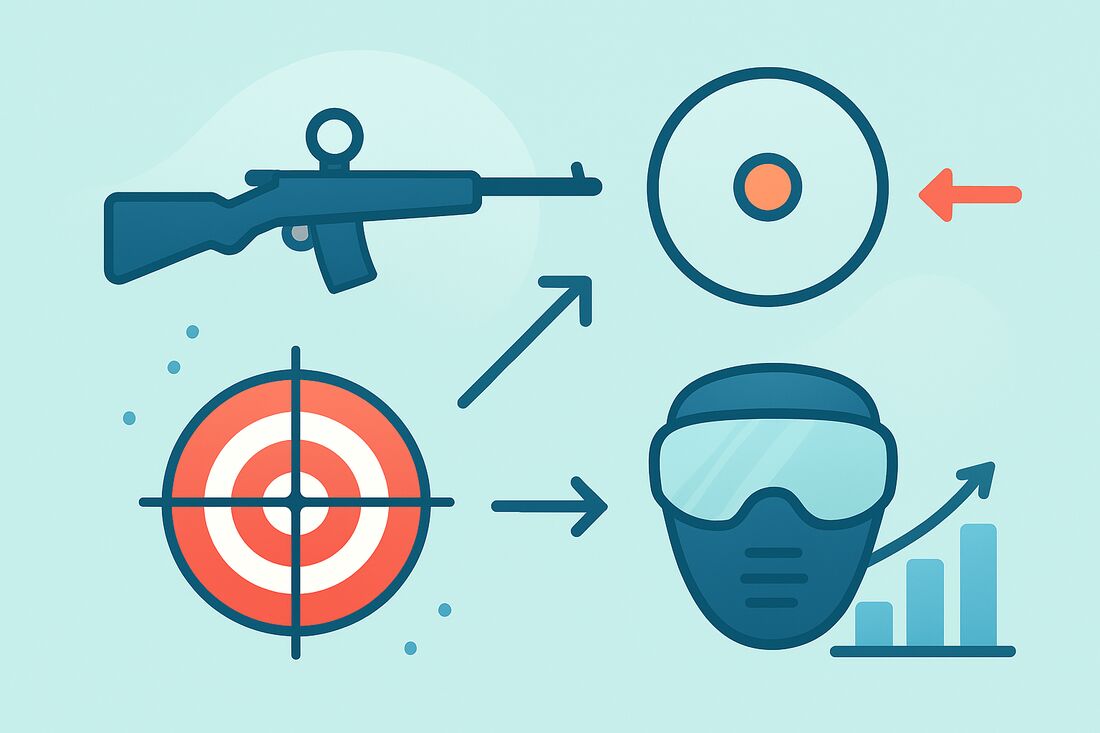
A peep sight (aperture sight) is a rear sight made of a small hole you look through to align the front sight and target; it uses the eye’s tendency to centre objects in a circle to improve accuracy.
If you’ve ever typed what is a peep sight on a rifle into a search, this short section gives a clear picture. For the formal usage and quick meaning see the dictionary definition for the term.
In plain words, a peep sight has two main pieces: a rear aperture and a front sight. The rear aperture mounts on the receiver, tang or a rail, and the front sight may be a post, a bead or fitted into a globe. Many systems use interchangeable aperture inserts so you can swap sizes.
How it works is simple and non-technical. The small hole acts like a pinhole and increases apparent depth of field so the front sight looks sharp. Your brain naturally centres the front sight in the ring, reducing parallax and improving repeatability between shots.
There are a few common names and variants: the terms aperture sight or peep are interchangeable; a ghost ring is a larger aperture for faster aiming; tang peeps mount on the tang of a rifle; diopter-style peeps offer fine focus adjustments. Each style keeps the same basic idea — look through a ring to aim.
You’ll commonly see peep sights on hunting rifles, rimfires, match rifles and on some tactical guns with ghost-ring peeps for short barrels. They’re also popular in airsoft training to build iron-sight fundamentals, and a labelled close-up photo of rear aperture, front sight and sight picture helps beginners learn fast.
THE ADVANTAGES OF USING A PEEP SIGHT
Peep sights improve precision and repeatability compared with a simple notch-and-post by making the sight picture easier to reproduce. The aperture forces a consistent eye–sight relationship, speeds natural centring of the front sight and keeps a larger usable field-of-view than a magnified optic.
Practically, hunters get a rugged, battery-free sighting system that aids fast acquisition at moderate ranges and works in bad weather. Target shooters get a steady, repeatable sight picture for tighter groups. Tactical shooters like ghost rings because they balance speed and accuracy for close work.
There are trade-offs: peeps give no magnification and very small apertures reduce visible light, so they can feel slower in dim conditions. They also require a short learning curve if you are used to open sights or red-dots, but most shooters adapt quickly.
In short, a peep beats an open notch when you want repeatable precision at distance and a long sight radius helps tighten groups. If you need extreme speed at very close range or want magnification, a red dot or scope is preferable.
Peep Sight vs Open Sight: A Tale of Two Radii
To answer what is a peep sight on a rifle in practical terms, you need to understand sight radius. Sight radius is the distance between the front and rear sight; a longer radius reduces the angular error caused by small misalignments, turning the same physical error into a smaller point-of-impact shift downrange.
Peep sights mitigate alignment errors by combining the aperture’s centring effect with the depth-of-field benefit of the small hole. That reduces human error especially when sight radius is limited, because the eye naturally locks the front sight in the center of the ring.
Open notch sights are quick to pick up but they are easier to misalign and depend on a perfect sight picture for best groups. A peep sight generally gives smaller, more consistent groups at distance, provided you maintain a proper cheek weld and consistent eye position.
Tang or receiver-mounted peeps extend the effective sight radius because the rear aperture sits farther back on the rifle, which lessens angular error and improves accuracy. Actionable takeaway: for precision at 50–100 yards and beyond, a peep plus a long sight radius will usually beat a simple notch-and-post; for tight CQB or when magnification is needed, pick a ghost ring, red dot or scope instead. For a quick lookup you can also see a plain dictionary entry on the term.
Large peepholes
“Large” peepholes, often called ghost rings, have a much wider aperture than a pinhole-style peep. Visually the ghost ring shows a slim, bright ring around the target and lets your eye find the front sight faster, while a small pinhole makes the front sight appear very crisp against the target.
The trade-offs are straightforward: large apertures let in more light and speed target acquisition but sacrifice ultimate precision; small apertures give sharper front-sight focus and better precision but make the image dimmer and the sight picture slower to pick up. Choose based on your priorities.
Use large or ghost-ring apertures for close, moving targets, low-light work or general-purpose defensive setups. Use small pinhole apertures for bench or match shooting and deliberate, longer shots in bright conditions. Most shooters benefit from a 2–3 aperture kit so they can switch sizes for different drills and light levels.
Peep Sights: How to Improve Your Vision and Shooting
Start with fundamentals: establish a consistent cheek weld and head position and put your eye centred on the aperture. Focus your eye on the front sight rather than the target, press the trigger with a smooth controlled motion, and hold follow-through until the shot settles.
Zeroing basics for a peep are simple: begin at a modest distance like 25–50 yards depending on your rifle and caliber, fire tight groups, then adjust windage and elevation by moving the rear aperture or tweaking the front sight. Once groups are centered, confirm your zero at the hunting or competition distance you plan to use.
Train with practical drills such as dry-fire front-sight focus, dot-to-dot target transitions at varying distances, and rapid acquisition drills using different aperture sizes. These exercises train your eye to index the front sight in the ring quickly and consistently.
Consider upgrades like interchangeable aperture plates, fiber-optic or glow front posts, diopter inserts for fine tuning and protective ears. For gear ideas and setup tips check this peep sights guide which outlines common plates and mounting options.
Maintenance is basic but important: keep the aperture free of grime, torque mount screws to spec, and avoid an inconsistent cheek weld. Common mistakes include focusing on the target instead of the front sight and swapping aperture sizes without re-zeroing.
Airsoft note: peep sights are perfect for learning iron-sight fundamentals in airsoft, but adjust for the game’s shorter effective ranges and BB drop. Use larger apertures for CQB and smaller for controlled target practice to practice exactly how to use peep sight fundamentals on a real rifle.
What People Ask Most
What is a peep sight on a rifle?
A peep sight is a small round aperture placed near the shooter’s eye on a rifle. It helps align the front sight and the target for more consistent aim.
How does a peep sight improve shooting accuracy?
The tiny hole forces your eye to center the front sight automatically, which steadies aim. This makes grouping shots tighter without complicated adjustments.
Is a peep sight hard for beginners to learn?
No, beginners usually pick it up quickly with a little practice. It can be easier than lining up open sights because the eye naturally centers the view.
Can I use a peep sight for hunting or only for target shooting?
Peep sights work well for both hunting and target shooting in many situations. They offer faster, more accurate aiming at moderate distances without needing optics.
Are peep sights better than open sights?
Peep sights often give more consistent accuracy than open sights, especially at longer ranges. However, some shooters prefer open sights for quick target acquisition in close quarters.
What common mistakes do new shooters make with peep sights?
New shooters often use the wrong eye relief or focus on the wrong sight. Another mistake is inconsistent cheek placement on the stock, which changes the sight picture.
Do peep sights need special maintenance or tools?
Peep sights need only basic care like keeping them clean and snug on the rifle. Routine checks for tight screws and a clear aperture are usually enough.
Final Thoughts on Peep Sights
If you liked numbers, 270 shows how specific gear choices matter — a peep sight gives a simple optical trick that turns tiny alignment wins into tighter groups. We opened by defining a peep as an aperture rear sight and showed how that centring effect improves consistency and repeatability. The guide walked through variants, sight radius, and practical drills so you can see when and why a peep helps your shooting.
The core benefit is steadier, more repeatable aiming without batteries or electronics, which gives better hits at range and quicker follow-up shots. Realistically, a peep won’t magnify and very small apertures dim the view or demand a bit of practice. That trade-off suits hunters needing rugged speed, target shooters after precision, and tactical or airsoft players honing iron-sight skills.
You learned how peeps compare to open notches and red dots, when to pick a ghost ring versus a pinhole, and simple zeroing and drill steps to get started. Try a few aperture sizes and a steady cheek weld — you’ll likely find small changes make a big difference in your shooting.