
What Is a Peq Box? (2026)

What is a peq box and why do players strap one to their rails?
This article answers what is a peq box in plain terms and shows the real uses, types, and safety tips. You will learn about dummy replicas, functional laser/light units, and PEQ battery boxes for front-wired AEGs.
We also cover how lasers, IR illuminators, and white lights work, plus battery fit and wiring basics. Expect clear photos, quick install checklists, and essential legal and eye-safety warnings.
Read on to find buying advice, simple troubleshooting, and step-by-step guides so you can pick and use the right PEQ for your airsoft setup. The rest of the article breaks everything down into easy-to-follow sections and visuals.
Airsoft PEQ Box — what is it?
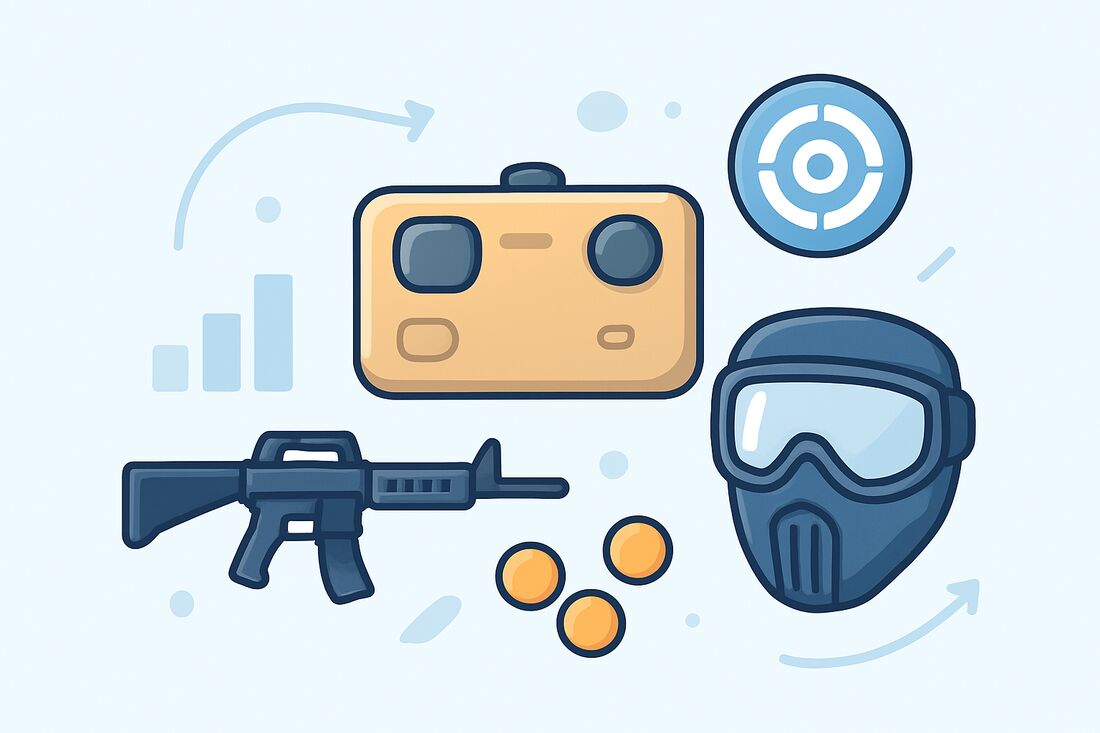
If you’re asking what is a peq box, it’s a small rail-mounted housing originally used to hold military aiming and illumination devices that in airsoft serves as a cosmetic replica, a working laser/light module, or a battery-storage box for front-wired AEGs.
PEQ traces back to military pointers and illuminators such as the AN/PEQ-2, and that look carried over into civilian and airsoft gear. When players ask what is a peq box they usually refer to one of three roles: purely cosmetic dummies, functional laser/illuminator modules (visible or IR), or a forward battery cavity for front-wired guns.
These boxes typically mount on the bottom or front of a 20mm Picatinny rail or on the side of some handguards depending on the design. Players add them to improve realism, to use with NVGs during night games, or simply to move the battery out of the stock for easier wiring and balance. For visuals, expect labeled photos showing a PEQ on an M4 rail and side-by-side images of dummy versus functional units to help identify differences.
Types of PEQ Boxes (dummy vs functional)
Dummy or cosmetic replicas are light, hollow shells meant only to match military styling and add realism to an airsoft rifle without electronics or batteries. Functional units contain electronics such as visible lasers, IR lasers, IR illuminators, white lights, or act as a battery-storage cavity for front-wired AEGs.
There are a few sub-variants to watch for: military-spec replicas that copy real PEQ layout, compact battery-only boxes sized for single LiPo sticks or CR123 cells, combo modules that offer laser plus light plus IR, and cheap generic units that vary wildly in power and build. You can usually spot a functional unit by lens apertures, mode selector knobs, battery caps, wiring exits or vent holes, while a sealed face with no seams is often a dummy.
Materials range from polymer to aluminum; polymer keeps weight down and is cheaper while metal adds durability and better heat dissipation for high-power lights. Dummy units are inexpensive and carry little legal risk, whereas functional boxes are useful but require wiring, batteries, and awareness of safety and local regulations.
What functions do PEQ modules provide?
Visible aiming lasers give a fast dot for short-range target acquisition and come in red or green variants; green appears brighter in daylight but is more conspicuous. These lasers are commonly low power in airsoft replica modules, often in the 1–5 mW range listed by manufacturers, which helps balance visibility with safety. Always check the spec sheet so you know whether you’re buying a low-power visible pointer or a higher-output device.
IR lasers and IR illuminators are for night-vision play; an IR laser projects a tight invisible dot used for marking, while an IR illuminator floods an area so NVGs can see a scene. The difference is tactical: a laser marks a point, an illuminator creates usable light for low-light navigation. IR modules can be much more power-hungry and are useful only when your teammates run NVGs, so restrict use to controlled night games.
White lights in PEQ housings act like compact weapon lights and are measured in lumens; a small PEQ flashlight may range from around 100 to several hundred lumens depending on model. Many modern modules combine laser, IR, and white light into one unit with a selector switch or remote pad to cycle modes, and some even remember the last mode used. If you want a ready-made combo, a tried product like a dedicated light and laser unit lists modes and power so you can match it to your needs.
Most functional modules include windage and elevation screws for boresighting, which you should adjust before relying on the laser for aiming. Battery life varies: lasers usually just sip power and can run many hours, while bright white lights or IR illuminators may drain a small pack in tens of minutes; typical cells include CR123/16340, 14500, or small Li-ion sticks. Laser safety is critical: never point lasers at people’s eyes or aircraft, obey local laws on laser power and public use, and only use IR gear in accepted NVG play environments.
Quick boresight routine: secure the rifle on a rest, place a clear target at a known distance (10–25 m), and power up the module to see the dot. Adjust windage screws until the dot is centered horizontally, then tweak elevation for vertical alignment; confirm by firing a controlled group or checking point-of-impact equivalency and refine as needed.
How a PEQ battery box is used on airsoft AEGs
On front-wired AEGs the PEQ cavity gives a neat, external place to stow the battery away from the stock or gearbox, which simplifies wiring and preserves internal space. Common battery shapes for PEQ cavities are single-stack LiPo sticks, CR123-sized cells, or short custom packs, so measure the internal space before committing to a pack type. Verify connector compatibility (Deans, Tamiya, XT30, etc.) or plan for a pigtail adapter if needed.
Install checklist in brief: confirm your rifle is front-wired and measure the cavity; pick a battery that fits the measured dimensions and has the right connector; route the wires through the unit’s exit port using a strain relief; secure the battery with foam or Velcro and test polarity and function before sealing the cap. Use gentle bends in the wire and avoid sharp kinks where the cable leaves the box to reduce the chance of shorts under movement.
Safety tips: never overstuff the cavity or compress cells tightly, and avoid charging cells inside a sealed PEQ unless the unit includes a dedicated charge port and is designed for that use. Add protective foam or a small adhesive strap to keep the pack from shifting, and inspect wiring periodically for pinches or exposed insulation. Visual guides that show wiring exits and recommended foam placement are very helpful when planning an install.
How to choose a PEQ module: functions, material, mounting, switches
Start with purpose: decide whether you want pure aesthetics, a battery box, a visible aiming laser, or NVG-capable IR illumination, because that determines which features matter most. Check mounting compatibility — most units assume a 20mm Picatinny rail but you may need M-LOK or adapter hardware for modern handguards. Confirm the internal cavity fits your chosen battery type and inspect the battery cap threads and O-ring seals for water resistance.
Think about switches and ergonomics: rotary selectors give clear position feedback while push buttons may be faster for momentary activation; consider whether the unit supports a remote pressure pad and where that pad will mount on your handguard. Decide on material: polymer keeps weight low and is often cheaper, while aluminum improves heat handling and durability; look for windage/elevation adjusters, a strobe option if useful, and clear power specs for both visible and IR outputs.
Before you buy, inspect seller photos for cavity dimensions, read real-world reviews for laser alignment and sealing, and check return and warranty policies to avoid surprises. If you want to compare choices or purchase ready-made units and sizes, a search to buy PEQ boxes can show common models and listings. Remember the core question, what is a peq box, and match that answer to how you will actually use it — aesthetic, battery storage, or a working aiming/illumination tool — then pick a reliable brand with spare parts and clear specs to reduce headaches in the field.
What People Ask Most
What is a PEQ box?
A PEQ box is a small aiming and accessory unit that mounts on a firearm. It commonly houses lasers and illumination tools to help with aiming and target identification.
How does a PEQ box benefit firearm users?
A PEQ box helps you aim faster and more accurately in low light by providing a visible or infrared laser. It also keeps multiple tools in one compact unit for easier use.
Can I use a PEQ box for training or home defense?
Yes, a PEQ box can be useful for training and home defense by improving target acquisition and awareness in dim conditions. Always practice safe handling and learn how the unit works before relying on it.
Is a PEQ box just the same as a flashlight or laser?
Not exactly — PEQ boxes often combine lasers, IR emitters, and illumination in one housing rather than being just a simple flashlight. They are designed to work with optics and night-vision equipment as well.
Are PEQ boxes legal to own and use?
Laws about PEQ boxes vary by location and by how they are used. Check local and federal regulations and follow all rules before buying or mounting one.
How should I mount and zero a PEQ box safely?
Mount the PEQ box to a compatible rail according to the manufacturer’s instructions and secure it tightly. Zero it in a safe area by aligning the laser with your sights and confirming at short range before extending distance.
Can beginners safely learn to use a PEQ box?
Yes, beginners can learn to use a PEQ box with basic firearms training and supervised practice. Start slow, follow safety rules, and get comfortable with the controls before using it in real situations.
Final Thoughts on PEQ Boxes
We opened by asking “what is a peq box?” and answered it plainly: a rail‑mounted housing used for cosmetic replicas, active laser/illumination modules, or a tidy battery cavity for front‑wired AEGs — I’ve even seen a 270 mAh stick squeezed into tight builds. The guide covered dummy vs functional units, core functions like visible/IR lasers and lights, and the fit‑and‑install details you need. That foundation makes the tips easier to use at the field.
Bottom line: the benefit is authentic kit that also adds practical tools — quicker target acquisition, NVG support, or simpler battery routing. One caution: functional units bring wiring, batteries, and laser risks, so check local laws and never point beams at faces or aircraft. These suit CQB/NVG players, milsim fans, and front‑wired AEG users.
Because we began with “what is a peq box?” and then walked through types, functions, and installs, you should now know which option fits and how to use it safely. Bring that into your next setup and enjoy cleaner wiring and more authentic gear.