
What Is an IR Illuminator? (2026)
what is an ir illuminator? Want to see in the dark without using visible light?
This article gives a clear, simple answer and shows how these devices work. You will learn about common forms, key wavelengths like 850 nm vs 940 nm, and real uses such as CCTV, tactical/airsoft, and wildlife observation.
You will also get practical help for choosing, installing, and troubleshooting an IR illuminator. Expect a spec comparison, helpful diagrams, and a short field test so you can pick the right unit with confidence.
Read on for easy, plain-English guidance that makes night‑vision gear less mysterious. By the end, the question “what is an ir illuminator” will be answered and ready for real use.
What is an IR Illuminator?
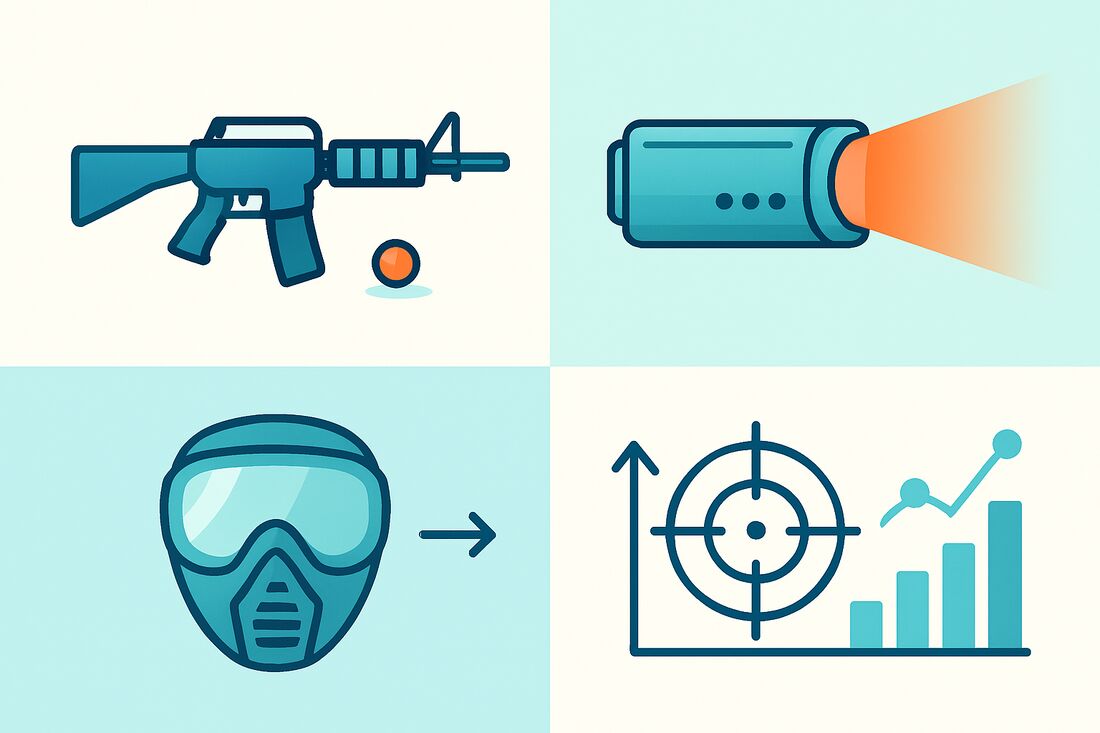
If you’ve ever asked what is an ir illuminator, think of it as a light source that emits near‑infrared (NIR) light to brighten a scene for cameras or night‑vision devices. It sends out photons outside the visible band so the world looks dark to our eyes but bright to sensors.
An illuminator is not a spotlight or camera flash aimed at humans, and it differs from a night‑vision intensifier which amplifies existing light rather than creating it. As an active light source, an IR illuminator is designed specifically to help cameras or goggles see in low light.
Form factors include built‑in camera rings, external flood and spot units, handheld models, and weapon‑mounted lights for tactical or airsoft use. Common uses are CCTV perimeter surveillance, tactical NV ops in airsoft, wildlife observation, and search & rescue; for an accessible primer see the Pulsar guide.
How Do They Work?
An IR illuminator emits NIR photons that travel to objects and reflect back to a sensor, which converts that light to an electrical signal and then into an image. The wavelengths are typically measured in nanometers and are just beyond visible red.
Cameras use CMOS or CCD sensors that are often sensitive to NIR, while image intensifier tubes in NV goggles respond differently and may need specific illumination. Many cameras use an IR cut filter by day to preserve color and switch it out at night so the sensor can pick up infrared light.
Controls include beam angle and focus, which choose a narrow spot for distance or a wide flood for coverage, plus power or brightness settings and photocell/day‑night switching. Expect tradeoffs: a more powerful unit gives longer range but draws more power and makes more heat, while a narrow beam increases range at the cost of area covered.
IR Illuminator Output and Wavelengths
To understand what is an ir illuminator you need to know about wavelengths and output characteristics. Two common choices are 850 nm, which often shows a faint red glow and gives good camera sensitivity, and 940 nm, which is covert to the human eye but is less visible to many cameras.
In practice, 850 nm tends to deliver better range and contrast on most security cameras, while 940 nm is chosen when stealth is required, such as wildlife work or covert operations. LEDs provide safer, wide beams for area coverage and lasers create tight, long‑range spots but bring eye‑safety rules; for guidance on laser selection see select IR lasers.
Specs to check include radiant output (mW or W), beam angle (degrees), claimed and field‑tested effective range, power consumption (W), LED life in hours, and IP/weatherproof rating. Remember that manufacturer ranges are optimistic; independent field tests often give a more realistic picture of usable distance.
Field note: tested on a mid‑range CMOS security camera with a 3W 850 nm LED ring, subject recognition was clear at about 50 meters and silhouettes were usable near 100 meters in very low ambient light. The same power level at 940 nm required higher output to reach similar clarity and showed reduced contrast at longer distances.
Glossary: “nm” is a nanometer, the unit used for wavelength, and “beam angle” is the spread of the emitted light in degrees; an “IR cut filter” blocks infrared during daylight so colors render normally. “PoE” means power over Ethernet, “IP rating” indicates weatherproofing, and “radiant flux” measures the total emitted optical power of the illuminator.
Choosing the Right IR Illuminator
Begin by matching the unit to your application: surveillance needs steady floods with wide coverage, tactical or airsoft users often want compact weapon mounts with adjustable intensity, and wildlife observers may prefer covert 940 nm options. Consider required range, beam pattern, mounting style, and whether you need battery power, 12–24V input, or PoE for fixed installations.
To pick the right tool you must check compatibility with your camera or NV device by reviewing sensor spectral response and running real tests. Remember what is an ir illuminator should be chosen based on how well its output pairs with your camera’s sensitivity, not only on quoted range numbers.
Operational considerations include ensuring adequate IP weatherproofing for outdoor work, sufficient heat sinking for continuous use, sensible duty cycle ratings, and a warranty for the LEDs or diodes. For covert versus semi‑covert choice, 940 nm hides visible glow but sacrifices some sensitivity, while 850 nm balances power and detection.
Quick buying checklist to scan: wavelength (850 vs 940 nm), realistic effective range, beam angle or adjustable focus, power input and expected battery life, mounting options and size/weight, IP/weatherproof rating, dim/adjustable output, and warranty. Use that list to filter models before hands‑on testing in your real environment.
Installation and Setup (plus practical tips & troubleshooting)
Aim the illuminator so its beam overlaps the camera or NV sensor field of view and start testing at low power, increasing until the image is well exposed. Adjust camera exposure and disable IR cut during trials, then test at the target distances and under the ambient conditions you’ll face.
Match voltage and current to the device specs, wire with a proper fuse or connector, and plan for runtime by choosing PoE, mains, or battery power that fits your duty cycle. Keep heatsinks clear and allow airflow for continuous use to prevent thermal shutdown and shorten LED life.
If the image is washed out, reduce IR power or widen the beam; if you lack range, try a narrower beam or higher output; and if you see flicker or banding, check camera shutter speed and refresh sync. No output usually means a power, photocell, or day/night setting issue, so verify those before replacing hardware.
Stay safe: never point lasers or concentrated IR at people’s eyes or aircraft, and follow IEC/FDA guidance for laser products when applicable. For weapon and airsoft rigs prefer compact QD‑mount lights with adjustable intensity, avoid accidental strobes in close quarters, test gear with teammates, and consult practical rifle setup advice when configuring rifle mounts.
What People Ask Most
What is an IR illuminator?
An IR illuminator is a device that emits invisible infrared light to brighten dark scenes for cameras. It helps cameras capture clearer images at night without using visible light.
How does an IR illuminator help night vision cameras?
An IR illuminator adds extra infrared light that the camera sensor can detect, improving visibility in low or no light. This makes night recordings clearer and more useful for security or wildlife monitoring.
Can I use an IR illuminator for outdoor security?
Yes, IR illuminators are commonly used to boost nighttime coverage for outdoor security cameras. They help reveal faces and movement in the dark without drawing attention with bright visible lights.
Will an IR illuminator be visible to people?
Most IR illuminators are invisible to the human eye and won’t look like a shining light. Some models have a faint red glow you might see up close, but they usually don’t light up an area like regular lamps.
Are IR illuminators safe for pets and eyes?
At normal security levels, IR light is generally considered safe for people and pets when used properly. Avoid pointing strong IR sources directly into someone’s eyes and follow the device’s safety instructions.
How far does an IR illuminator work?
Range varies by device and setup, but an IR illuminator increases how far a camera can see in the dark. Proper placement and aiming will help cover the areas you need to monitor.
Do IR illuminators require special cameras?
They work best with cameras that can detect infrared, like most night-vision security cameras. If a camera only records visible light, an IR illuminator won’t improve its night performance.
Final Thoughts on IR Illuminators
If you’re choosing kit, even a compact 270 illuminator proves how much an active near‑infrared light can change a night scene—turning the invisible into usable contrast for cameras and night‑vision. This guide showed what an IR illuminator is, how it sends NIR photons to reveal shape and motion, and why beam pattern, wavelength and power matter for real results. The core benefit is simple: reliable, controllable low‑light scene illumination so your optics see what you need without relying on ambient light.
One caution: covert wavelengths and high output aren’t magic—940 nm hides the glow but gives less range, and higher power raises heat and battery drain, so plan for tradeoffs. This piece walked through wavelengths, output metrics, matching to sensors, and practical setup and troubleshooting so surveillance teams, airsoft/tactical players, wildlife watchers and rescuers know which form factor and settings suit them best. Try what you learned in a safe field test and you’ll be set for clearer nights ahead.