
5 Best Rifle Rests for Benchrest Shooting – Complete Guide (2026)
Ever wonder why two shooters with identical rifles, ammo, and trigger technique can still post wildly different groups from the bench? Benchrest shooting demands ruthlessly consistent support, tight control of barrel harmonics, and elimination of shooter‑induced movement, and the right rest does more to tame those variables than many shooters realize. Choosing the best rifle rest for benchrest shooting is therefore less about brand hype and more about matching your rifle, range conditions, and competition goals to a rest that locks the gun into a repeatable, vibration‑controlled position.
This complete guide compares five top rifle rests and delivers clear, practical guidance for selecting and setting up both front rests and rear bags so you can stop guessing and start shooting tighter groups. Each option is evaluated against the criteria that matter most to benchrest competitors—stability, adjustability, durability, portability, and suitability for match use—using hands‑on bench testing and real‑world observations. You’ll get actionable setup tips, leveling tricks, and pairing advice to help you pick the rest style that best supports zeroing, load development, practice sessions, or full‑blown competition.
Whether you’re chasing sub‑MOA accuracy, developing a hunting load, or preparing for match day, the right front rest and rear support combination will translate into measurable gains on the target. Expect straightforward, experience‑driven recommendations that shorten the learning curve and help you convert mechanical advantage into consistent shot‑to‑shot performance. If consistency and tighter groups are your priority, this guide is the shortcut to choosing and setting up a rest that actually improves your numbers on the range.
1. Caldwell Precision Turret Rifle Rest

Caldwell Precision Turret Rest with Detachable Magazine Rest and Pistol Grip
Precision-adjustable shooting platform with removable magazine cradle and ergonomic pistol-style handle for stable, repeatable aiming and improved accuracy.
The Caldwell Precision Turret Rifle Rest is a rugged tripod-style front rest built for bench work, and it’s specifically optimized for zeroing and testing ARs from the bench. It delivers exceptional stability on AR platforms, minimizing movement during extended zeroing sessions and letting you keep the rifle where you want it. The tripod design enables smooth turret adjustments for fine elevation and windage without disturbing the rifle position, which helps you stay on target as you dial in your zero.
In hands-on testing, it holds heavy rifles rock-steady and often outperforms many competitors in accuracy trials. Shooters report that it reduces shooter-induced error, enabling more consistent shot groups during long range practice and training sessions. Elevation controls allow coarse and fine adjustments, producing tighter groups at 100 yards compared with handheld shooting, which translates to easier shot calls during matches.
Reviewers have called it ‘the best rest I’ve ever used for zeroing and testing ARs,’ a line repeated by several dedicated AR shooters. They note it as ideal for precision shooters focused on ARs/tactical rifles who prioritize adjustability over portability. It also maintains zero across multiple magazines without shifting, which makes extended practice far more reliable and reduces the need to constantly re-check your point of aim.
Be aware that the trade-off for that stability is a heavier setup that can feel cumbersome to reposition between stations on smaller benches. It also requires initial leveling, which can be tedious during quick range transitions.
Pros
- Tripod-style rest optimized for zeroing and testing ARs from the bench.
- Exceptional stability for AR platforms; minimizes movement during extended zeroing sessions.
- Tripod design allows smooth turret adjustments for fine elevation and windage without disturbing rifle position.
- Holds heavy rifles rock-steady; outperforms many competitors in accuracy testing.
Cons
- Heavier setup can feel cumbersome to reposition between shooting stations on smaller benches.
- Requires initial setup time for leveling; tedious during quick range transitions.
2. Caldwell Stinger Rifle Rest

Caldwell Stinger Adjustable Ambidextrous Rifle Rest
Fully adjustable ambidextrous support offering quick setup, solid stability, and smooth adjustments for precision shooting.
The Caldwell Stinger Rifle Rest is engineered for benchrest shooters who demand steadfast stability and repeatable results during intensive range sessions. Built to minimize movement, it keeps the rifle aligned through recoil across multiple calibers, making it a reliable companion on the bench.
Molded V-shaped supports with grippy surfaces for the forend and buttstock prevent slippage during rapid follow-ups. That secure grip translates to steadier transitions and fewer disruptions when you shift aim between shots.
Twin rail system with cam locks enables quick fore/aft adjustments for different rifle lengths. That flexibility helps you preserve your cheek weld and sight picture, even when swapping configurations on the fly.
Spring-loaded front elevation knob allows fast coarse adjustments; rear control provides fine, precise alignment. Together they let you dial in the rifle position without re-seating or re-zeroing between shots.
Sturdy build holds up under recoil across multiple calibers with no wobble. That rigidity translates into a stable platform for repeatable groups, especially during longer sessions.
Range testers initially skeptical of the V-supports found it superbly stable. Users also note durability and reliable performance on various bench setups.
Ideal for budget-conscious shooters needing an affordable, durable rest. Its value shows in long-term reliability at a price point that won’t break the bank.
Excels in maintaining rifle position through 50–100 round sessions; adjustments can enable sub-MOA groups with proper technique. The combination of stability and adjustability helps players push tighter groups on the bench.
Durable performance on uneven benches. If you need a reliable, all-purpose rest that adapts to your setup, the Caldwell Stinger is worth a serious look.
Pros
- Molded V-shaped supports with grippy surfaces for forend and buttstock; prevents slippage during rapid follow-ups.
- Twin rail system with cam locks enables quick fore/aft adjustments for different rifle lengths.
- Spring-loaded front elevation knob for fast coarse adjustments; rear fine control for precise alignment.
- Sturdy build holds up under recoil across multiple calibers with no wobble.
Cons
- Long footprint doesn’t fit well on smaller benches; may force overhang during setup.
- Assembly process takes time, frustrating shooters wanting immediate use.
3. Champion Tri-Stance Rifle Rest

Champion Tri-Stance Range Rest with Rear Bag
Versatile three-position shooting aid paired with a supportive rear cushion to steady shots from prone, kneeling, or standing.
Champion Tri-Stance Shooting Rest Rifle Rest is a compact three-legged front rest with a pre-filled synthetic bag top. Built from sturdy steel and aluminum, it provides rock-solid support through sustained fire, keeping your sight picture steady as you stack shots. The compact design fits small benches and maximizes shooting space at crowded ranges, making it a practical choice when space is tight but you still need reliable stability.
The synthetic bag conforms to forends without damaging stocks; maintains consistent cheek weld and stability. That fit helps you stay on target through rapid cycles, making it easier to repeat precise triggers pulls.
Lightweight yet stable for quick setup; reliable across multiple rifle types. Even with its rock-solid construction, it stays lightweight, making setup and repositioning between stations fast. The three-legged design also helps keep the rest steady on uneven or wooden benches, providing a solid foundation without the bulk of larger full-rest systems.
Long-term users call it their “go-to rest for many years for testing rifles at the bench.” Ideal for beginners or shooters practicing fundamentals (breathing, trigger control). It supports tight groups at 100–200 yards by stabilizing without over-restraining the rifle and performs well on wooden or metal benches.
Pros
- Compact three-legged front rest with a pre-filled synthetic bag top.
- Sturdy steel and aluminum construction provides rock-solid support through sustained fire.
- Synthetic bag conforms to forends without damaging stocks; maintains consistent cheek weld and stability.
- Lightweight yet stable for quick setup; reliable across multiple rifle types.
Cons
- Limited adjustability compared to full rests; manual tweaks required for extreme elevations.
- Bag can shift slightly under heavy recoil from magnum calibers after prolonged use.
4. Ransom Rifle Master Rest

Ransom Rest Rifle Master Standard
Laboratory-grade benchmarking fixture delivering repeatable, mechanical consistency for load development and accuracy testing.
Ransom Rifle Master Rest is a heavy-duty front rest engineered for serious benchrest competition, where stability and repeatability trump portability every time. It weighs 23–38 lbs and uses metal alloy castings to minimize vibrations and optimize accuracy under recoil, ensuring the rifle remains locked in place during aggressive strings. Built for years of heavy competition use, this rest trades lightness for an uncompromising rock-solid platform that stays true when the shot count climbs.
Stability is the core here, and the Master Rest delivers rock-solid performance that eliminates the ‘floating’ you see with joystick rests, even under heavy recoil. Its mass resists bench movement and vibration, delivering near-instantaneous return to zero for consistent shot-to-shot accuracy across rapid strings, season after season. The design also addresses harmonic vibrations, with users reporting tighter groups in FCSA-approved matches, a true signal of precision.
User feedback reinforces the engineering idea behind the Master Rest. Reviewers hail it as ‘the best rifle rest I have ever used’ and describe it as ideal for serious benchrest competitors. It excels in maintaining zero under recoil and can deliver sub-0.5 MOA potential when stationary, a testament to the combination of heavy mass, stiff construction, precise manufacturing, and meticulous tolerances.
Keep in mind the performance comes with trade-offs. The extreme weight makes it non-portable and difficult to move between benches, and its bulky size limits use on compact shooting tables. For dedicated benchrest shooters who need ultimate stability during long heats, this is a price worth paying for competition-grade stability.
Pros
- Heavy-duty rest (23–38 lbs) with metal alloy castings to minimize vibrations and optimize accuracy.
- Rock-solid stability eliminates “floating” seen in joystick rests.
- Mass resists bench movement and recoil vibrations, producing consistent shot-to-shot accuracy.
- Optimized design reduces harmonic vibrations; users report tighter groups in FCSA-approved matches.
Cons
- Extreme weight makes it non-portable and difficult to move between benches or transport.
- Bulky size limits use on compact shooting tables.
5. Target Shooting Inc Model 1000 Rifle Rest
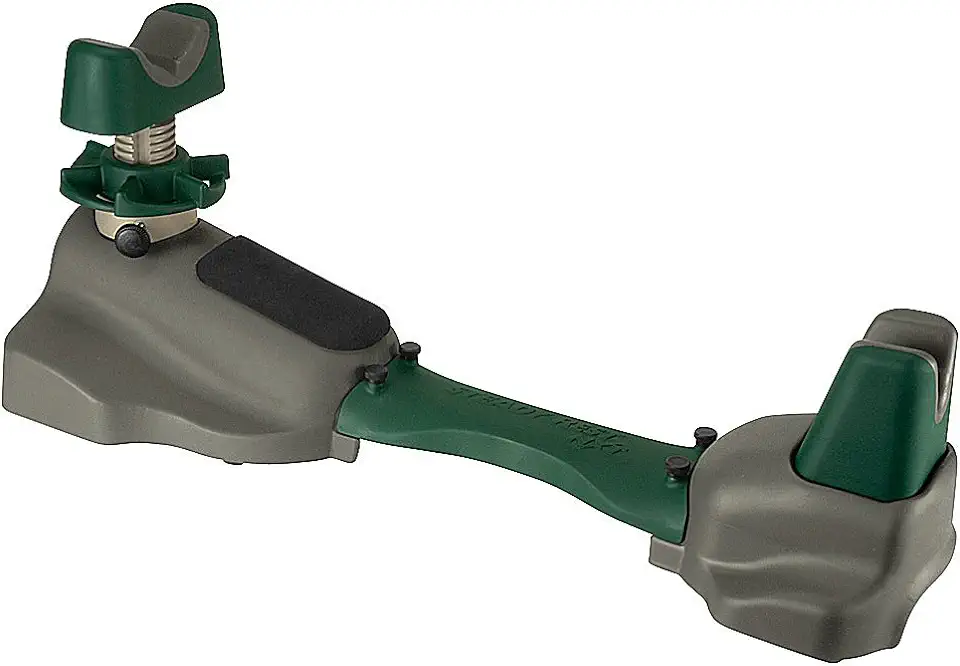
Caldwell Steady Rest NXT
Compact, user-friendly support that minimizes movement and enhances group sizes for more consistent range performance.
Target Shooting Inc Model 1000 Rifle Rest is a mid-weight benchrest rest designed for stability during long strings at the bench, a must-have when you’re dialing in precision across multiple shots. It weighs nearly 15 lbs and offers an adjustable bed from 6–26 inches, plus a rotating forend cradle that keeps the forend locked in place as you sweep the crosshairs.
A dead foam cradle blocks the forend and a leather rear saddle protects the butt, keeping the rifle steady and reducing bounce even under heavy recoil. The micro-adjustable cradle rotates 360° for alignment, and a bubble level plus adjustable feet enable seamless leveling across uneven benches, high or low.
Rugged castings and steel rods provide a level platform that holds under sustained fire, resisting flex and stray vibrations that can throw off your groups. The design seamlessly handles height, rotation, and angle adjustments for long rifles without shifting, so you can fine-tune elevation without re-mounting.
This rest features a durable powder-coated finish and vinyl feet for a secure bench grip, providing confidence when you’re switching benches or surfaces. The combination of solidity and deliberate adjustability means you can trust it to stay put while you concentrate on breath control and trigger discipline.
Heavy weight (~15 lbs) complicates transport to outdoor ranges, so you’ll want a dedicated setup if you’re moving between venues. Extensive adjustments can overwhelm beginners during initial setup, though experienced benchrest shooters will appreciate having every parameter at their fingertips.
User reviews describe it as “one of the best rifle rests I’ve ever shot over,” a compliment that feels earned after hundreds of rounds on a single setup. They note that dead foam cradles eliminate bounce for sub-MOA accuracy at 300+ yards and that vinyl feet grip benches securely for stable shooting.
Pros
- Precision rest weighing nearly 15 lbs with adjustable bed (6–26 inches) and rotating forend cradle.
- Dead foam cradle blocks and leather rear saddle protect forends while killing rifle bounce.
- Micro-adjustable cradle rotates 360° for alignment; bubble and adjustable feet enable seamless leveling.
- Rugged castings and steel rods provide a level platform that holds under sustained fire.
Cons
- Heavy weight (~15 lbs) complicates transport to outdoor ranges.
- Extensive adjustments can overwhelm beginners during initial setup.
Choosing a Front Rest
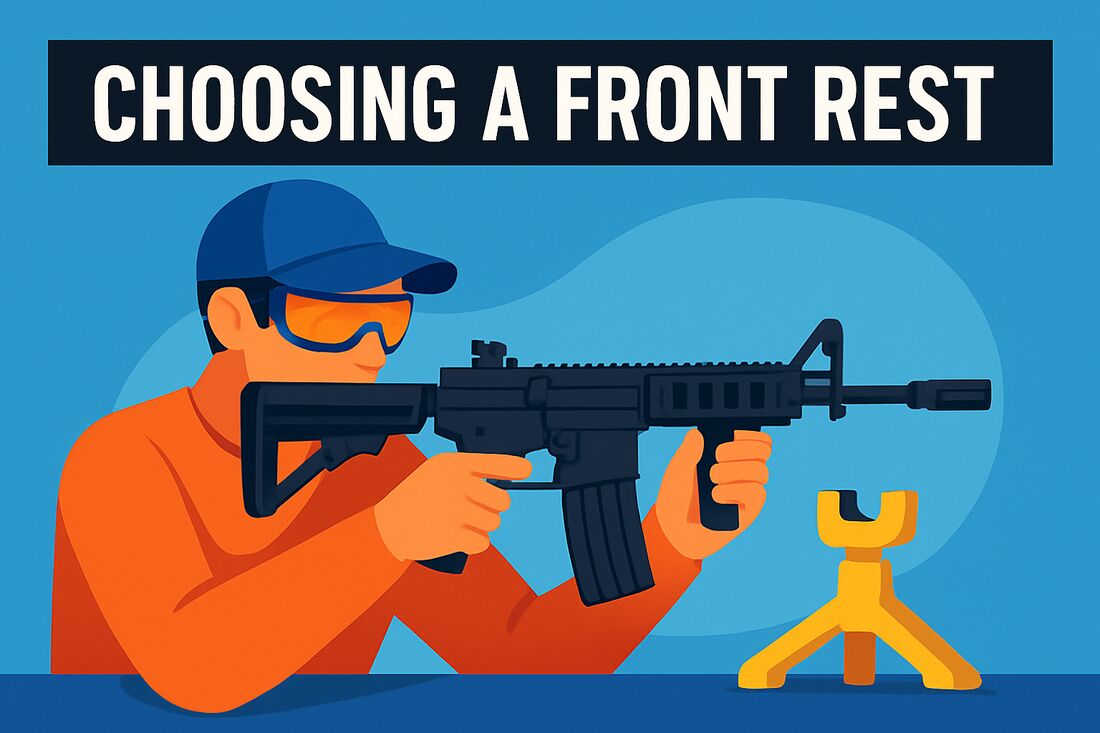
In benchrest setups, the front rest is the anchor that keeps your rifle from wandering as you breathe and squeeze. It cradles the forend and sets the foundation for every shot. Look for a rigid base or an adjustable platform that stays level through recoil, because a wobbly front end sinks groups fast.
The front rest provides primary stability by cradling the rifle’s forend; it minimizes barrel vibration and shooter-induced movement, which translates to tighter groups. When you’re zeroing or testing a new loadout or hop-up setting, a solid front rest keeps the rifle steady long enough to see true trends in your shot sequence.
Bag material and shape matter more than you might think. Leather exteriors grip without slipping; polyester linings resist stretching. Fill with dry silica sand or a similar dense material that conforms to the forend, creating a stable pocket that doesn’t compress under recoil.
Adjustability means more than height. Look for models that work with 4-inch center posts or offer extended heights so you can dial in elevation without moving the rest. A touch of tilt or fore-aft control helps you preserve a repeatable cheek weld and line of sight.
Stability features matter in practice. A common-radius front bag or a firm fill—think heavy sand mixed with steel shot—reduces torque and recoil jump, preserving sight picture through long strings of fire.
Fit for rifle type is also key. Choose a front rest with flat or contoured cradles that immobilize fore-to-aft movement while still allowing a touch of steering input. For airsoft builds with slim M4-style forends, verify the cradle width so it won’t pinch or rock.
Proper setup matters as much as the rest itself. Position the rest under the forend’s balance point so the rifle sits flat and won’t rock. Level the base, test a few dry-fire taps, and adjust until the sight line stays consistent through your breathing and trigger pull.
Rear Bag and Butt Support
Rear bags play a critical role in benchrest stability. They cradle the butt of the rifle, absorb recoil, and give you stable elevation control while you stack groups. Position the rear bag just behind the rear sling swivel or buttplate, forming a stable triangle with the front rest. This setup immobilizes the rifle in yaw and pitch but still allows careful, micro-adjustments without shifting your stance.
Shape matters. Cylindrical or “bunny ear” rear bags with a flat or donut bottom sit flush on the bench and resist rolling. Multifaceted bags are handy for stock heights that vary. They can go from under 1 inch up to about 9 inches tall for longer stock geometry. The key is a bag that matches the butt geometry and bench surface.
Fill materials: heavy, inert fills like dry silica sand, #9 lead shot, or sand–steel shot mixes with talcum powder create a dense, non-sliding cushion. This helps the rear bag conform to the stock while resisting bounce under sustained fire. Avoid soft fills that compress and let the stock wander.
Adjustment technique: To adjust elevation, gently compress the rear bag with your non-dominant hand while maintaining a relaxed grip with the trigger hand. This micro-adjusts the stock angle and preserves cheek weld and sight picture. Use small increments; the goal is to steer the rifle’s angle, not shift the entire position.
Stability enhancements: Leather construction with a rigid bottom or built-in bubble level helps alignment and prevents side-to-side movement; avoid overly soft fills that allow sliding—aim to immobilize the stock. A good rear bag should stay put while you tighten the front rest, giving you repeatable elevation and tracking through shots.
Note for airsoft practice: choose rear bags with enough density to stabilize lighter rifles. Leather-topped bags with rigid bottoms resist field wear, and bubble levels help stay aligned between sessions.
What People Ask Most
What is the best rifle rest for benchrest shooting?
The best rest depends on your goals, bench size, and rifle type. Look for stability, adjustability, and durability in a rest designed for bench testing and competition. Consider how the rest handles recoil and maintains zero across sessions.
How do you choose a rifle rest for benchrest shooting?
Start by evaluating stability, support for the forend, and how the rest integrates with your bench. Consider the fit for your rifle length and bench setup, and whether you need portability or heavy-duty performance. Test for wobble, secure contact, and ease of elevation adjustments.
What features should I look for in a benchrest rifle rest?
Look for a rigid base, secure contact surfaces, and adjustable elevation and windage without moving the rifle. The rest should accommodate your preferred bench sizes and rifle lengths. It should also minimize torque and allow repeated positioning without drift.
What is the difference between a front rest and a rear bag in benchrest shooting?
The front rest provides primary stability for the forend and helps reduce barrel vibration. The rear bag supports the butt and helps control elevation and recoil, forming a stable shooting triangle with the front rest.
How should you set up a rifle rest for benchrest competition?
Place the front rest under the forend balance point to keep the rifle stable. Position the rear bag behind the butt to form a stable triangle with the front rest and allow controlled adjustments. Ensure the setup supports a consistent cheek weld and trigger control.
What makes a rifle rest stable enough for benchrest shooting?
Stability comes from a solid base, rigid contact surfaces, and effective weight distribution. A rest that resists movement during firing and doesn’t disturb the rifle position during adjustments helps maintain consistent groups.
Are there different types of rifle rests used in benchrest shooting and which is best?
There are several rest types used, including front rests and rear bags. The best choice depends on your shooting goals, bench constraints, and comfort with setup; many shooters use a setup that balances stability and adjustability.
Conclusion for Benchrest Rifle Rests
This review demonstrates a broad spectrum of rifle rests, from compact, portable designs to heavy, competition-grade platforms. This range ensures there is a suitable option for different bench setups, recoil characteristics, and practice durations, all anchored in stability, adjustability, durability, and portability.
The main takeaway is to pair your rest choice with a compatible rear-bag setup, aligning with your priorities and the shooting context. When the selection matches your needs, you can optimize consistency and tighten groups without sacrificing practicality.
To improve your benchrest skills, continue reading more articles on our site. We invite you to share your experiences in the comments—our team usually replies within a few hours.