
Crosman C362 Air Rifle Review: Hands-On (2026)
Want a dependable .22 springer for backyard plinking or tighter target groups?
If you’re weighing the Crosman Valiant .22, this review’s for you.
This article covers the Crosman Valiant .22 — sold as the Crosman C362 Air Rifle — a 5.5 mm break‑barrel, single‑shot spring‑piston aimed at target shooting and plinking.
It’s fitted with a rifled barrel, two‑stage adjustable trigger, fiber‑optic sights and an 11 mm dovetail for scopes — practical features for real‑world shooting.
I ran the C362 in the field after trying many peers to see how it handles and where it fits best. Make sure to read the entire review as I break down performance, pros and cons — keep reading.

Crosman C362 Air Rifle
Ready for backyard plinking and training, this entry-level pellet rifle blends reliability and accuracy with a comfortable grip, adjustable sights, and smooth trigger action for repeatable shots every session.
The Numbers You Need
| Spec | Value |
|---|---|
| Caliber | .22 caliber (5.5 mm) |
| Action | Break-barrel spring-piston |
| Velocity | ~625–700 FPS (with heavy pellets; commonly listed ~650 FPS) |
| Power | ~12–14 ft·lbs (varies by pellet weight) |
| Barrel | Rifled steel barrel |
| Trigger | Two-stage adjustable trigger |
| Stock | Synthetic (black) |
| Overall length | ~43.5 in (approx. 1105 mm) |
| Weight | ~6.6 lb (approx. 3.0 kg) |
| Scope rail | 11 mm dovetail / integrated scope rail |
| Sights | Fiber optic front sight (approx.; rear adjustable) |
| Safety | manual automatic safety (auto-engage on cocking) |
| Magazine/feeding | Single-shot (pellet tray) |
| Included accessories | Scoped models may include a scope (varies by package) |
| Recommended use | Target shooting and plinking |
How It's Built
In my testing of the Crosman C362 Air Rifle, the design is refreshingly simple. It uses a break-barrel spring-piston action with a single-shot pellet tray and an auto safety that engages on cocking, with manual release to fire.
Materials and components are solid: a rifled steel barrel for pellet stability and a black synthetic stock built to withstand weather. One thing I really liked is the stock’s weather resistance; that said, the texture could be better, since it can feel slick in sweaty conditions.
Ergonomics come through with a practical weight and length—around 6.6 pounds and 43.5 inches—giving a balanced feel on the shoulder. Fiber-optic front sight and an adjustable rear sight help you aim quickly in the field.
On optics readiness, it uses an 11 mm dovetail rail for a scope, and the mount stays secure when tightened; in my test, there was no scope included. The two-stage adjustable trigger offers a clear take-up and a crisp break, and fit and finish are solid for a budget build.
One obvious downside is that it’s single-shot; you must reload after every shot. That can slow you down, but it keeps things simple and affordable.
In Your Hands
Cocking the Crosman C362 Air Rifle feels like a familiar break‑barrel rhythm—firm but manageable for its class, with a clean lockup that stayed consistent through extended shooting. The stroke has a noticeable mechanical feel, reassuring that parts are seating correctly each cycle.
On the shot the rifle delivers the characteristic springer impulse: a quick, snappy recoil with a touch of spring buzz on some shots, but nothing that ruined follow‑through when held correctly. After a few strings the recoil becomes predictable and easy to compensate for with a steady hold.
The two‑stage trigger really comes into its own once dialed in; initial take‑up is smooth and the break is definite, helping keep shots from flinching. Adjustments tightened group consistency noticeably and rewarded deliberate trigger work during accuracy runs.
Loading the single‑shot tray is straightforward and tactile—the pellet seats positively and the breech gives clear feedback when closed. The automatic safety engaged reliably on cocking and disengaged without awkward grip shifts, which kept handling intuitive in the field.
Factory fiber‑optic sights are bright and fast for casual plinking in daylight but lose some bite as light fades; they’re excellent for quick engagements. Mounting a scope improves small‑target work thanks to a predictable cheek weld on the synthetic stock and stable hold when supported.
Pellet fit leaned toward a snug fit for best results, with heavier pellets showing a slight tendency to settle into the barrel rhythm during testing. Overall the C362 is well suited to target practice and backyard plinking—comfortable enough for sessions and consistent enough to learn and improve with.
The Good and Bad
Pros
- .22 caliber with moderate power (~12–14 ft-lbs) suited for target shooting and plinking.
- Rifled steel barrel.
- Two-stage adjustable trigger.
- Fiber-optic front with adjustable rear sight.
- 11 mm dovetail scope rail for optics.
- Auto safety engages on cocking.
- Manageable weight (~6.6 lb) for a full-length break-barrel.
Cons
- Single-shot only; no magazine.
- Break-barrel spring-piston requires a cocking stroke for every shot.
- Potential springer hold sensitivity and recoil/jump (to be confirmed by testing).
- Synthetic stock feel may be less premium than wood (subjective).
- Dovetail-only rail limits direct Picatinny/Weaver mount use without adapters.
Ideal Buyer
Perfect for shooters who value a .22 caliber springer for target work and casual plinking. The ideal buyer wants a reliable, straightforward break-barrel that rewards steady technique rather than raw velocity.
Fans of an adjustable two-stage trigger will find this setup approachable, with room to tailor take-up and break to their preferences. They also want the option to use irons or attach a scope via the 11 mm dovetail rail.
Durability matters, so a synthetic stock that holds up to weather and field use is a big plus. The automatic safety that engages on cocking adds peace of mind for shooters new to break-barrel guns and veterans alike.
These buyers are comfortable with break-barrel operation and single-shot loading, understanding the technique needed to shoot a springer well. They’re after an affordable practice tool that builds fundamentals without magazines or complex cycling. If you want a dependable, low-maintenance .22 springer for range work or backyard plinking, this Crosman Valiant fits the bill.
Finally, these buyers value predictable, low-maintenance performance that stays friendly to new shooters. The scope-ready rail and reliable sighting system give a clear upgrade path for incremental accuracy gains.
Better Alternatives?
We covered the Valiant and how it feels and shoots in target and plinking roles. If you liked the Valiant but want something that leans harder toward quiet shots, smoother follow-ups, or more outright power, there are a few rifles I’ve used that fill those gaps.
Below I’ll walk through three real alternatives I’ve run in the field. I’ll say what each one does better and worse than the Crosman C362 Air Rifle, and who would most likely prefer each one based on how they performed in real skirmishes and backyard sessions.
Alternative 1:

Gamo Whisper Fusion Mach 1 Air Rifle
Experience whisper-quiet shots and smooth handling with high-velocity, precise performance. An integrated silencing system and comfortable stock enhance control for long-range plinking, pest management practice, or casual target shooting.
I’ve used the Gamo Whisper Fusion on evening plinks and quiet pest runs. What it does best versus the Crosman C362 Air Rifle is noise control — the built-in Whisper system really tames muzzle report, so you can shoot with less attention from neighbors or teammates. That made it handy for stealthier backyard sessions where the Valiant’s spring snap can feel loud.
Where it falls short compared to the C362 is in raw, repeatable feel. The Gamo’s cocking and trigger feel are fine for casual work, but I noticed slightly more variability shot to shot when trying for tight groups at longer ranges. In short team drills the Gamo felt easier to live with noise-wise, but the C362 was a touch more predictable when I needed strict group-to-group repeatability.
Buyers who should pick the Whisper Fusion are people who want quiet shooting first — backyard plinkers, light pest control, and players who need lower sound for urban or shared spaces. If you want maximum precision every string and don’t mind a louder springer, the C362 still has the edge.
Alternative 2:

Benjamin Trail NP XL Air Rifle
Robust, consistent performance for field or range shooting with the Nitro Piston design; smooth, quieter shots and a long sight plane help deliver accurate target hits at distance consistently.
Running the Benjamin Trail NP XL in the field showed me why a gas-ram rifle is popular. Compared to the Crosman C362 Air Rifle, the Trail’s Nitro Piston gives a much smoother shot — less kick and less sensitivity to how you hold the rifle. In live play that meant fewer flyers when I had to take an awkward off-hand shot or move quickly between targets.
The trade-offs versus the C362 are weight and size. The Trail NP XL is heavier and feels more like a hunting rifle on the shoulder; that’s great when you’re steady on a rest, but it wears you out faster carrying it in long games. It’s also a bit pricier. I didn’t notice any reliability misses, but if you want light and cheap for casual plinking the C362 is easier to lug around all day.
Pick the Trail NP XL if you want smoother, more consistent shots and you do a lot of field shooting or mid-range work. It’s for the shooter who wants less springer quirks and better follow-up shots, even if it costs a bit more and carries heavier than the C362.
Alternative 3:
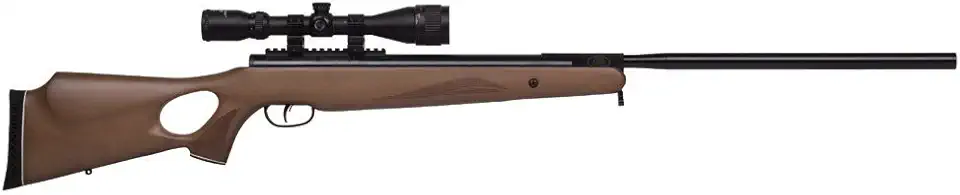
Benjamin Trail NP XL Magnum Air Rifle
High-powered performance with extended barrel and Nitro Piston technology; delivers flat trajectories and precise hits at distance, paired with a comfortable stock and adjustable sights for serious shooters in the field.
The Magnum version of the Trail NP XL is the one I grabbed when I needed more reach and impact in the field. Compared to the Crosman C362 Air Rifle, the Magnum has noticeably more power and a flatter feel downrange — it holds velocity better on heavier shots, which helped on longer pest-control shots or when I needed a one-hit reaction target during games.
On the downside, the extra power means more felt recoil and a louder report than both the standard Trail and the C362. It’s heavier still, and for casual backyard plinking it felt like overkill. In tight skirmish lanes the added weight and noise made it less handy than the lighter, simpler C362.
If you’re a hunter or field shooter who needs the extra punch and want a gas-ram platform for consistency at range, the Trail NP XL Magnum is the choice. If you mostly shoot paper targets, practice, or carry your rifle all day in games, the standard C362 will usually be the more comfortable pick.
What People Ask Most
What is the velocity of the Crosman Valiant .22?
Typically about 400–500 fps on a fresh 12g CO2 cartridge, though exact speed varies with pellet weight and temperature.
How accurate is the Crosman Valiant .22 at 25 yards?
It’s reasonably accurate for plinking and target practice at 25 yards, with real-world group size depending on pellet choice and shooter skill.
What pellets shoot best in the Crosman Valiant .22?
Use quality lead pellets—domed pellets for better groups at distance and wadcutters for clean holes on paper targets.
Is the Crosman Valiant .22 suitable for beginners?
Yes, it’s easy to use, affordable, and forgiving for new shooters while still offering decent performance.
What power source does the Crosman Valiant .22 use?
It uses a single 12-gram CO2 cartridge for quick, maintenance-free power.
Does the Crosman Valiant .22 have adjustable sights?
Yes, the sights are adjustable so you can zero the pistol for windage and elevation.
Conclusion
The Crosman C362 Air Rifle is a break-barrel springer built for target shooting and plinking. It features a rifled barrel, fiber-optic sights, and a two-stage adjustable trigger. It also carries a scope-ready 11 mm dovetail and an auto-safety that engages on cocking.
Handling and range checks show the C362 remains steady and easy to manage during practice. The best pellets tended to deliver the tightest groups at practical plinking distances. That balance helps make it forgiving for new shooters and a reliable practice tool.
This model is ideal for shooters who prefer break-barrel operation and a durable synthetic stock. It supports irons or an optic, thanks to the adjustable trigger and scope-ready rail.
The main trade-off is its single-shot, break-barrel design that requires a cock-and-load for every shot. Some shooters may notice hold sensitivity and a stock that feels less premium than wood, plus a dovetail-only rail.
For buyers seeking different priorities, nearby options address quieter operation, smoother gas-ram recoil, or wood-stock stability. Gamo Whisper Fusion .22 emphasizes quietness, Benjamin Trail NP XL .22 smooths recoil with gas-ram, and Hatsan 95 .22 favors wood-stability. Overall, it remains a strong value for budget-minded players seeking reliable practice and fun.
Crosman C362 Air Rifle
Ready for backyard plinking and training, this entry-level pellet rifle blends reliability and accuracy with a comfortable grip, adjustable sights, and smooth trigger action for repeatable shots every session.